Beyond flying taxis: China’s low-altitude economy targets practical uses, including emergency response
China's low-altitude aviation industry is expanding beyond passenger air taxis to practical applications like emergency rescue, cargo transport, and building maintenance, as showcased at a recent Shanghai expo. Regulatory hurdles remain a significant challenge for wider a…
Intelligence analysis by Gemini 2.5 Flash
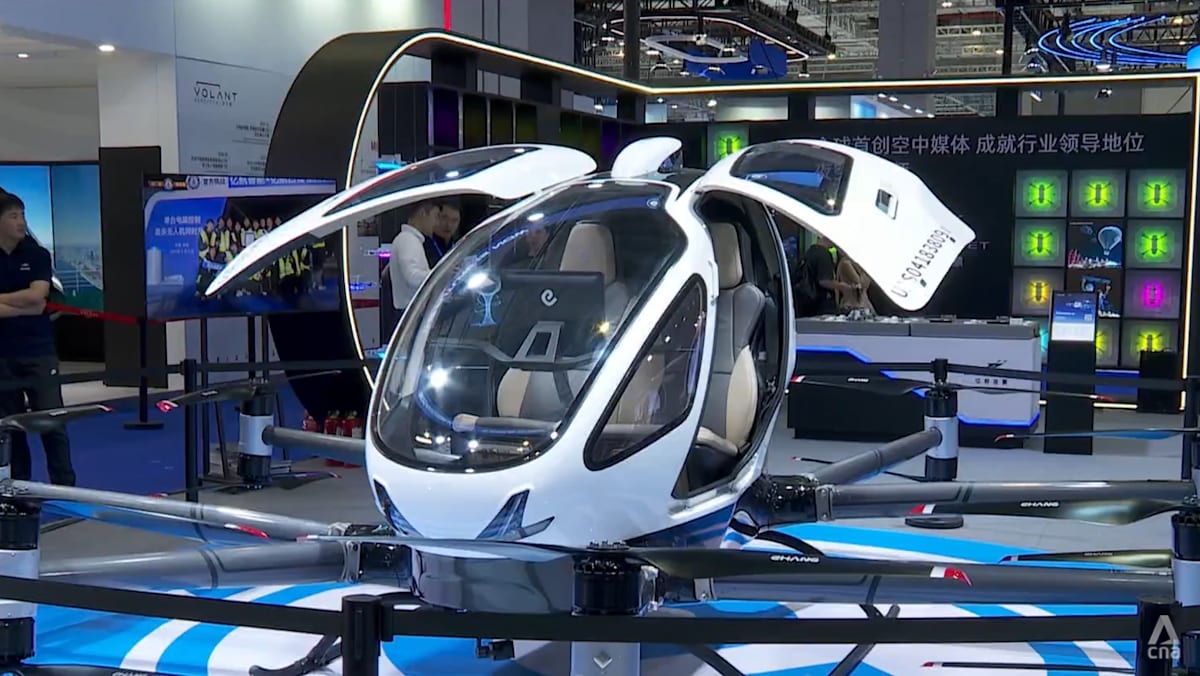
China is aggressively developing its "low-altitude economy," moving past the initial hype of flying taxis to focus on immediate, real-world applications for drones and eVTOLs. Companies are showcasing innovations for emergency services, logistics, and dangerous industrial tasks, aiming for commercial viability sooner than widespread passenger services, though regulatory approval remai…
Imagine tiny flying cars and robots that don't just carry people, but also help firefighters put out fires in tall buildings, deliver packages, or clean windows high up. China is building lots of these flying machines, not just for fun rides, but to do important jobs that are too hard or dangerous for people, even though they still need to figure out all the rules for them to fly safely everywhere.
Analysis
Shifting Focus to Practicality
China's burgeoning low-altitude economy is undergoing a strategic pivot, moving beyond the futuristic allure of passenger-carrying "flying taxis" towards more immediate and practical applications. This shift was prominently displayed at Shanghai’s International Advanced Air Mobility Expo, where the emphasis was on integrating advanced air mobility (AAM) technologies into everyday operational needs. While autonomous passenger aircraft like EHang’s EH216-S garnered attention for their regulatory milestones, the broader industry narrative is now centered on leveraging these innovations for tangible, real-world problem-solving. This pragmatic approach aims to accelerate commercial viability by addressing critical societal and industrial demands, rather than waiting for the complex infrastructure and public acceptance required for widespread passenger services.
Diverse Real-World Applications
The expo highlighted a wide array of specialized applications for low-altitude aircraft, demonstrating their potential to revolutionize various sectors. Emergency response is a key area, with developers pursuing uses in firefighting, including breaking through windows to douse flames directly, and evacuating individuals from hazardous situations. Cargo transport, particularly between ships and shore, and building maintenance, such as high-rise window cleaning and dangerous inspections, were also showcased as commercially viable opportunities. Companies like E-Hawk Technology are designing electric vertical take-off and landing (eVTOL) aircraft with enclosed ducted fans, prioritizing safety and quiet operation for urban environments, further enabling these diverse applications. These specialized uses are anticipated to achieve commercial viability much sooner than routine passenger services, providing a clear pathway for industry growth.
Navigating Regulatory Hurdles
Despite the significant technological advancements and the clear potential for practical applications, the article underscores that regulatory frameworks remain the most substantial impediment to wider adoption of China's low-altitude economy. While EHang has achieved notable success in securing design, manufacturing, and operational approvals for its EH216-S aircraft, even its vice-president acknowledges that widespread passenger services will take considerable time, estimating demonstration services in some cities within three years. The challenge lies in establishing comprehensive and consistent regulations that can safely integrate these novel aircraft into existing airspace, manage traffic, and ensure public safety and privacy. Overcoming these regulatory complexities is crucial for unlocking the full economic potential of low-altitude aviation and transitioning from demonstration projects to scalable, routine operations across various industries.
Key points
- China's low-altitude aviation industry is expanding beyond passenger air taxis to practical applications.
- New uses include emergency rescue, firefighting, cargo transport, and building maintenance.
- Companies like EHang are gaining regulatory approval for passenger services, but widespread adoption is expected to take time.
- E-Hawk Technology is developing eVTOLs with enclosed ducted fans for safer, quieter urban integration.
- Drones are being fitted with robotic arms for tasks like window cleaning and high-rise fire extinguishing.
- Regulation is identified as one of the biggest obstacles to wider adoption of these technologies.
The rapid development and focus on practical applications in China's low-altitude economy could lead to significant advancements in urban logistics, emergency response capabilities, and infrastructure maintenance. This could create new industries, improve safety for dangerous jobs, and enhance efficiency in various sectors, potentially inspiring similar innovations globally.
Despite technological progress, the article highlights that regulation remains a major obstacle. Slow or inconsistent regulatory frameworks could stifle innovation, delay widespread adoption, and limit the commercial viability of these advanced air mobility solutions. Safety concerns and public acceptance issues could also hinder growth, making the ambitious goals difficult to achieve.