Bitcoin Core Developer Responds To AI & Quantum Risk
Bitcoin Core contributor Antoine Poinsot addressed concerns about AI and quantum computing risks to Bitcoin's security. He emphasized the need for evidence-based claims and early preparation over fear-driven reactions.
Intelligence analysis by Gemini 2.5 Flash Lite
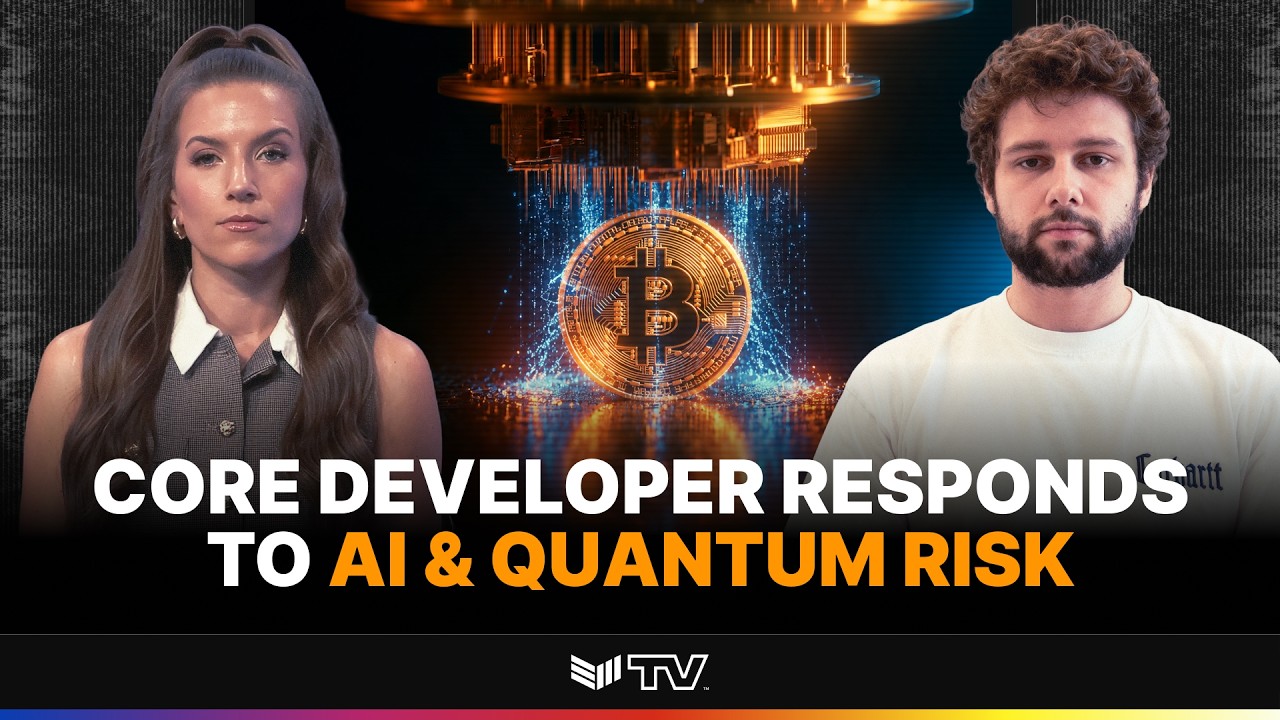
Bitcoin Core developer Antoine Poinsot discussed the perceived threats of AI and quantum computing to Bitcoin's security. He argued against fear-mongering, stressing that concrete evidence is crucial for security claims and that proactive preparation for quantum risks is more valuable than panicked responses.
Imagine Bitcoin's security is like a strong castle. Some people worry that new super-smart robots (AI) or powerful magic spells (quantum computers) could break the castle. But a castle builder says we need proof before we panic, and we've been working on stronger walls for years, so let's focus on building them instead of just worrying.
Analysis
Antoine Poinsot on AI and Quantum Computing Risks
Bitcoin Core contributor Antoine Poinsot, speaking from Chaincode Labs, addressed the growing discourse surrounding the potential impact of Artificial Intelligence (AI) and quantum computing on Bitcoin's security. Poinsot's commentary, in response to a viral post by Justin Drake, aimed to temper what he perceives as fear-mongering, particularly concerning AI's role in security claims. He stressed the importance of empirical evidence in security research, advocating for a measured approach rather than reacting to unsubstantiated anxieties. This perspective is crucial in a field where technological advancements can often outpace clear understanding, leading to speculative panic.
Poinsot elaborated on the specific threat of quantum computing, a long-standing concern within cryptography. While acknowledging that quantum computers, if sufficiently powerful, could theoretically break current encryption standards, he highlighted that the Bitcoin community has been aware of this risk for years. The development and implementation of quantum-resistant cryptography are ongoing, and early preparation is key. He suggested that hiding public keys behind hashes, a technique sometimes proposed as a short-term mitigation, is largely a red herring and not a robust solution. Instead, the focus should be on developing and deploying more advanced cryptographic methods that are inherently resistant to quantum attacks.
Furthermore, Poinsot touched upon the practical aspects of Bitcoin development and security, referencing past events like a failed soft fork and ongoing work on BIPs (Bitcoin Improvement Proposals) such as BIP 54 for consensus cleanup. He also discussed the nuances of different transaction versions like BIP 360, BIP 361, and P2TR v2, indicating that the development landscape is continuously evolving to address bugs and enhance security. The conversation also included lessons learned from incidents like the Coldcard issue and the benefits of reducing single points of failure through multisignature setups and Liana, a layer-two solution. This holistic view underscores that Bitcoin's security is a multifaceted and evolving challenge, addressed through continuous development and community consensus.
Key points
- Bitcoin Core developer Antoine Poinsot downplayed immediate AI-driven security risks, emphasizing the need for evidence over fear.
- He acknowledged quantum computing as a long-term risk but highlighted ongoing community efforts for quantum-resistant solutions.
- Poinsot argued that early preparation and robust cryptographic development are more effective than reactive measures.
- The discussion touched on various Bitcoin Improvement Proposals and security practices like multisig to reduce single points of failure.
The proactive stance of Bitcoin Core developers in addressing potential quantum computing threats suggests that the network will likely transition to quantum-resistant cryptography well before such computers pose a significant risk. This foresight ensures the long-term security and trustworthiness of Bitcoin, allowing it to continue functioning as a robust digital asset.
If the development and adoption of quantum-resistant cryptography lag significantly behind the advancement of quantum computing capabilities, Bitcoin's address security could be compromised. This could lead to widespread theft of funds and a severe erosion of trust in the network, potentially causing a catastrophic collapse in its value.