Bitcoin falls back below $63,000 as Iran-Israel trade strikes and Korean stocks crash
Bitcoin slipped to about $62,900 as Iran-Israel strikes rattled markets, oil jumped, and Asian stocks fell sharply.
Intelligence analysis by GPT-5.4 Mini
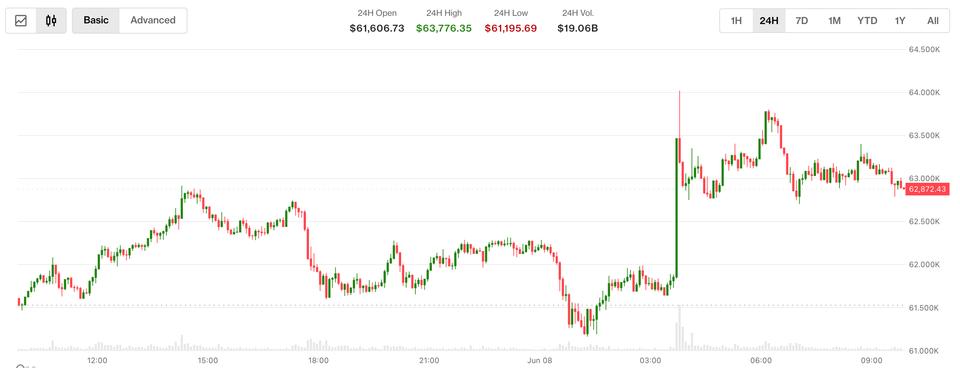
Bitcoin pulled back from a Sunday high near $63,776 as renewed Iran-Israel fighting hit risk sentiment across global markets. The move came alongside a surge in oil prices, a drop in Asian equities, and broader pressure already weighing on crypto.
Bitcoin was like a boat on rough water: when fighting between countries made markets nervous, oil jumped and stock markets dropped, so Bitcoin got pushed lower too.
Analysis
Market backdrop
Bitcoin fell back to around $62,900 after renewed military conflict between Iran and Israel pushed investors toward safer assets. The article says the coin had reached $63,776 late Sunday before reversing as Asian markets opened under pressure.
What moved alongside it
WTI crude oil futures jumped more than 3% to $93.50, reflecting renewed energy-market stress. Asian equities sold off sharply, with South Korea's KOSPI falling more than 6.8% and triggering a temporary trade halt, while Japan's Nikkei dropped more than 3%.
Why crypto weakened
The piece ties bitcoin's weakness to broader risk-off conditions already in place. It points to higher Treasury yields after a strong U.S. jobs report, recent outflows from spot bitcoin ETFs, and other pressures including Strategy's BTC sale, the AI stock frenzy, and capital leaving crypto funds. Those forces had already pushed bitcoin down about 14% last week, including a brief break below $60,000.
The article also notes that U.S. President Donald Trump urged restraint and said he wanted Israel not to retaliate further, but the market reaction remained negative. Looking ahead, the story says volatility could stay elevated this week because of geopolitical tensions, upcoming U.S. inflation data, and major IPOs such as SpaceX and Anthropic, all of which could affect liquidity and risk appetite.
Key points
- Bitcoin fell to about $62,900 after renewed Iran-Israel strikes unsettled global markets.
- WTI crude oil jumped more than 3% to $93.50 as energy markets reacted to the conflict.
- South Korea's KOSPI fell over 6.8% and Japan's Nikkei dropped more than 3%.
- The article says bitcoin has already fallen about 14% last week amid ETF outflows and other market pressures.
- U.S. inflation data and major IPOs could keep volatility high this week.
If the fighting cools and markets regain confidence, Bitcoin could recover some of the ground it lost during the risk-off move. The article also suggests that future U.S. data and IPO activity could improve liquidity conditions if investors shift back toward riskier assets.
If the conflict escalates or oil keeps rising, risk aversion could deepen and keep pressure on Bitcoin. Higher Treasury yields, ETF outflows, and weak market sentiment could also extend the slide or keep volatility elevated.