'Bizarre choice': business and Labour puzzle over Shabana Mahmood as future chancellor
As Andy Burnham prepares to enter Downing Street, Home Secretary Shabana Mahmood has emerged as frontrunner for chancellor, puzzling business leaders and Labour figures who cite her lack of economic credentials.
Intelligence analysis by Llama
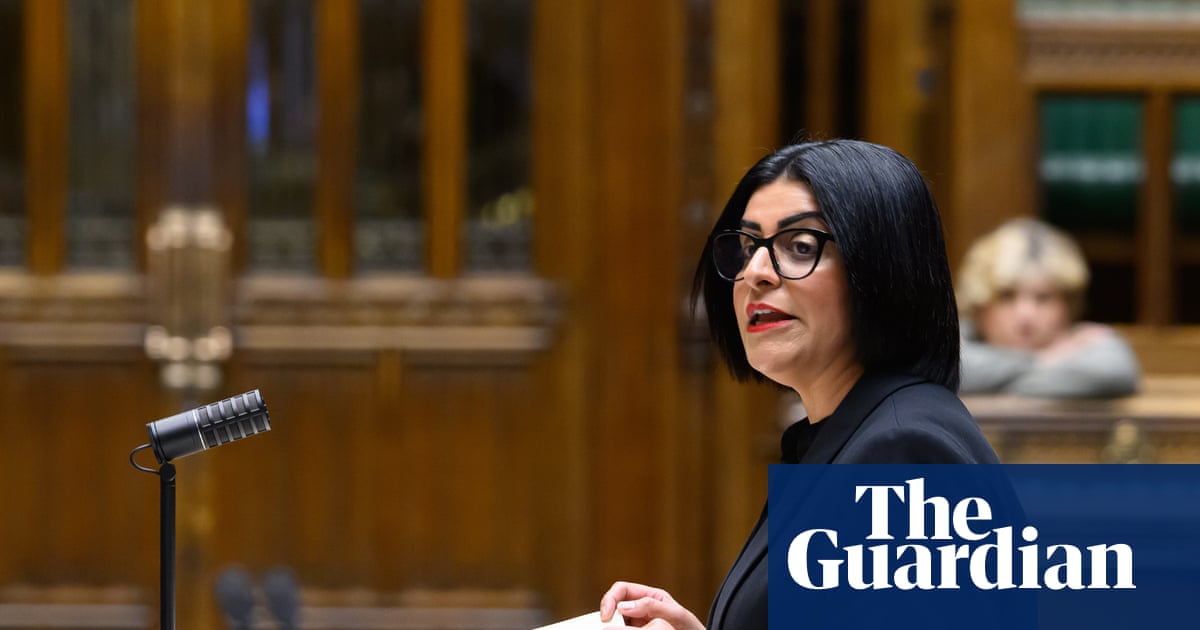
With Andy Burnham set to replace Keir Starmer as prime minister, Shabana Mahmood has moved ahead of Ed Miliband as the expected chancellor pick. Business groups express cautious relief at avoiding Miliband but warn Mahmood is an 'unknown quantity' on economic policy.
Imagine a school's head teacher is changing, and the class needs a new top helper who handles the money. The favourite for the job, Shabana Mahmood, has never really looked after the school's money before, so the other teachers and parents are worried. They wish someone who knows more about money, like Ed Miliband, had been picked instead.
Analysis
Mahmood's Surprise Emergence
Shabana Mahmood, currently serving as home secretary, has become the frontrunner to succeed Rachel Reeves as chancellor once Andy Burnham replaces Keir Starmer in Downing Street. The article notes that Mahmood moved ahead of Ed Miliband, the energy secretary, after a 'brutal briefing battle' and backlash from big business over Miliband's net zero commitments. Some FTSE leaders privately welcomed the shift, citing concerns that Miliband's left-leaning reputation and decarbonisation focus would translate poorly into Treasury policy. One public affairs boss at a large British manufacturer told the Guardian that having Miliband at the Treasury 'can't work' because of his 'personal ambitions in terms of net zero.'
An Unknown Quantity on the Economy
The article emphasizes that Mahmood has minimal direct experience with economic or business-facing departments. A FTSE 250 insider described her as an 'unknown quantity,' and the Home Office reportedly logged no meetings between Mahmood and individual businesses during her tenure. One exception is the security industry, where contacts describe her as a 'straight talker' who 'reads her briefs.' A senior lobbyist captured the ambivalence: Mahmood 'probably wouldn't be the worst but I'd like someone who's more dynamic and more into business.' The chancellor, the lobbyist added, should not be chosen 'just to give people jobs and move people around' for Labour's political management.
A Divided Labour Circle
The piece details significant unease within Labour's own ranks. Figures close to Miliband called Mahmood's elevation a 'disaster' because she 'largely did not share his political vision as an MP from the right of the party.' A senior Labour figure pushing for Miliband described the move as a 'disastrous choice' with 'no economic background or clear ideas on how we turn the economy around.' Others urged Burnham to consider Yvette Cooper as a compromise. The article also reveals that several economic policy advisers from earlier in the transition, including former local government minister Miatta Fahnbulleh, former OBR chair Richard Hughes, ex-Goldman economist Jim O'Neill, and former Bank of England chief economist Andy Haldane, are not expected to take formal roles. The result is a Treasury team being assembled under considerable uncertainty, with key personnel decisions still unresolved just days before Burnham's installation.
Key points
- Home Secretary Shabana Mahmood has become the frontrunner to replace Rachel Reeves as chancellor under incoming PM Andy Burnham
- Business leaders and Labour figures are divided, with some calling the choice 'bizarre' and 'disastrous' due to her lack of economic credentials
- Ed Miliband was previously the favorite but faced backlash from big business over his net zero commitments and perceived left-leaning stance
- Key economic advisers including former OBR chair Richard Hughes, Jim O'Neill, and Andy Haldane are not expected to take formal roles in the new government
- Yvette Cooper has been floated as a possible compromise candidate should Burnham reconsider Mahmood
Some business leaders expressed cautious relief that Mahmood, rather than Miliband, appears headed for the Treasury, suggesting her lack of a strong net zero agenda may preserve flexibility on industrial policy. Her reputation as a 'straight talker' who 'reads her briefs' could also bring discipline to fiscal decision-making after Reeves's rocky tenure.
Senior Labour figures warned that Mahmood's elevation would be a 'disaster' due to her lack of economic background and perceived misalignment with Burnham's policy vision. With several experienced economic advisers already cut from the inner circle, a chancellor entering No 11 without a tested team risks missteps on taxation, growth, and the post-Reeves fiscal reset that businesses are keen to avoid repeating.