BJP files police complaint against Sonia Gandhi over alleged Vande Mataram stoppage at Congress HQ; protests erupt nationwide
BJP filed police complaints against Sonia Gandhi in Bengaluru and Mangaluru over a video allegedly showing her gesturing to stop Vande Mataram at Congress HQ, demanding an FIR and apology.
Intelligence analysis by Llama
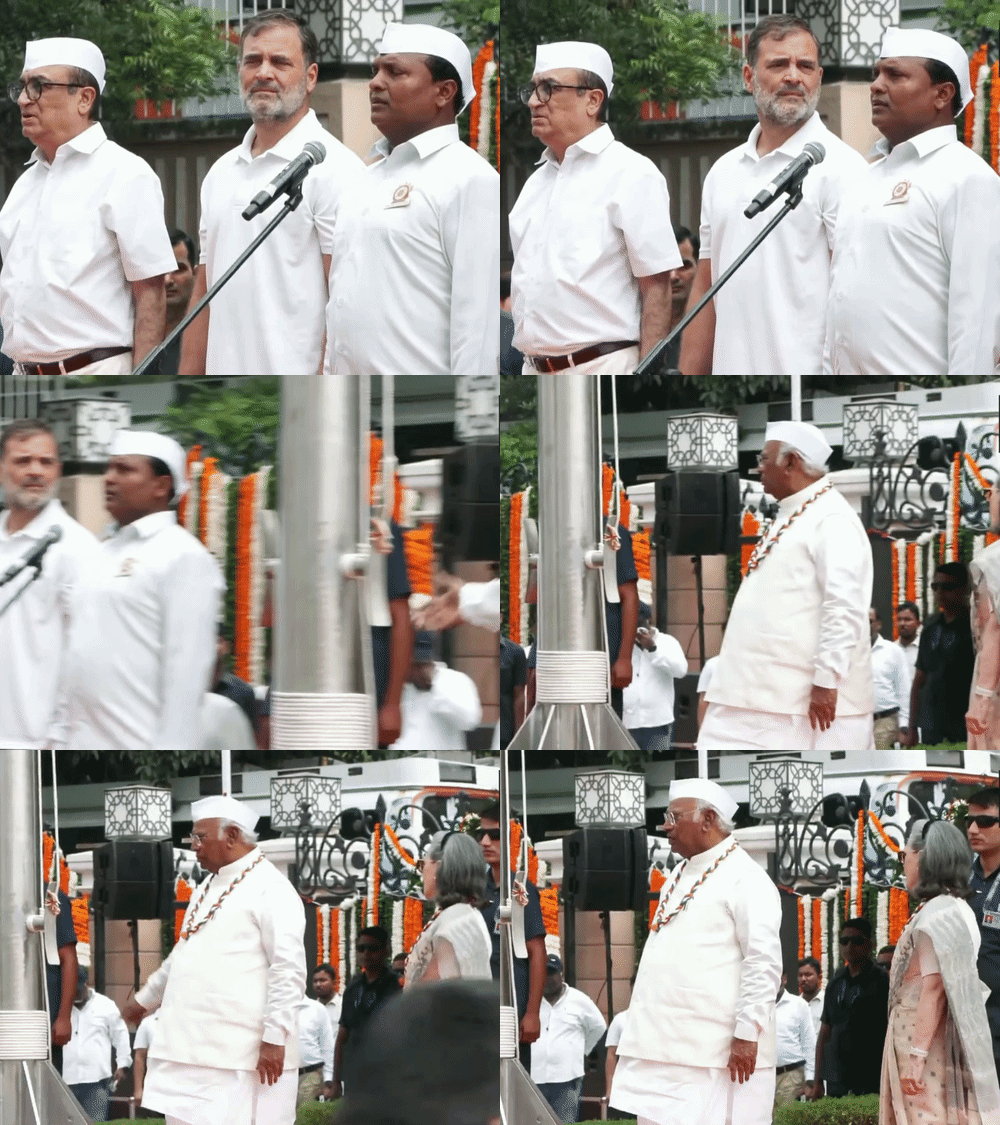
BJP filed police complaints in Bengaluru and Mangaluru against Sonia Gandhi, alleging she signalled to stop Vande Mataram at Congress HQ during Independence Day events. Protests followed in Patna, Raipur, Kolkata and Thiruvananthapuram, and the row tests a new law passed July 29.
Congress and BJP are fighting again. BJP says Sonia Gandhi told people to stop singing India's patriotic song Vande Mataram at a party event. BJP went to the police to complain and held candle and torch marches in several cities. A new law now punishes anyone who insults the song with up to three years in jail.
Analysis
Malleswaram and Urva police stations
The BJP's formal escalation rests on two parallel complaints, one filed at the Malleswaram police station in Bengaluru by the state unit of the BJP Yuva Morcha, and another at the Urva police station in Mangaluru by local party leaders. According to the report, neither station had registered an FIR at the time of filing, leaving the matter in a pre-cognisance stage. The complainants asked police to act under the recently enacted law that places Vande Mataram on the same legal footing as the national anthem Jana Gana Mana. Filing in two Karnataka cities signals that the BJP wants the case to remain in the public eye across the state rather than allow it to be narrowed to a single jurisdiction.
Dheeraj Muniraju's apology demand
State legislator and BJP Yuva Morcha president Dheeraj Muniraju framed the dispute in personal terms, saying Sonia Gandhi and Rahul Gandhi owe the country an apology for what he characterised as disrespect to Vande Mataram. He warned that the party's protests would continue until the apology is forthcoming. BJP leaders in Mangaluru echoed the same framing, calling Sonia's behaviour inappropriate and arguing that sentiments attached to the national song had been hurt. The political theatre of demanding a public apology is aimed less at the courts than at the broader narrative war over which party is seen as more committed to India's national symbols, and the row has already produced street action in at least four cities.
The July 29 statute and its three-year penalty
The timing of the controversy is pointed. The article states that Parliament passed a new law on July 29, days before the August 15 incident, giving Vande Mataram legal protection equal to Jana Gana Mana. The statute prescribes up to three years' imprisonment, a fine, or both for anyone who deliberately insults the song or obstructs its singing. The BJP's complaint is the first major public test of this provision, and how the Malleswaram and Urva police stations respond will determine whether the law becomes a live political instrument or remains largely symbolic. For now, the BJP has used the new statute as the legal hook for an FIR request, while Congress has pushed back by saying Sonia was only arranging a chair for Kharge rather than signalling for the song to stop.
Key points
- BJP filed police complaints against Sonia Gandhi at Malleswaram station in Bengaluru and Urva station in Mangaluru, citing a video of alleged gestures at Congress HQ
- BJP Yuva Morcha state president Dheeraj Muniraju demanded a public apology from Sonia and Rahul Gandhi, saying protests will continue until one is offered
- BJP workers held candle and torch marches in Patna, Raipur, Kolkata and Thiruvananthapuram in response to the alleged incident
- The article notes a new law passed on July 29 places Vande Mataram on par with Jana Gana Mana, with up to three years' jail, a fine, or both for deliberate insult or obstruction
- No FIR had been registered at either police station at the time the complaints were filed, according to the report
If handled with restraint, the dispute could prompt a calmer national conversation about respecting patriotic symbols without turning them into partisan weapons, and the new Vande Mataram law could end up functioning as a genuine civic safeguard rather than a political cudgel.
Without an FIR or apology, the BJP's protest machinery is likely to widen into sustained street action across more states, and the freshly enacted Vande Mataram law risks becoming a routine tool in India's polarised political battles, with each side accusing the other of insulting the anthem.