Britain’s scorched fields mean a food crisis – and the government is ignoring the one measure that would help | George Monbiot
Britain faces its most severe food security crisis in decades due to extreme weather, global conflicts, and fragile supply chains, exacerbated by the government's failure to maintain strategic food reserves.
Intelligence analysis by Gemini 2.5 Flash
The article argues that the UK government's ideological aversion to long-term planning has led to the abandonment of strategic food stockpiles, leaving the nation highly vulnerable to a global food system on the brink of collapse. This systemic fragility is compounded by climate change impacts and geopolitical conflicts disrupting crucial trade routes.
Imagine your lunchbox is usually filled by a big, complicated system that brings food from all over the world. But now, the sun is too hot in some places, and there are fights in others, making it hard for food to travel. Our grown-ups used to keep a secret cupboard full of extra food just in case, but they stopped, thinking shops would always have enough. Now, with all these problems, that cupboard is empty, and if the big food system breaks down, we might not have enough to eat.
Analysis
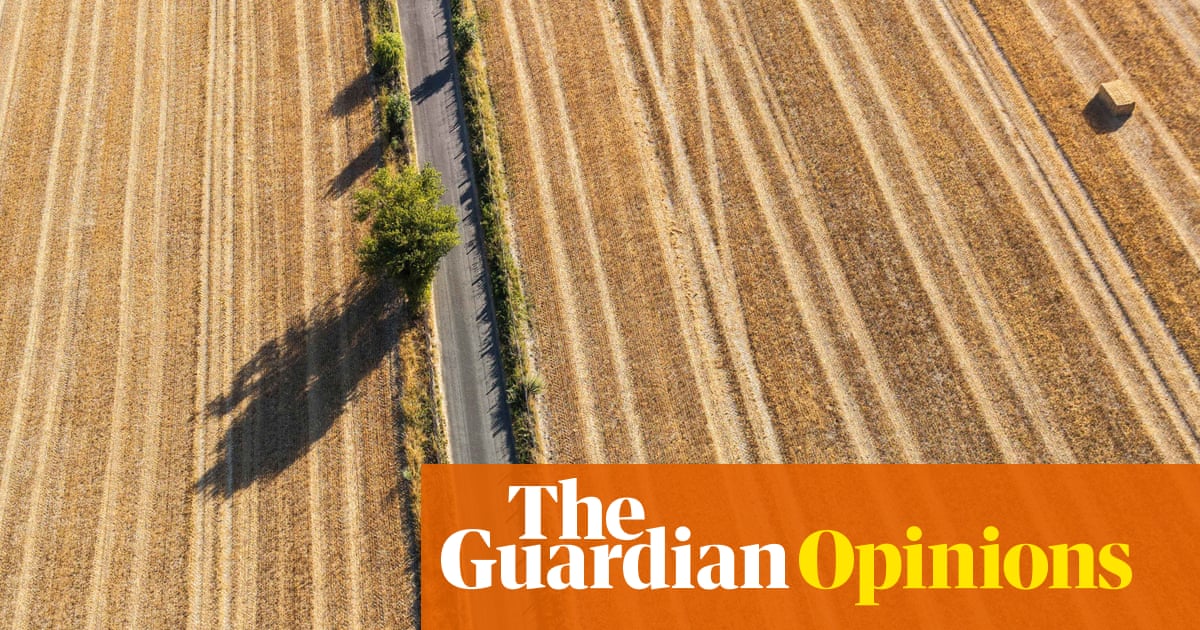
The current confluence of extreme weather events and geopolitical conflicts has exposed a profound vulnerability in Britain's food security, a situation the author attributes directly to government policy. While crop failures at home would typically be mitigated by global trade, this year presents a global problem, with similar impacts hitting farmers across Europe and the US, whose wheat production is forecast to be at its lowest since 1971. The systemic fragility of the global food structure, likened to the financial system's near-collapse in 2008, means that disruptions in one area can cascade rapidly, threatening widespread availability even in wealthy nations.
Strait of Hormuz
Geopolitical tensions, specifically Donald Trump's "aimless war with Iran," have significantly impacted crucial global trade routes, exacerbating the food security crisis. Major reductions in shipping through the Strait of Hormuz, the Red Sea, and the Suez Canal have occurred, disrupting the flow of essential goods. These waterways are vital for the transport of fertilisers and, increasingly, food, especially with the Middle East emerging as a significant re-export hub.
The disruptions in these key maritime passages have forced a diversion of shipping traffic, notably through the Panama Canal. However, the Panama Canal itself is now suffering from drought, leading to restrictions on ships' draught. This interconnected series of failures demonstrates how global circulation, upon which modern food security depends, has become unreliable, creating a precarious situation for nations like the UK that rely heavily on international trade for their food supply.
1971
The article highlights that the US wheat production this year is forecast to be lower than at any point since 1971, underscoring the severity and global nature of the current agricultural crisis. This historical comparison illustrates the unprecedented scale of the challenges facing food production, extending beyond Britain's scorched fields to major global producers. The widespread impact suggests that traditional reliance on global trade to offset domestic shortfalls is no longer a reliable strategy.
Furthermore, Canada, initially expected to have excellent harvests, is now seeing its spring wheat shrivel due to hot and dry conditions. Even Ukraine, despite a good growing season, faces reduced export forecasts because of Russia's attacks on its ports. These simultaneous failures across major breadbaskets globally signify a systemic rather than localised problem, making the absence of strategic food reserves in importing nations particularly perilous.
National Preparedness Commission
The government's own security advisers have warned that Britain's food supply is "at strategic risk of catastrophic failure" by 2030, a report which the government reportedly suppressed. This internal assessment corroborates the external warnings about systemic fragility, indicating that the government is aware of the dire risks but has failed to act decisively. The National Preparedness Commission has pointed out that the UK's policy of relying on private retailers for food stocks, adopted in the late 1970s and early 1980s, coincided with retailers switching to a just-in-time logistics system, abandoning large warehouses.
This shift means the government's food-security assumptions are based on conditions that no longer exist, leaving the nation without a buffer against major disruptions. The author suggests this inaction stems from a political fear of being labelled "interventionist," prioritising ideological purity over national resilience. The government's current "intervention" is limited to a single, unpublicised paragraph on its website advising citizens to assemble an emergency kit, a measure deemed woefully inadequate given the scale of the potential crisis.
Key points
- Britain faces its most severe food security crisis in decades due to extreme weather, global conflicts, and systemic fragility in the global food supply.
- The UK government has abandoned strategic food reserves, relying instead on private retailers who operate on a just-in-time logistics model with minimal stockpiles.
- Geopolitical events, such as the war in Iran, are disrupting critical trade routes like the Strait of Hormuz, while climate change impacts the Panama Canal and global crop yields.
- Government security advisers have warned of a "catastrophic failure" risk by 2030, but the report was reportedly suppressed, and policy remains unchanged.
- The author suggests the government's inaction is driven by a fear of being labelled "interventionist," prioritizing political image over national resilience.
Should the government acknowledge the severity of the food security risks and reverse its policy on strategic reserves, implementing a robust national stockpile could significantly enhance resilience. Such a move would buy crucial time to rebuild the food system in the event of a major disruption, potentially averting a catastrophic societal collapse.
Without strategic food reserves, Britain faces an existential threat if the global food system collapses, a scenario the article warns could be the most deadly global crisis in modern history. The government's continued inaction, driven by ideological bias, leaves the nation highly vulnerable to cascading failures from climate change and geopolitical conflicts, with potentially unimaginable consequences.