Burnham to chair growth meeting call at No 10 North – UK politics live
Prime Minister Andy Burnham is chairing a 'growth situation room' meeting in Manchester today, alongside key ministers, as the UK government reported a larger-than-expected £1.8bn deficit in July.
Intelligence analysis by Gemini 2.5 Flash
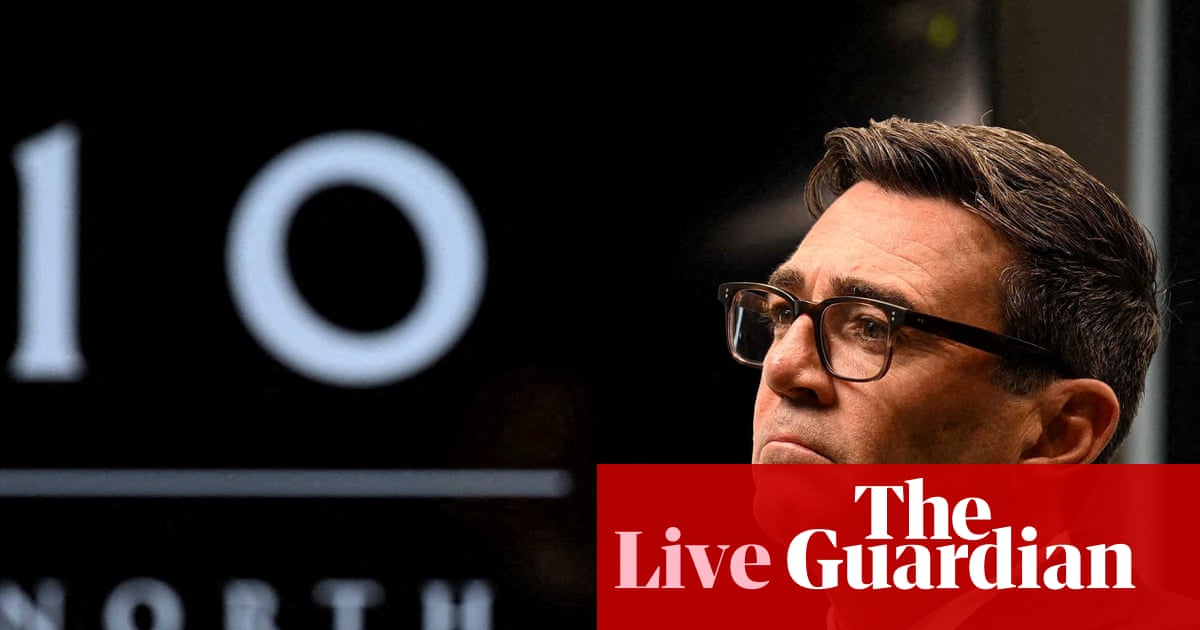
UK Prime Minister Andy Burnham is leading a high-level meeting at No 10 North in Manchester to address economic growth, joined by Chancellor John Healey and other senior cabinet members. This comes as the Office for National Statistics revealed a surprising £1.8bn government deficit for July, despite higher self-assessment tax receipts, highlighting ongoing fiscal challenges.
Imagine the grown-ups in charge of the UK are trying to make sure everyone has good jobs and enough money. Today, their leader, Andy Burnham, is having a big meeting to talk about how to make the country's money grow. This is important because, like when your piggy bank has less money than you thought, the government spent more than it earned last month. They also have to deal with other big problems, like people trying to cross the sea in small boats and making sure everyone is treated fairly.
Analysis
Prime Minister Andy Burnham's decision to chair a 'growth situation room' at No 10 North in Manchester signals a concentrated effort by the UK government to tackle economic challenges head-on. The meeting involves key figures such as Chancellor John Healey, First Secretary of State Lou Haigh, and Housing Secretary Angela Rayner, indicating a cross-departmental approach to economic strategy. This initiative underscores the government's commitment to regional development and decentralised governance, moving significant policy discussions outside London. The focus on growth comes at a critical time, as the UK navigates a complex global economic landscape.
£1.8bn Deficit
The unexpected £1.8bn government deficit in July presents a significant fiscal hurdle for Chancellor John Healey as he prepares his first budget. City economists had anticipated a zero shortfall for the month, making the reported deficit a cause for concern. While self-assessment tax payments in July were £1.7bn higher than the previous year, overall spending growth outpaced receipts, according to the Office for National Statistics. This financial performance highlights the persistent pressure on public finances, with the cumulative deficit for the first four months of the financial year standing at £56.7bn, exceeding the Office for Budget Responsibility's forecast by £2.3bn. The deficit figures will undoubtedly influence future government spending decisions and economic policy.
French Police
In a separate but related development, footage has emerged showing French police clashing with individuals on a beach in northern France, attempting to intercept a dinghy bound for the UK. This incident underscores the ongoing challenges of irregular migration across the Channel and the intensified efforts by French authorities, supported by a new £660m UK-France deal, to prevent small boat crossings. The use of Pava spray and the slashing of the inflatable boat highlight the confrontational nature of these interceptions. Since the deal's signing in April, French authorities report preventing 185 'small boat crossing events,' indicating a significant increase in enforcement activities. This situation remains a contentious political issue between the UK and France, with humanitarian and security implications.
Key points
- Prime Minister Andy Burnham is chairing a 'growth situation room' meeting in Manchester with senior ministers.
- The UK government reported an unexpected £1.8bn deficit in July, despite higher self-assessment tax receipts.
- The cumulative deficit for the financial year is £56.7bn, exceeding forecasts by £2.3bn.
- Footage shows French police clashing with migrants on a beach, attempting to intercept a dinghy bound for the UK.
- Equalities minister Bridget Phillipson warned that racism and sexism have become normalised in Britain, fueled by social media.
The government's proactive 'growth situation room' meeting, involving key ministers and regional mayors, suggests a concerted effort to stimulate the economy and address fiscal challenges. Despite the unexpected deficit, the cumulative shortfall for the financial year is lower than last year, indicating potential for improvement if the new growth strategies prove effective.
The larger-than-expected £1.8bn deficit in July signals persistent economic headwinds, potentially complicating the Chancellor's budget plans and leading to difficult spending choices. Furthermore, escalating social issues like racism and misogyny, alongside ongoing tensions over cross-Channel migration, could create further instability and divert government resources.