Burnham to give speech on social care as Louise Casey plays down cost concerns saying many families ‘already paying’ – UK politics live
Andy Burnham is set to deliver a speech on social care, aiming to build political consensus for reforms, while Louise Casey, leading the government's commission, downplays cost concerns by noting many families already bear the burden.
Intelligence analysis by Gemini 2.5 Flash
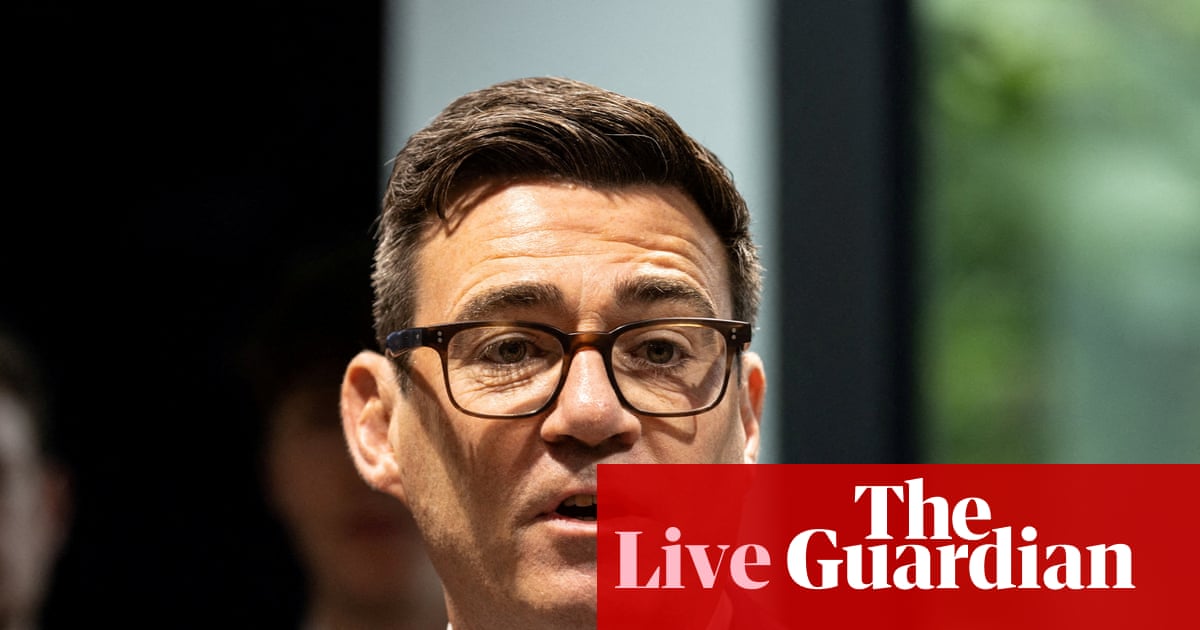
Andy Burnham is advocating for cross-party consensus on social care reform in England, emphasizing the need to move past political deadlock. Concurrently, Louise Casey, head of the government's social care commission, is launching a "Big Conversation" to gather public input and suggests a "mixed market" for provision, though she strongly opposes private companies "profiteering out of …
Imagine grown-ups are trying to figure out how to help older people and those who need extra help, like when they get sick. A man named Andy wants all the grown-ups from different teams to work together to find a fair way to pay for it, because right now, it's really hard for many families. Another lady, Louise, says it won't be as expensive as some think because lots of families are already paying a lot. They also want to make sure no one is making too much money from people who are struggling.
Analysis
The Quest for Cross-Party Consensus
Andy Burnham is poised to deliver a significant speech on social care, aiming to foster a political consensus for much-needed reforms. For decades, this issue has been "kicked down the road" by successive governments, deemed "too risky, too difficult, and too complicated." Burnham's stated intention is to "find common ground and listen to others to find a way forward," emphasizing the human cost of political inaction on carers, families, and the NHS. This push for unity, however, faces immediate hurdles, as key opposition leaders Kemi Badenoch and Ed Davey will not attend the initial meeting in person, signaling the persistent challenge of bridging political divides on such a complex issue.
Redefining the Role of Private Care
A central point of contention in the social care debate revolves around the involvement of private providers. The Times reports that the Prime Minister is reluctant to allow large private sector firms to operate the new service for profit, preferring a model based on "community-led services run by charities, local authorities and not-for-profit companies." Louise Casey, leading the government's commission on social care, supports a "mixed market" but strongly objects to "profiteering out of human misery and human life." Liberal Democrat leader Ed Davey echoes this sentiment, acknowledging the role of private providers but criticizing instances where "ridiculous amounts of money" are made, suggesting a need for better regulation. This indicates a potential shift towards a more publicly-oriented or heavily regulated social care landscape.
The Broader Political Context
The ongoing discussions occur against a backdrop of long-standing systemic issues within England's social care system, which has been under immense strain. Louise Casey, a veteran Whitehall official, is spearheading a "Big Conversation on Care" to gather public views, underscoring the government's recognition of the need for comprehensive reform. While Burnham seeks consensus, the reported stance of the Prime Minister against large private sector involvement suggests a specific ideological direction for the reforms. The Green party leader Zack Polanski's unrelated controversy regarding a shared image further illustrates the fragmented and often contentious nature of the broader political discourse, even as efforts are made to unite on critical policy areas like social care. The success of Burnham's initiative will depend heavily on overcoming these entrenched political and ideological differences to forge a sustainable path forward.
Key points
- Andy Burnham is giving a speech advocating for cross-party consensus on social care reform in England.
- Louise Casey, leading the government's social care commission, believes there's "room for a mixed market" but opposes "profiteering."
- The Prime Minister reportedly wants to exclude large private sector providers from the new social care model.
- Opposition leaders Kemi Badenoch and Ed Davey will not attend Burnham's initial meeting in person, highlighting challenges to consensus.
- Casey is launching a "Big Conversation on Care" to gather public views on the future of adult social care.
If a genuine cross-party consensus can be achieved, as Andy Burnham hopes, it could lead to a stable, long-term solution for social care funding and provision, alleviating the burden on families and the NHS. Louise Casey's "Big Conversation" could ensure public input shapes a more equitable and effective system, potentially reducing "profiteering" while maintaining quality care.
The immediate challenges to achieving consensus, such as the absence of key opposition leaders from the initial meeting, suggest that political divisions may persist, delaying much-needed reforms. The strong opposition to "profiteering" from private providers, while understandable, could also deter investment or lead to a reduction in available care options if not carefully managed, potentially exacerbating existing capacity issues.