Rescue teams face ‘race against time’ in search for trapped survivors as death toll in Japan rises to at least 13 – live updates
A powerful earthquake in southern Japan has killed at least 13 people, prompting a desperate search for survivors amidst widespread devastation and an explosion at a shopping center.
Intelligence analysis by Gemini 2.5 Flash
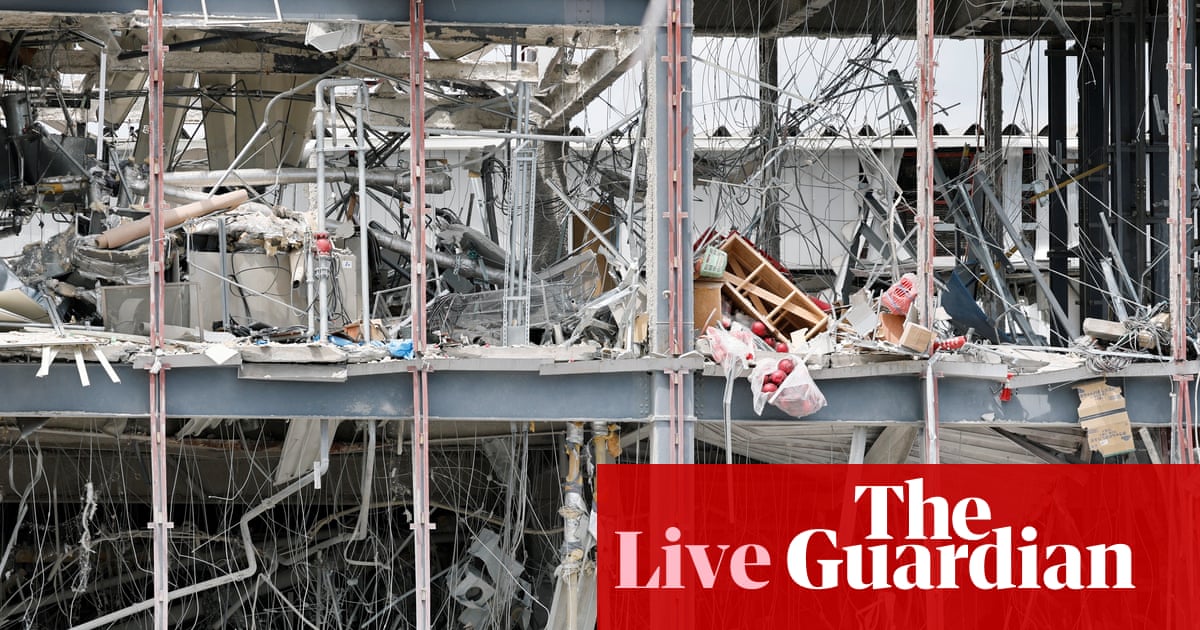
Emergency workers in Japan are engaged in a critical 'race against time' to locate and rescue individuals trapped after a magnitude 7.1 earthquake struck the Kumamoto area. The disaster has caused significant infrastructure damage, power outages, and an explosion at a shopping mall, with rising temperatures further complicating the challenging search efforts.
A really big earthquake hit Japan, making buildings fall down and causing an explosion at a big shopping mall. Grown-ups are working super fast to find people who might be stuck, but it's like a race because it's getting very hot outside. Many people also don't have electricity or gas, and some big car factories have stopped working for a few days.
Analysis
Immediate Aftermath and Urgent Rescue Efforts
The powerful earthquake, measured at magnitude 7.1 by Japan's meteorological agency and 6.8 by the US Geological Survey, struck the Kumamoto area on Japan's southern main island of Kyushu, leaving a trail of destruction. At least 13 people have been confirmed dead, with many more reported missing, as emergency teams navigate collapsed buildings and severely damaged roads.
Japanese Prime Minister Sanae Takaichi emphasized the urgency of the situation, stating that rescue workers face a "race against time" to reach those still trapped beneath rubble. The government has pledged to deploy all available resources to find and rescue as many people as possible, highlighting the critical window for survival in such disasters.
Compounding Challenges and Infrastructure Damage
The rescue operations are complicated by several factors, including an apparent explosion at the damaged Aeon Mall shopping center near Kumamoto, which occurred about an hour after the earthquake. Eight people were pulled from the mall's rubble, but four workers remain unaccounted for, with a gas smell detected inside the building prior to the blast. Additionally, seven people are missing from the Nippon Paper Industries factory after a chimney collapsed.
Beyond the immediate search, the region faces significant infrastructure challenges. Nearly 37,000 homes are without electricity, and 9,500 lack gas, while communication networks are disrupted in some areas. Over 9,000 people have been forced to evacuate their homes, seeking refuge in more than 500 shelters, further straining local resources. Adding to the difficulties, weather officials have warned of another hot day, with temperatures forecast to reach 35C in Kumamoto, posing a risk to both survivors and rescue personnel working outdoors.
Broader Societal and Economic Repercussions
The earthquake's impact extends beyond immediate casualties and structural damage, causing significant societal disruption. The large-scale displacement of residents and the widespread utility outages underscore the fragility of modern infrastructure in the face of severe natural events. The disruption to daily life is profound, with communities grappling with the aftermath and the long road to recovery.
Economically, the earthquake has already begun to affect key industries. Major automotive manufacturers Toyota and Honda have announced the suspension of operations at their factories in Kumamoto until Friday. This decision, driven by safety concerns and the need for repairs to quake-damaged facilities, illustrates the ripple effect of the disaster on Japan's industrial output and supply chains, even for a short period.
Key points
- At least 13 people have died following a powerful earthquake (magnitude 7.1) in Japan's Kumamoto area.
- Rescue teams are in a 'race against time' to find survivors trapped in rubble amidst widespread devastation.
- An explosion occurred at the damaged Aeon Mall shopping center, with four workers still unaccounted for.
- Nearly 37,000 homes are without electricity and 9,500 without gas, with over 9,000 people in shelters.
- Toyota and Honda have suspended factory operations in Kumamoto until Friday due to the quake's impact.
- High temperatures, forecast to reach 35C in Kumamoto, are adding to the challenges for rescue and recovery efforts.
Despite the severe challenges, rescue efforts are actively ongoing, with reports of people being successfully pulled from the rubble, offering hope for more survivors. The prime minister's strong commitment to an all-out rescue effort suggests a coordinated and determined response to mitigate further loss of life.
The 'race against time' indicates that chances of finding survivors diminish rapidly, especially with the added complication of high temperatures. The widespread damage, utility outages, and the explosion at the mall suggest a complex and dangerous environment for rescue workers, potentially leading to a higher death toll and prolonged recovery.