Can Iran's Islamic Republic Have a Leader in Absentia?
Iran's new leader, Ebrahim Raisi, has been absent from public view for over four months, sparking speculation about his health and the future of the Islamic Republic.
Intelligence analysis by Llama
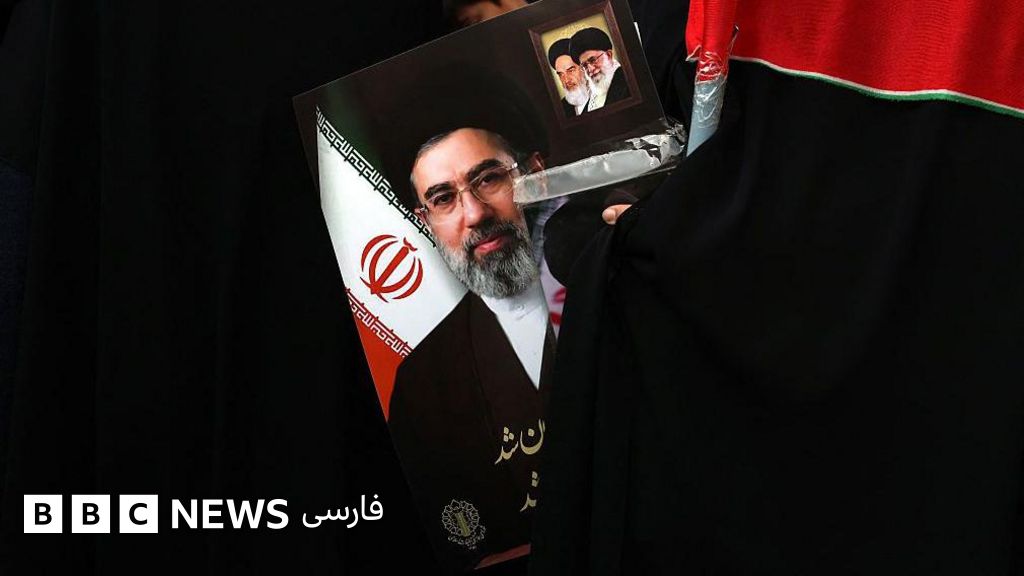
The absence of Iran's new leader, Ebrahim Raisi, has sparked speculation about his health and the future of the Islamic Republic. Some have compared his absence to the Ghaybat of the 12th Imam, while others have questioned the legitimacy of a leader who is not visible to the public.
Imagine a country where the leader is not visible to the public. This is what is happening in Iran with the new leader, Ebrahim Raisi. Some people are comparing his absence to the Ghaybat of the 12th Imam, a concept in Shia Islam where the leader is absent but still guides the community. But others are questioning the legitimacy of a leader who is not visible to the public. This is a big deal because it affects the country's politics, economy, and society.
Analysis
The Ghaybat of Ebrahim Raisi: A New Era of Absence in Iran's Politics?
The absence of Iran's new leader, Ebrahim Raisi, has sparked widespread speculation about his health and the future of the Islamic Republic. Some have compared his absence to the Ghaybat of the 12th Imam, while others have questioned the legitimacy of a leader who is not visible to the public.
The concept of Ghaybat has been a cornerstone of Shia Islam for centuries, and its significance has only grown in recent years. In the 47 years since the Islamic Revolution, the idea of Ghaybat has been used to justify the absence of leaders and the continuation of the Islamic Republic.
However, the current situation is different. Ebrahim Raisi's absence has sparked concerns about the legitimacy of the Islamic Republic and the future of its leaders. Some have questioned whether a leader who is not visible to the public can truly be considered a leader.
The concept of Ghaybat has been used to justify the absence of leaders and the continuation of the Islamic Republic. However, the current situation is different. Ebrahim Raisi's absence has sparked concerns about the legitimacy of the Islamic Republic and the future of its leaders.
The Role of the Clergy in the Era of Ghaybat
The absence of the 12th Imam has led to the rise of the clergy as the leaders of the Shia community. The clergy have played a crucial role in interpreting the teachings of the Prophet Muhammad and the Imams, and have been responsible for guiding the community during times of uncertainty.
In the era of Ghaybat, the clergy have taken on an even more significant role. They have been responsible for interpreting the teachings of the Prophet Muhammad and the Imams, and have been responsible for guiding the community during times of uncertainty.
The Future of the Islamic Republic
The absence of Ebrahim Raisi has significant implications for the future of the Islamic Republic. It has sparked concerns about the legitimacy of the Islamic Republic and the future of its leaders.
The Islamic Republic has been based on the idea of Ghaybat, but the current situation is different. Ebrahim Raisi's absence has sparked concerns about the legitimacy of the Islamic Republic and the future of its leaders.
Conclusion
The absence of Ebrahim Raisi has sparked widespread speculation about his health and the future of the Islamic Republic. The concept of Ghaybat has been used to justify the absence of leaders and the continuation of the Islamic Republic, but the current situation is different. The Islamic Republic has been based on the idea of Ghaybat, but the current situation is different. Ebrahim Raisi's absence has sparked concerns about the legitimacy of the Islamic Republic and the future of its leaders.
Key points
- Ebrahim Raisi's absence has sparked widespread speculation about his health and the future of the Islamic Republic.
- The concept of Ghaybat has been used to justify the absence of leaders and the continuation of the Islamic Republic.
- The clergy have taken on a more significant role in guiding the community during times of uncertainty.
- The future of the Islamic Republic is uncertain, and it is unclear what the consequences of Ebrahim Raisi's absence will be.
If Ebrahim Raisi's absence continues, it could lead to a more transparent and accountable government. The clergy may take on a more significant role in guiding the community, which could lead to a more stable and secure future for Iran.
If Ebrahim Raisi's absence continues, it could lead to a power vacuum and instability in Iran. The clergy may take on a more significant role, but this could also lead to a more authoritarian government. The future of the Islamic Republic is uncertain, and it is unclear what the consequences of Ebrahim Raisi's absence will be.