Can Japan avoid a Liz Truss-style shock as its PM embarks on a giant spending spree?
Japan's Prime Minister Sanae Takaichi plans to inject £1.7tn into 17 industrial sectors by 2040, but investors fear a Liz Truss-style economic shock. The government's debt-to-GDP ratio has risen to 230% and the stock market has reacted negatively to the proposals.
Intelligence analysis by Llama
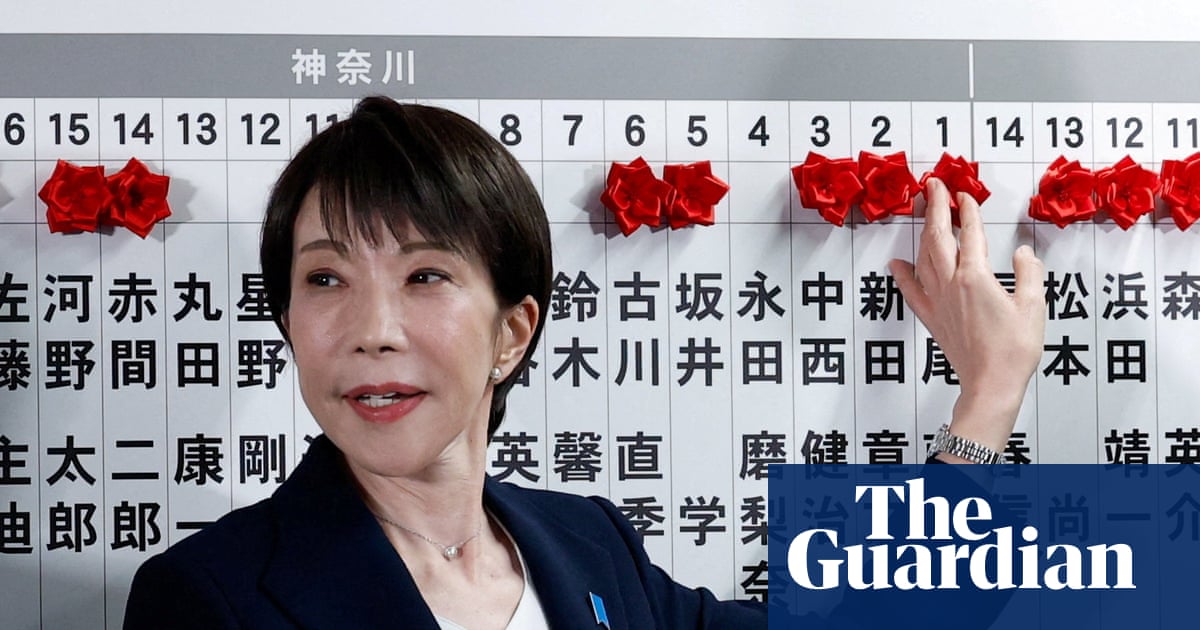
Japan's Prime Minister Sanae Takaichi plans to invest £1.7tn in 17 sectors, but investors fear a Liz Truss-style economic shock due to the country's high debt-to-GDP ratio and the lack of detail on how the investment will be financed.
Imagine Japan's economy is a big car that needs to go fast. The government wants to put a super-powerful engine in the car to make it go even faster. But the problem is, the car's brakes are not strong enough to stop it when it gets too fast. This is like what's happening in Japan's economy. The government wants to spend a lot of money to make the economy grow, but it's not sure how to control the growth and make sure it doesn't get too out of control.
Analysis
A $60B Vote of Confidence
Sanae Takaichi's investment plan is a bold move to inject £1.7tn into 17 industrial sectors by 2040. The plan aims to lift the productive capacity of the economy, keep Japan at the forefront of the AI revolution, and free the economy from its increasing dependence on trade with China. However, many investors are fearful of a Liz Truss-style economic shock, similar to the market response to the short-lived British prime minister's plans for £45bn of unfunded tax cuts in September 2022.
The roots of Takaichi's frustration date back to the financial crisis of 1991, when Japan's property market bubble burst with spectacular effect. Tokyo had become the world's most expensive place to live following the country's export boom, but within months of the crash, banks behind much of the lending were bust. Before the turn of the century, a second slump brought more turmoil when some of Tokyo's largest financial institutions, unable to cope with the hangover of bad debts from the first crash, went under.
In the late 1980s, Japan's government debts were equal to about 60% of national income, or gross domestic product (GDP). By the end of the 1990s, and after much of the financial sector had been bailed out, the debt to GDP ratio was 130%. Since the 2008 global financial shock, the economy has stagnated. In response, the government has regularly spent 10% more than it receives in tax receipts – much of it to cope with a rapidly ageing population – and debts have continued rising. By 2020, the debt-to-GDP ratio had reached 260% before tighter budgets and a modest improvement in economic growth brought it below 230% in 2025.
Takaichi has said her investment plan will lift the productive capacity of the economy, keep Japan at the forefront of the AI revolution, and free the economy from its increasing dependence on trade with China. The stock market has reacted with a succession of downward steps ever since the proposals were unveiled in June, though the renewal of hostilities in the Middle East and the prospect of higher oil prices have not helped. Bank of Japan raises interest rates to 31-year high … of 1% Read more Many investors sold up almost as soon as the government arrived in office, hitting the shares of the country's biggest companies, among them Sony and Toyota Motor Corporation. Sony faces intense competition from rivals in South Korea and China while Toyota has stood out against all-electric cars, and now faces being crushed by a flourishing and highly subsidised Chinese car industry . Graph of Japanese interest rate rises from before 2024 and forecast beyond 2026 Domestic and international lenders have pushed up the interest rate on Japanese government bonds (JGBs) to 2.8% in recent months, the highest in 29 years. Waning international support for Japan's economic outlook has also hit the value of the yen. More recently it is Takaichi's boldness, which like Truss's is often characterised as recklessness, that has acted as a heavy weight on the currency, pushing it down to 163 to the US dollar, a four-decade low. Much of the blame for higher debt bills is connected to rising inflation, which has tracked upwards as the yen has fallen, largely because a low currency rate raises the price of imports of energy and raw materials. Although Japan's core inflation has remained below the BoJ's 2% target over the last four months, analysts a jump in the last quarter to the mid-2% range on higher oil prices following the Iran war. Kelvin Lam, an Asia specialist at the consultancy Pantheon Macroeconomics, has said what the financial markets really fear is the lack of detail about where the fresh investment money will come from. “As long as you don't say how you are going to finance your spending, you are on course for a Liz Truss moment,” he said, referring to the market response to the short-lived British prime minister's plans for £45bn of unfunded tax cuts in September 2022. “The markets were already worried about Japan's long term fiscal health and this plan hasn't helped.”
Key points
- Japan's Prime Minister Sanae Takaichi plans to inject £1.7tn into 17 industrial sectors by 2040.
- The plan aims to lift the productive capacity of the economy, keep Japan at the forefront of the AI revolution, and free the economy from its increasing dependence on trade with China.
- Many investors are fearful of a Liz Truss-style economic shock due to the country's high debt-to-GDP ratio and the lack of detail on how the investment will be financed.
- The stock market has reacted negatively to the proposals, with many investors selling up and the value of the yen falling to a four-decade low.
If Japan's investment plan is successful, it could lead to a significant increase in economic growth and a reduction in the country's dependence on trade with China. This could also lead to an increase in the value of the yen and a decrease in inflation.
However, if the plan is not well-executed, it could lead to a Liz Truss-style economic shock, with a significant increase in debt and a decrease in the value of the yen. This could also lead to higher inflation and a decrease in economic growth.