Can Mark Carney’s US-China juggling act keep Canada’s ‘primary relationship’ intact?
Mark Carney is trying to deepen Canada-China ties without weakening Canada’s core relationship with the US. The move comes as Trump pressures Ottawa and Beijing seeks economic cooperation.
Intelligence analysis by GPT-5.4 Mini
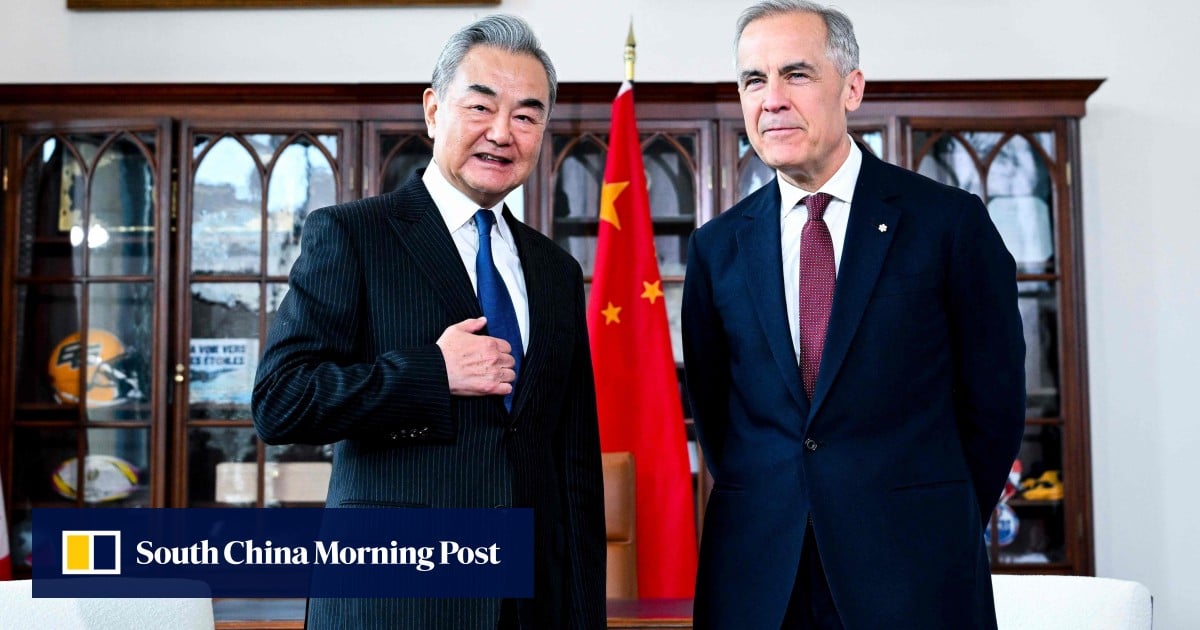
The piece says Carney is using a careful two-track approach: courting China on trade while reassuring Washington that the US remains Canada’s main partner. His meeting with Wang Yi, after a New York investment pitch, was meant to show balance.
Mark Carney is trying to keep two important friends happy at once: the United States and China. It is like trying to carry two buckets without spilling either one, while making sure Canada still has the biggest friendship with the US.
Analysis
A balancing act
The article describes Mark Carney’s effort to keep Canada’s relationship with the United States at the center of his foreign policy while still pursuing closer ties with China. When Chinese Foreign Minister Wang Yi visited Canada to help consolidate a new economic partnership, Carney was in New York seeking more than US$1 trillion in investment.
What the timing signaled
A Hong Kong-based China politics expert quoted in the piece said the timing looked deliberate, because it sent a message to Washington that engagement with Beijing would not come at the expense of Canada’s main relationship. Carney later met Wang after returning from New York, reinforcing the impression that Ottawa wants both channels open.
No simple trade-off
The article says Carney has looked for new trade partners since Donald Trump returned to the White House and again threatened to leave NATO and turn Canada into the 51st US state. Even so, Carney still treats the US as overwhelmingly important: during the New York trip, he said it still made up more than 70% of Canada’s trade.
A senior fellow quoted in the article said Carney does not view Canada-China and Canada-US relations as a zero-sum choice. The argument, as presented in the piece, is that China matters because of its role in the global economy and because Canada wants more autonomy and sovereignty.
The message from New York
In New York, Carney praised the mutual benefits of the Canada-US relationship and called for a “new partnership” that would help make America great again. The article frames that as part of the same balancing act: reassure Washington, keep Beijing engaged, and avoid forcing Canada to choose one partner over the other.
Key points
- Carney is trying to deepen ties with China without weakening Canada’s main relationship with the US.
- Wang Yi’s visit to Canada and Carney’s trip to New York happened at the same time, which the article says was likely not accidental.
- The article says Carney still sees the US as dominant in Canada’s trade, accounting for more than 70% by his own remark.
- Quoted experts say Carney treats China and the US as complementary relationships, not a trade-off.
- Trump’s return to the White House has pushed Canada to look for additional trade partners.
If Carney’s approach works, Canada could open more doors with China while keeping trust with Washington. That could give Ottawa more trade options and a stronger hand when dealing with both powers.
If Washington reads Canada’s China outreach as a sign of drift, the balancing act could backfire. The effort could also fail if promised economic gains from China do not materialize, leaving Canada exposed to pressure from both sides.