Can the US and its allies break China’s grip on rare earths and AI technology?
A senior US official discusses America’s efforts to rally its allies and cut dependence on China by securing alternative rare earth and critical mineral supply chains.
Intelligence analysis by Llama
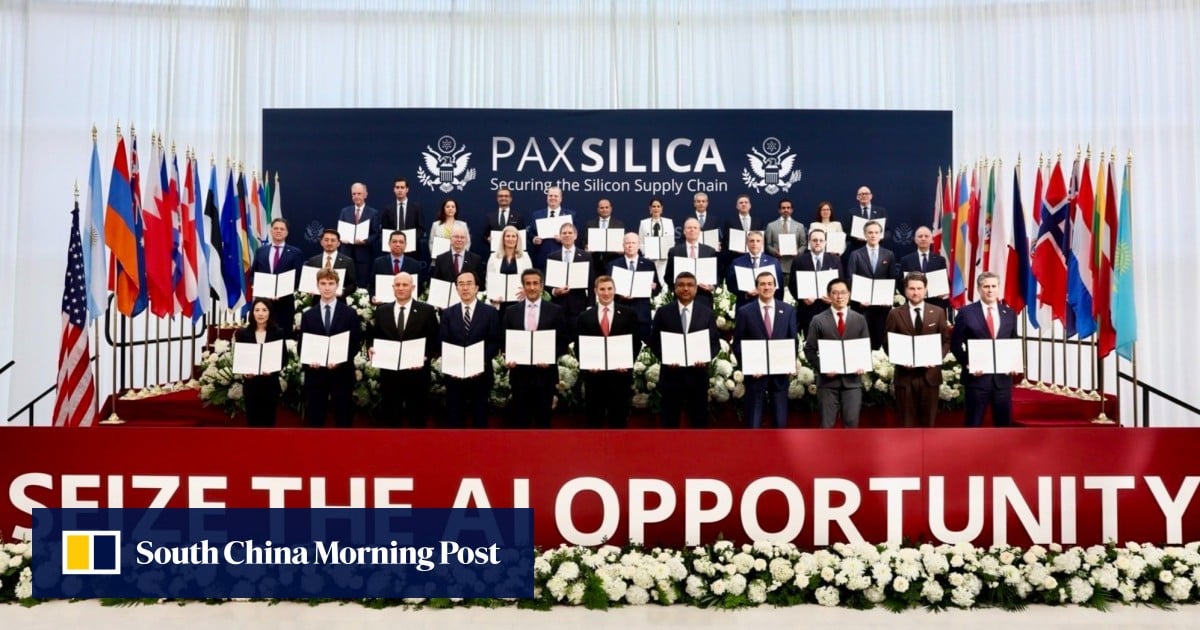
The US is working to rally its allies to cut dependence on China for critical minerals, following China’s export controls on rare earth elements that have caused supply imbalances and factory shutdowns across the developed world.
Imagine you're building a big Lego castle, and you need a special kind of Lego brick that only comes from one place. If that place runs out of the bricks, you'll have to find a new way to get them. That's what's happening with a special kind of metal called rare earths, which are used in lots of important things like electric cars and wind turbines. China has been controlling how much of this metal it sells to other countries, which has caused problems for countries like Japan and the US. The US is trying to find new ways to get this metal, so it doesn't have to rely on China.
Analysis
A Whole-of-Supply-Chain Strategy is Needed
The US is taking a whole-of-supply-chain approach to reduce its dependence on China for critical minerals, according to Jacob Helberg, US undersecretary of state for economic affairs. This includes rallying its allies to secure alternative rare earth and critical mineral supply chains. Helberg cited Japan and European countries as among those adversely affected by China’s export controls on seven rare earth elements imposed in April last year in response to US tariffs. Beijing’s restrictions set off a scramble for supplies and led to factory shutdowns across the developed world, including in the United States. While a temporary US-China truce in October resumed the flow of exports, countries such as Japan have continued to face shortages.
Why China’s Export Controls Matter
China’s export controls on rare earth elements have caused significant disruptions to global supply chains. The restrictions have led to factory shutdowns and shortages of critical minerals, including neodymium, dysprosium, and praseodymium. These elements are essential for the production of advanced technologies, including electric vehicles, wind turbines, and electronics. The US is concerned that China’s export controls will give it a strategic advantage in the development of these technologies.
The Road Ahead
The US is working to develop alternative supply chains for critical minerals, including rare earth elements. This includes investing in domestic production, as well as partnering with other countries to secure alternative sources of supply. The US is also working to improve its own recycling and reprocessing capabilities for rare earth elements, in order to reduce its dependence on primary production. By taking a whole-of-supply-chain approach, the US aims to reduce its dependence on China and ensure a stable and secure supply of critical minerals.
Key points
- The US is working to reduce its dependence on China for critical minerals, including rare earth elements.
- China's export controls on rare earth elements have caused significant disruptions to global supply chains.
- The US is investing in domestic production and partnering with other countries to secure alternative sources of supply.
- The US is also working to improve its own recycling and reprocessing capabilities for rare earth elements.
If the US is successful in developing alternative supply chains for critical minerals, it could reduce its dependence on China and ensure a stable and secure supply of these essential materials. This could also create new economic opportunities for the US and its allies, as they invest in domestic production and recycling capabilities.
If the US is unable to develop alternative supply chains for critical minerals, it could lead to a prolonged period of dependence on China, which could give China a strategic advantage in the development of advanced technologies. This could also have negative economic consequences for the US and its allies, as they struggle to access the critical materials they need.