Carney's counterattack: Canada's America problem could be India's opening
An opinion piece arguing that as Canada faces 50% US tariffs on $28 billion of goods, India is well placed to become a preferred trade partner supplying commodities Canada needs while absorbing Canadian exports.
Intelligence analysis by Llama
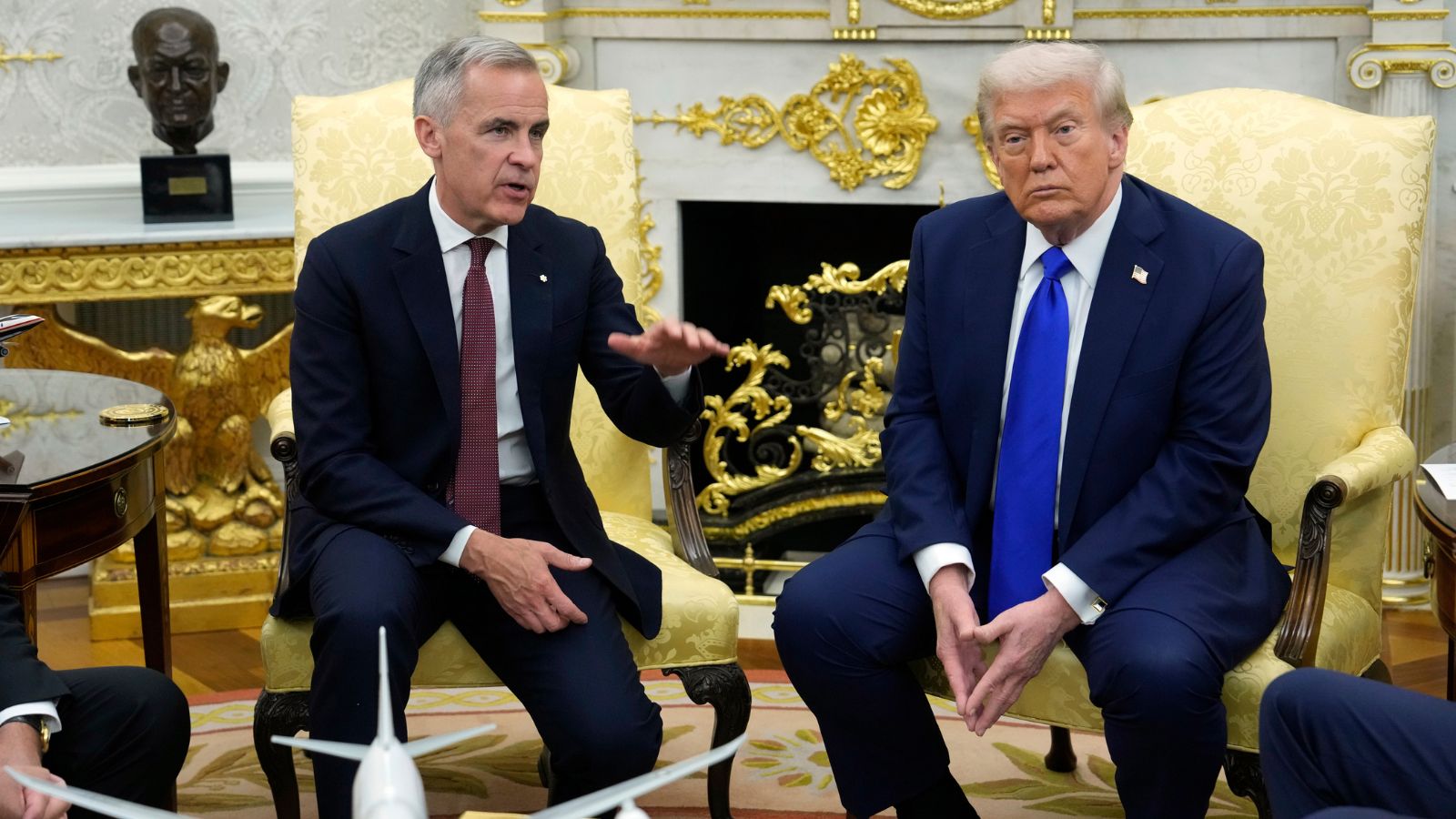
Canadian PM Carney's middle-power framing at Davos resonates with India, which has lived through similar tariff exposure. With 50% US tariffs hitting Canadian goods and Ottawa pivoting toward non-US markets, the article argues India and Canada have complementary trade baskets — uranium, potash, LNG, pension capital on one side; a large growing market on the other.
Imagine two kids on a playground: one big kid keeps grabbing the smaller kids' lunch money. The smaller kids (Canada and India) are now teaming up to share snacks with each other instead, so the big kid can't take as much. That's basically the idea — when America slaps high taxes on Canadian stuff, Canada looks to India, and India is ready to trade.
Analysis
The $28 billion that changed overnight
At one minute past midnight on August 22, 50 per cent American tariffs landed on roughly $28 billion of Canadian goods, and Ottawa recalled its negotiators. The list, according to the article, went well beyond provincial irritants like alcohol bans and dairy quotas: wine, lumber, clothing, furniture, and hockey sticks that had been duty-free under CUSMA were swept in. Less than two hours before the deadline, Trump paused for three days and announced a deal; three days of talks later, the deal collapsed because of late changes to Washington's terms, and Canada scheduled matching counter-tariffs for September 8. The interim experience closely mirrors what India has already lived through — staged deals, then escalation, then a forced-labour surcharge — and that symmetry is the column's core argument. When the same playbook reaches a G7 economy, middle powers that read each other's playbooks gain bargaining weight.
Kananaskis, Johannesburg, New Delhi
The diplomatic repair between India and Canada is treated as the structural precondition for the trade opening. After three years of stalemate over the Nijjar affair, the relationship was rebuilt in stages: at Kananaskis, in Johannesburg, and then in New Delhi in March, where, per the article, the two sides signed terms of reference. That sequencing matters because trade diversification requires political trust before market access can be negotiated. Carney's Davos call for middle-power coordination, the article notes, was heard attentively in New Delhi precisely because India had run out of patience with tariff whiplash. The EU deal concluded in January is held up as evidence that New Delhi can move quickly when the political cover exists; a Canada deal, in this reading, becomes easier to imagine once both governments have something to point to besides shared grievance.
Buy Canadian and the liquor shelves
The most grounded data point in the piece is the consumer-led pivot already underway in Canada. The Bank of Canada's own research, the article reports, finds a visible Buy Canadian shift in grocery and travel data, with eight in 10 Canadians still believing the boycott strengthens Ottawa's negotiating hand. The most legible symbol is liquor: American beer, wine and spirits are ultimately corn, barley and grapes, and Canada was, in 2024, the largest market for US wine exports. The author flags an underappreciated agricultural arithmetic — Canadian producers, processors, and retailers are absorbing displaced American supply lines, and India sits on the other side of that displacement with commodity surpluses and a fast-growing import bill. Where Ottawa wants to double non-US exports by 2035 and has already struck an arrangement with China in January, the column argues India is the natural anchor of any Indo-Pacific pivot.
Key points
- 50% US tariffs on roughly $28 billion of Canadian goods took effect on August 22, with Canadian counter-tariffs scheduled for September 8.
- Carney's Davos speech framed middle powers as needing to coordinate against large powers converting economic integration into leverage, a framing New Delhi readily recognised.
- India and Canada have rebuilt ties after the Nijjar stalemate through meetings at Kananaskis, Johannesburg and New Delhi in March, where terms of reference were signed.
- Canada was the largest market for US wine exports in 2024, and the Buy Canadian shift is now visible in grocery and travel data, per Bank of Canada research.
- Ottawa has set a goal of doubling non-US exports by 2035, struck a trade arrangement with China in January, and is sending its PM to the Middle East and Asia — India is presented as the natural anchor of that pivot.
If the post-Nijjar diplomatic repair holds, a Canada-India trade package covering uranium, potash, LNG and pension capital could be negotiated alongside the Indo-Pacific diversification push, giving New Delhi a tariff-insulated market and Canada a non-US destination for goods that have lost CUSMA privilege.
The same diversification logic runs in reverse: Canada already has a January trade arrangement with China and is courting the Middle East and Asia broadly, meaning India could end up competing with other suitors rather than anchoring the pivot. There is also a real risk that Trump's tariff theatre, which the article suggests is partly a midterm distraction, fades and the CUSMA status quo is restored, leaving the India opening under-exploited.