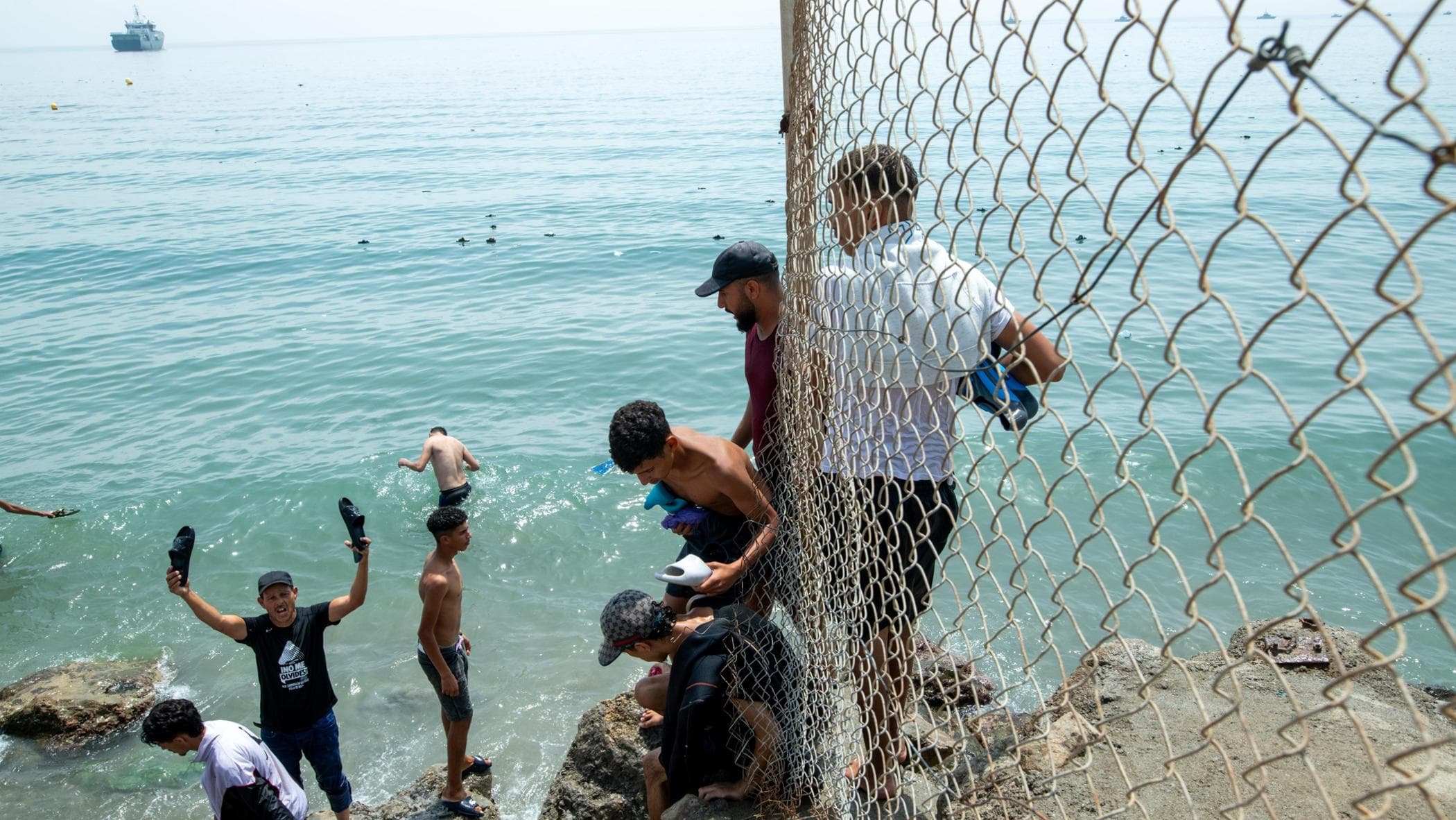
Ceuta crisis: 22 EU leaders gang up against Spain’s Sánchez over his migration policy
Twenty-two EU leaders have taken aim at Spanish Prime Minister Pedro Sánchez's migration policies, accusing him of undermining the security of the bloc's borders. The leaders, including German Chancellor Friedrich Merz and Italian Prime Minister Giorgia Meloni, have raise…
Intelligence analysis by Llama
Twenty-two EU leaders have criticized Spanish Prime Minister Pedro Sánchez's migration policies, accusing him of undermining the security of the bloc's borders. The leaders have raised concerns over the threat to the EU's frontier and the regularization of unauthorized migrants.
Imagine you're trying to build a big wall to keep out unwanted visitors. But some of the visitors are already inside, and you're not sure how to get them out. That's kind of what's happening in the EU right now. Some countries are saying that Spain is not doing enough to keep out migrants, and that's causing a big argument. It's like a big game of 'who's to blame' – but in the end, it's the migrants who are getting hurt.
Analysis
A Crisis in the Making
The recent influx of unauthorized migrants into the Spanish exclave of Ceuta has sparked a heated debate among EU leaders. The sudden arrival of some 50,000 migrants from Morocco has put a strain on the EU's external borders and has raised concerns about the security of the bloc's frontier. The 22 EU leaders who signed the letter to European Commission President Ursula von der Leyen, European Council President António Costa, and Irish Prime Minister Micheál Martin have made it clear that they will not tolerate uncontrolled mass crossings and the instrumentalization of migration.
The letter, which was drafted by Rome and Copenhagen, highlights the need for EU-level cooperation on policies such as Madrid's migrant regularization scheme. The leaders have accused Sánchez of creating a 'pull factor' that fueled the crisis by granting legal status to up to 1.2 million unauthorized migrants. They have also called for a video conference of interior ministers to agree on next steps.
Sánchez has hit back at his European counterparts, accusing them of responding in a 'selfish' and 'unlawful' manner to the crisis. He has defended himself from accusations that Spain was failing to protect the EU's external borders, citing data showing that his country had recorded half as many illegal entries as Italy between 2021 and 2026. He has also stressed that it was not the first time that migrants had been weaponized against the bloc's members, recalling Belarus' 2021 bid to sow chaos in the EU by facilitating migrant crossings into Poland and several Baltic countries.
The growing tension between Sánchez and the EU leaders highlights the complexities of the migration issue. While the EU leaders are concerned about the security of the bloc's borders, Sánchez is committed to protecting the rights of migrants and promoting a more humane approach to migration. The crisis in Ceuta has exposed the weaknesses in the EU's external borders and the need for cooperation on migration policies. It remains to be seen how the situation will unfold and what consequences the EU leaders' criticism will have for Sánchez and his government.
Key points
- Twenty-two EU leaders have criticized Spanish Prime Minister Pedro Sánchez's migration policies.
- The leaders have raised concerns over the threat to the EU's frontier and the regularization of unauthorized migrants.
- Sánchez has defended himself from accusations that Spain was failing to protect the EU's external borders.
- The crisis in Ceuta has exposed the weaknesses in the EU's external borders and the need for cooperation on migration policies.
If the EU leaders can find a way to work together and agree on a common approach to migration, it could lead to a more secure and stable border. This could also lead to a more humane approach to migration, where migrants are treated with dignity and respect.
If the EU leaders continue to argue and blame each other, it could lead to a breakdown in cooperation and a more fragmented approach to migration. This could lead to a more insecure and unstable border, and could also lead to a rise in xenophobia and nationalism.