Chantal Mouffe’s “The Democratic Paradox” available in Persian
The Persian translation of Chantal Mouffe’s book, “The Democratic Paradox,” has been released in bookstores across Iran. The book offers further discussion of the concept of radical democracy that Mouffe explored in her previous work, Hegemony and Socialist Strategy.
Intelligence analysis by Llama
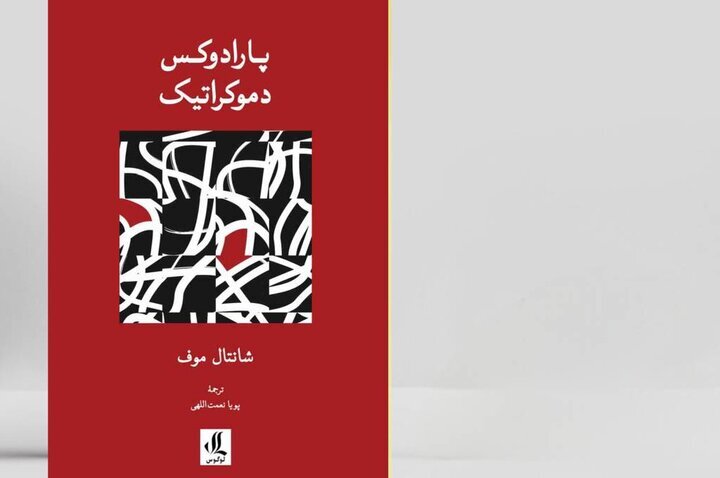
The Persian translation of Chantal Mouffe’s book, “The Democratic Paradox,” has been released in Iran. The book explores the concept of radical democracy and its internal conflicts within modern liberal democracy.
Chantal Mouffe’s book, “The Democratic Paradox,” is about how democracy works in countries with different ideas about how to make decisions. Mouffe thinks that democracy should allow people to disagree and fight for their ideas, but also respect the right of others to have different opinions. This is called radical democracy, and it’s a new way of thinking about how to make decisions in a country.
Analysis
A New Perspective on Democracy in Iran
The release of Chantal Mouffe’s book, “The Democratic Paradox,” in Persian is a significant event for Iranian readers interested in political theory and democracy. The book offers a new perspective on the concept of radical democracy and its implications for modern liberal democracy.
Mouffe’s work explores the internal conflicts within modern liberal democracy, which are created by the union of two separate strands of political thought: the tradition of classical liberalism and the tradition of democratic theory. This paradox is central to Mouffe’s argument, and she sees radical democracy as a means for continuing to sustain the balance between the values of liberalism and democracy.
The book is a collection of essays that offer further discussion of the concept of radical democracy that Mouffe explored in her previous work, Hegemony and Socialist Strategy. In this collection, Mouffe deals with the specific conflicts between the post-Marxist democratic theory that she and Laclau theorized in Hegemony and Socialist Strategy and the competing democratic theories proposed by Jürgen Habermas and John Rawls.
Mouffe’s argument is that radical democracy requires the availability of a choice between real alternatives. This means that opponents in a democratic process should treat each other not as enemies to be destroyed, but as adversaries who will fight for the victory of their position while recognizing the right of their opponents to fight for theirs.
The release of Mouffe’s book in Persian is significant because it provides a new perspective on the concept of radical democracy and its implications for modern liberal democracy. It is a valuable resource for Iranian readers interested in political theory and democracy, and it offers a new way of thinking about the challenges and opportunities of democratic politics in Iran.
Key points
- Chantal Mouffe’s book, “The Democratic Paradox,” has been released in Persian in Iran.
- The book explores the concept of radical democracy and its implications for modern liberal democracy.
- Mouffe argues that radical democracy requires the availability of a choice between real alternatives.
- The release of Mouffe’s book in Persian is significant for Iranian readers interested in political theory and democracy.
The release of Chantal Mouffe’s book in Persian could lead to a greater understanding of radical democracy and its implications for modern liberal democracy in Iran. This could lead to a more nuanced and informed discussion of democratic politics in Iran, and potentially even to the development of new democratic institutions and practices.
However, the release of Mouffe’s book in Persian may also be met with resistance from those who are opposed to the idea of radical democracy. This could lead to a backlash against the book and its ideas, and potentially even to the suppression of dissenting voices in Iran.