China censors public mourning as it holds former premier's funeral
China held a low-key funeral for former Premier Zhu Rongji, a key economic reformer, amidst state efforts to censor public mourning that could be seen as criticism of the current government.
Intelligence analysis by Gemini 2.5 Flash
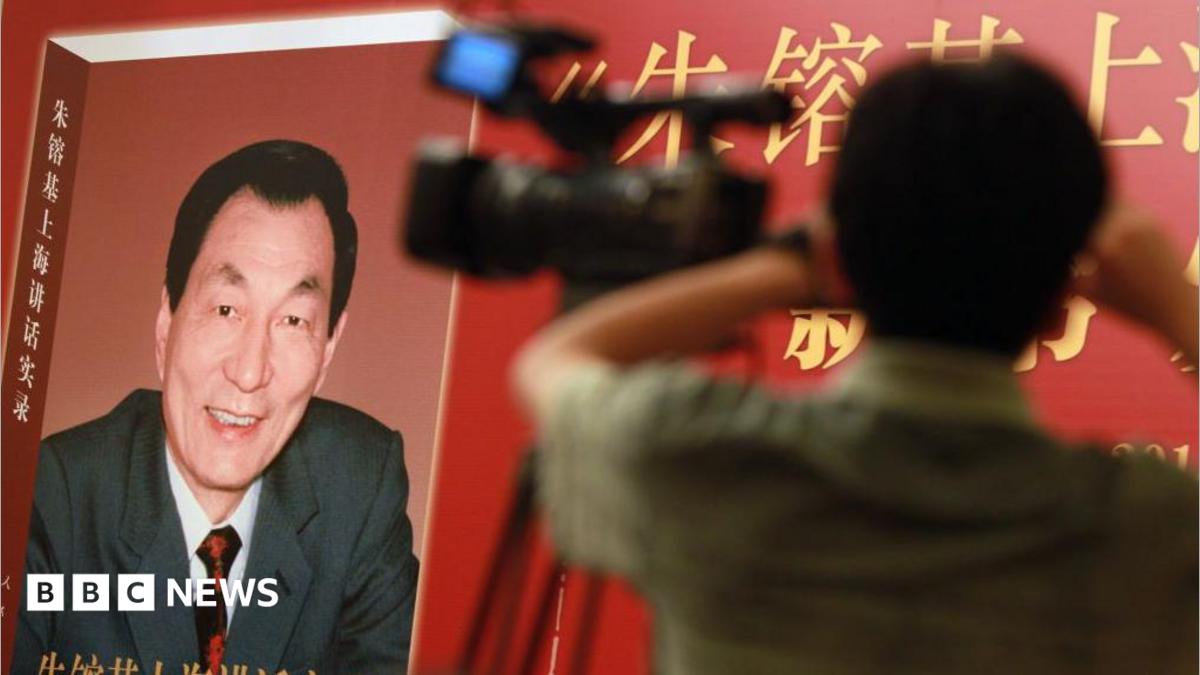
The death of former Chinese Premier Zhu Rongji, known for his economic reforms and candid style, has prompted a wave of nostalgia among some Chinese citizens for a more open era. However, the state is carefully managing public mourning, censoring online discussions to prevent comparisons that might implicitly criticize President Xi Jinping's current leadership and policies.
Imagine a very important leader in China, Zhu Rongji, who helped make the country's economy grow a lot and let people have a bit more freedom. When he passed away, many people felt sad and remembered those times. But the current government doesn't want people to talk too much about the past, especially if it makes them think the old ways were better than today's rules. So, they quietly held his funeral and made sure not too many people could share their feelings online, like trying to keep a lid on a bubbling pot.
Analysis
Zhu Rongji's Economic Legacy
Zhu Rongji, who served as China's premier from 1998 to 2003, is widely remembered as one of the country's most pivotal economic reformers. His tenure, alongside President Jiang Zemin, was characterized by a period of rapid economic growth and significant integration into the global economy. During this time, China undertook challenging structural adjustments, including the closure of unprofitable state-owned enterprises and the overhaul of the old housing system in favor of a commercial property market. These reforms were instrumental in navigating the Asian financial crisis of the late 1990s and culminated in China's landmark entry into the World Trade Organization in 2001.
Beyond his policy achievements, Zhu Rongji, much like Jiang Zemin, was known for a distinctive, candid style that resonated with the Chinese public. He was unafraid to use blunt language, famously labeling rogue bankers as "half-wits" and criticizing shoddy infrastructure. His deadpan humor, exemplified by his response to allegations of Chinese political donations to the US, showcased a directness that stands in stark contrast to the carefully choreographed public image of current leaders. This "common touch" and willingness to "tell the truth" fostered a sense of connection with the populace, contributing to the nostalgia many now feel for that era.
Public Mourning and Censorship
The Chinese state's management of Zhu Rongji's death reflects a deep-seated apprehension regarding public expressions of grief for prominent figures. Historically, such outpourings have morphed into significant political protests, as seen with the deaths of former Premier Zhou Enlai in 1976 and former CCP General Secretary Hu Yaobang in 1989. This historical precedent makes the current leadership wary that public mourning for Zhu's reformist era could easily transform into veiled criticisms of President Xi Jinping's administration.
Consequently, the state has implemented measures to contain and censor online discussions surrounding Zhu's passing. An essay by economist Zhao Jian, which nostalgically recalled Zhu's era as a time when people were "properly poor but saw a clear future ahead" and could "say what they really thought," was swiftly removed from WeChat. This swift censorship underscores the government's determination to control the narrative and prevent any comparisons that might implicitly challenge the legitimacy or direction of the current leadership. The funeral itself was kept low-key, with no footage released, further indicating a desire to minimize public attention and potential for collective sentiment.
Xi Jinping's Narrative
The passing of both Zhu Rongji and Jiang Zemin marks a symbolic end to the era of breakneck reforms and an emphasis on private entrepreneurship that defined the 1990s and early 2000s. This period stands in stark contrast to the current direction under President Xi Jinping, who has consolidated greater central control and championed a state-driven economic policy focused on technological autonomy and strategic industries. Xi's approach prioritizes stability and party authority, often at the expense of the more open and market-oriented policies of his predecessors.
In a recent 40-minute speech commemorating Jiang Zemin, Xi Jinping explicitly called on the Communist Party to "carry forward Jiang's legacy," framing the current leadership as a direct continuation of his political and ideological project. However, this narrative carefully selects aspects of Jiang's legacy that align with Xi's vision, particularly emphasizing vigilance against "potential dangers" and the need for an "indomitable fighting spirit" to meet "major tests posed by high winds and rushing waters, or even by raging storms." This rhetoric reinforces Xi's emphasis on national strength and resilience under centralized party leadership, subtly distancing the present from the more liberalizing aspects of the Zhu-Jiang era while still claiming historical continuity.
Key points
- Former Chinese Premier Zhu Rongji, a key economic reformer, died at 97 and was cremated in a low-key funeral attended by senior leaders.
- The Chinese state is wary that public mourning for Zhu's reformist era could turn into veiled criticisms of President Xi Jinping's current government.
- Online posts and an essay by economist Zhao Jian, which praised Zhu's era, were censored.
- Historically, deaths of senior officials like Zhou Enlai and Hu Yaobang led to widespread protests, making the party cautious.
- Zhu's era, alongside Jiang Zemin, was marked by rapid economic growth, painful reforms, and a candid leadership style that contrasts with Xi's centralized control.
The government's tight control over public mourning and historical narratives suggests a continued suppression of any sentiment that could be interpreted as dissent or a preference for past policies. This could lead to further restrictions on freedom of expression and a deepening of political control, potentially stifling open discussion about China's economic and social direction.