China-made vessel carries record number of EVs in shipment from Shanghai to Europe
A new China-made roll-on, roll-off carrier, the Glovis Nova, set a domestic record by shipping 7,738 new energy vehicles, primarily Tesla models, from Shanghai to Europe.
Intelligence analysis by Gemini 2.5 Flash
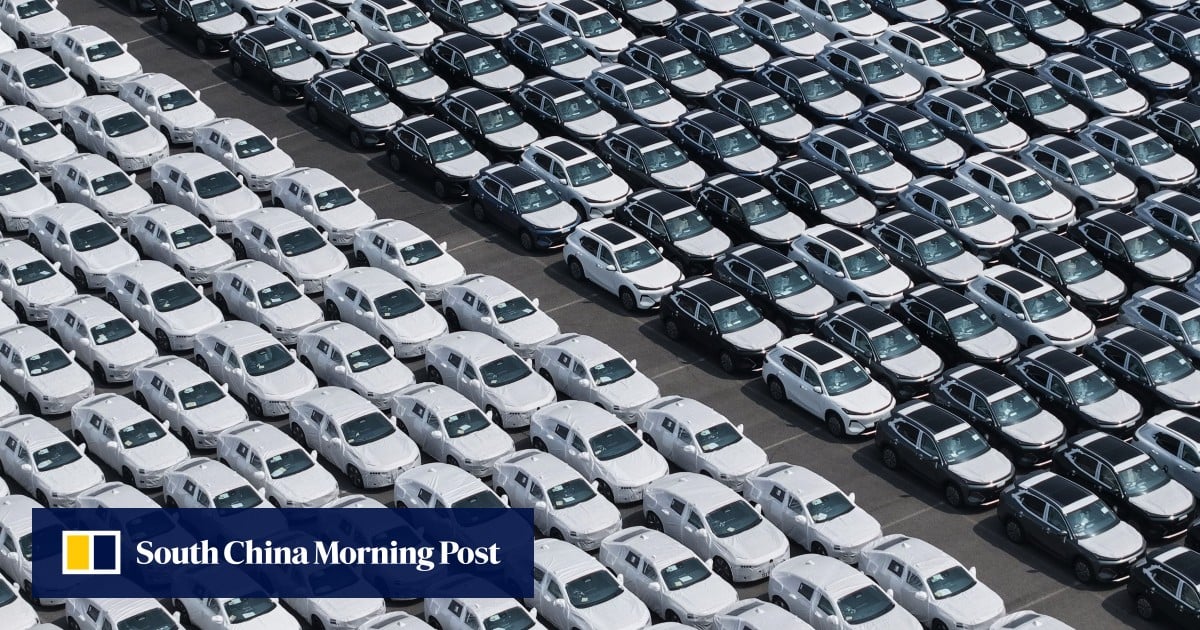
The maiden voyage of the Malta-flagged Glovis Nova, a China-built vehicle carrier, marked a new record for EV shipments from a Chinese port in a single voyage. This event highlights China's expanding role in global supply chains, particularly in the burgeoning electric vehicle export market, utilizing its advanced shipbuilding capabilities.
Imagine a super-duper big boat, built in China, that's like a giant floating parking lot! It just carried more brand-new electric cars, like Teslas, than any other ship ever has from China all the way to Europe. This shows that China is getting really good at making lots of electric cars and sending them out to people all over the world, like a super-efficient delivery service for future cars.
Analysis
A New Benchmark in EV Logistics
The recent maiden voyage of the Glovis Nova, a newly delivered vehicle carrier built in China, has established a significant new benchmark for electric vehicle exports. Loading an unprecedented 7,738 new energy vehicles at Shanghai’s South Port Terminal, the vessel set a domestic record for the largest single shipment of vehicles from a Chinese port. This substantial cargo, consisting entirely of Tesla Model 3 and Model Y passenger cars, was destined for Zeebrugge, Belgium, serving as a distribution hub for the broader European market. The sheer volume of this shipment highlights the increasing scale and efficiency of China's EV export operations.
Simultaneously, another China-built carrier, the Panama-flagged Glovis Leader, also berthed at the same terminal, heading to Busan, South Korea. The coordinated deployment of such high-capacity vessels demonstrates a robust and expanding logistical infrastructure designed to support China's burgeoning automotive export industry. This strategic use of advanced shipping capabilities is crucial for meeting the global demand for China-made EVs and ensuring their timely delivery to international markets.
China's Advanced Shipbuilding Capabilities
Both the Glovis Nova and Glovis Leader are state-of-the-art 10,800-car capacity liquefied natural gas (LNG) dual-fuel vehicle carriers, ranking among the world's largest vessels of their kind. Their construction by Guangzhou Shipyard International, a subsidiary of the China State Shipbuilding Corporation, one of the world's largest shipbuilding groups, underscores China's advanced capabilities in maritime engineering and construction. The ability to produce such sophisticated and large-scale carriers is a testament to China's industrial prowess, extending beyond manufacturing to critical logistical infrastructure.
The use of LNG dual-fuel technology in these vessels also points to a commitment towards more environmentally friendly shipping solutions, aligning with global efforts to reduce carbon emissions in the maritime sector. This technological sophistication not only enhances operational efficiency but also positions China as a leader in developing sustainable shipping practices for the future of global trade. The integration of advanced shipbuilding with high-volume EV exports creates a powerful synergy that strengthens China's overall economic influence.
Broader Implications for Global Supply Chains
This record-breaking shipment is more than just a logistical achievement; it signifies China's deepening integration and increasing influence within global supply chains. As China's domestic EV production continues to surge, the development and deployment of large-capacity, efficient car carriers become vital for distributing these vehicles worldwide. The ability to move thousands of EVs in a single voyage drastically improves the efficiency and cost-effectiveness of international trade, making China-made products more competitive in foreign markets.
The strategic importance of such vessels extends to strengthening China's position as a global manufacturing and export powerhouse. By controlling key aspects of the supply chain, from production to transportation, China can ensure greater resilience and responsiveness in its trade operations. This development is a clear indicator of China's ambition to not only produce a significant share of the world's EVs but also to dominate the logistical means of their global distribution, further cementing its role in shaping the future of international commerce.
Key points
- A China-made vessel, the Glovis Nova, shipped a record 7,738 new energy vehicles from Shanghai to Europe.
- The cargo consisted entirely of Tesla Model 3 and Model Y passenger cars, destined for Zeebrugge, Belgium.
- The Glovis Nova and Glovis Leader are 10,800-car capacity LNG dual-fuel carriers, among the world's largest.
- Both vessels were built by Guangzhou Shipyard International, a subsidiary of China State Shipbuilding Corporation.
- The record shipment highlights China's growing role in global EV supply chains and its advanced shipbuilding capabilities.
This development suggests increased efficiency in global EV distribution, potentially lowering logistics costs for manufacturers and making electric vehicles more accessible worldwide. It further solidifies China's position as a key player in global trade and the transition to sustainable transportation.