China signals openness to Colombia’s Trump-backed president-elect despite US tilt
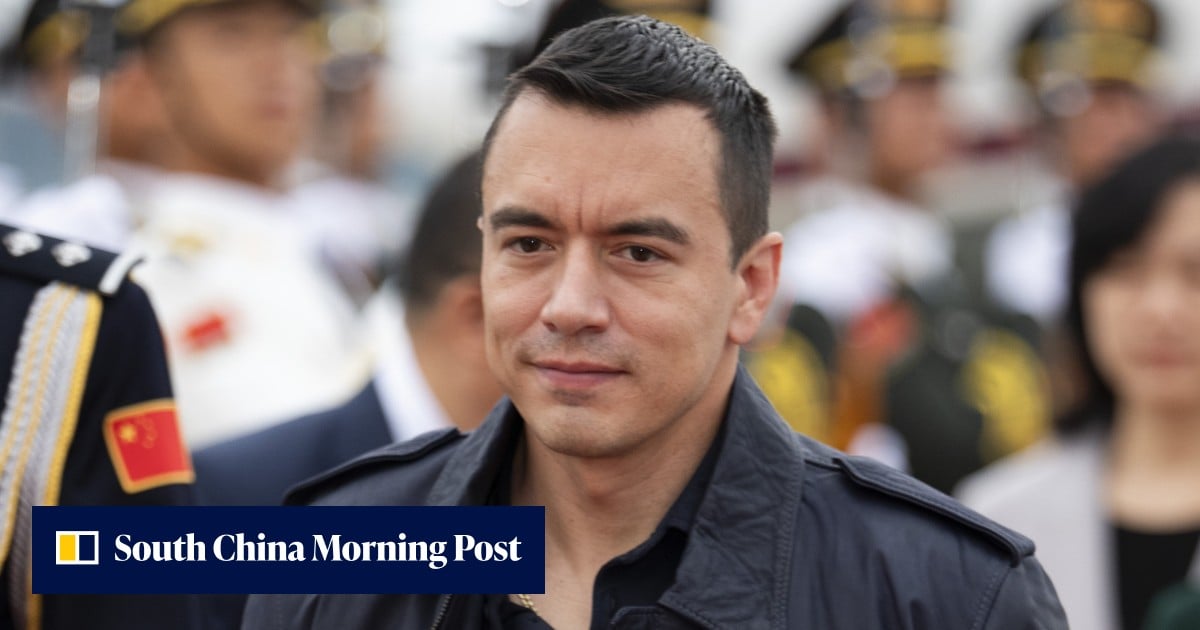
China congratulated Colombia on its presidential election and expressed willingness to work with the incoming government. Beijing's move comes despite president-elect Abelardo de la Espriella's campaign focus on a security alliance with the US and Israel.
Intelligence analysis by Llama 3.3 70B

China is open to working with Colombia's new government, led by president-elect Abelardo de la Espriella, who has promised to strengthen ties with the US.
China wants to be friends with Colombia's new president, even though he wants to work closely with the US. This is like a big game of diplomacy, where countries try to make friends and work together to achieve their goals.
Analysis
China's Strategic Interests in Latin America
China's decision to congratulate Colombia on its presidential election and express willingness to work with the incoming government reflects its strategic interests in the region. Beijing has been actively engaged in Latin America in recent years, seeking to expand its economic and political influence. China's foreign ministry spokesman, Guo Jiakun, stated that Beijing views the relationship with Colombia "from a strategic height and long-term perspective," indicating a commitment to long-term cooperation.
China's interests in Latin America are driven by its desire to secure access to natural resources, markets, and strategic trade routes. Colombia, as a major oil producer and a key player in regional trade, is an important partner for China. By working with de la Espriella's government, China aims to advance its bilateral ties and promote its economic interests in the region.
The Role of the US in Colombia's Foreign Policy
De la Espriella's campaign focus on a security alliance with the US and Israel has raised questions about the impact on Colombia's relations with China. The president-elect has promised to revive Plan Colombia, a US-funded military and counter-narcotics program that anchored the alliance from 2000. This move is likely to be viewed with skepticism by China, which has been critical of US intervention in the region.
Despite these challenges, China is likely to continue its engagement with Colombia, seeking to balance its relations with the US and other regional players. Beijing's willingness to work with de la Espriella's government reflects its pragmatic approach to diplomacy, prioritizing economic and strategic interests over ideological differences.
Implications for Regional Balance of Power
The development of China-Colombia relations under de la Espriella's government will have significant implications for the regional balance of power. China's growing influence in Latin America has raised concerns among US policymakers, who see the region as a key area of competition with China. The US has historically been the dominant player in the region, but China's economic and diplomatic engagement has created new opportunities for cooperation and competition.
As China and the US compete for influence in the region, Colombia is likely to play a key role in shaping the balance of power. De la Espriella's government will need to navigate the complex web of relationships between China, the US, and other regional players, seeking to advance its own interests while avoiding conflict with its major partners.
Key points
- China congratulated Colombia on its presidential election
- Beijing expressed willingness to work with the incoming government
- De la Espriella's campaign focused on a security alliance with the US and Israel
If China and Colombia can work together effectively, it could lead to increased economic cooperation and investment in the region, benefiting both countries. This could also create new opportunities for regional trade and development, promoting stability and growth in Latin America.
However, the challenges posed by de la Espriella's campaign focus on a security alliance with the US and Israel could create tensions in China-Colombia relations. If these tensions escalate, it could lead to a decline in economic cooperation and investment, harming the interests of both countries.