China urged to fast-track carrier fleet upgrades as Japan boosts strike power
Military experts say China should upgrade carrier groups faster as Japan expands its strike capacity near Taiwan.
Intelligence analysis by GPT-5.4 Mini
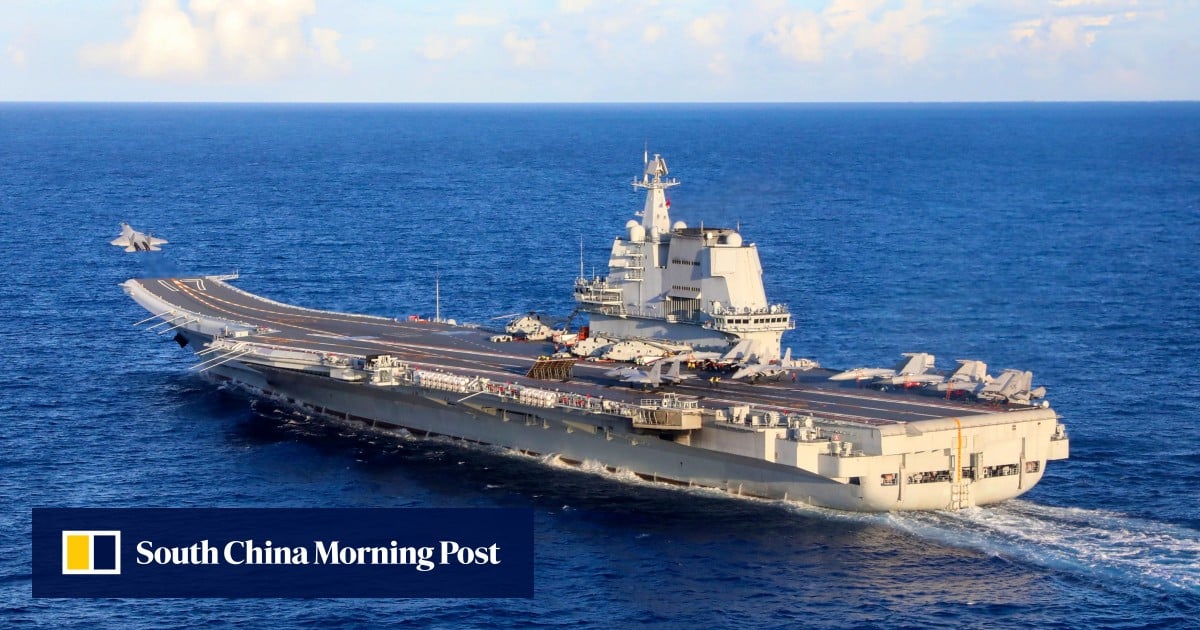
The article says China’s naval planners are being pushed to improve carrier strike groups as Japan adds long-range anti-ship missiles and strengthens deployments around islands near Taiwan. A recent simulated confrontation involving the Liaoning carrier group and Japanese fighter jets underscored the concern.
China’s big ships at sea are being told to get stronger faster because Japan is adding more powerful missiles and practicing how to hit ships. It is like two teams in a game where one side is getting better shields and longer throwing arms, so the other side has to train harder to keep up.
Analysis
What the article argues
Military experts quoted by the paper say China needs to speed up upgrades to its aircraft carrier groups and improve their combat power. The concern is not abstract: Japan is described as strengthening its defense posture with long-range anti-ship missiles and deployments on islands near Taiwan, which has raised alarm in Beijing.
The trigger event
The article highlights a December episode, when tensions were already high after remarks by Japan’s prime minister about Taiwan. China’s Liaoning carrier strike group took an unusual route east of Japan. Japan responded by scrambling a dozen F-2 fighters carrying a combined 64 ASM-2 anti-ship missiles. The paper says this scale of deployment was read as a saturation-style drill, with the Liaoning group treated as the stand-in target.
Why China is being told to move faster
Fu Qianshao, identified as a military expert and former PLA Navy officer, says one gap China’s carrier formations still need to address is the limited number of stealth fighters. That point matters because carrier air wings depend on aircraft that can survive in a contested environment and hit back effectively.
The article’s broader message is that Japan’s evolving strike capability is forcing China to think about whether its carriers are ready for high-end conflict, not just presence missions. The exchange also suggests the military balance around Taiwan is becoming more active, more visible, and more sensitive to signaling on both sides.
Key points
- Military experts say China should accelerate carrier fleet upgrades to keep pace with Japan.
- Japan is described as boosting strike power with long-range anti-ship missiles and island deployments near Taiwan.
- A December incident involved the Liaoning carrier group and a large Japanese fighter response.
- The article says one weakness for China is the limited number of stealth fighters on carrier strike groups.
If China upgrades its carrier groups quickly, the article suggests it could close some of the gap in air power and make its naval formations harder to threaten. Better stealth aircraft and stronger carrier combat capability could also improve deterrence and reduce the chance that Japan reads those forces as easy targets.
If the upgrades lag, China’s carrier groups may remain vulnerable to Japan’s longer-range anti-ship weapons and island-based deployments. The simulated confrontation described in the article suggests that even peacetime signaling can quickly turn into sharper military posturing around Taiwan and the waters east of Japan.