China’s AI chip demand pushes South Korea into a rare surplus with top trade partner
Booming demand for AI memory chips has flipped South Korea’s trade with China into surplus, but analysts say the boost may not last.
Intelligence analysis by GPT-5.4 Mini
South Korea’s trade with China has moved from deficit to surplus as the AI boom drives demand for memory chips. The shift is visible in soaring semiconductor exports, though analysts warn the uplift may be temporary because it depends on a strong chip cycle.
South Korea is selling a lot more computer memory chips to China because China needs them for AI. That helped South Korea buy and sell with China more evenly, like a store suddenly selling a popular toy. But the story says the good run might not last forever.
Analysis
A rare trade swing
South Korea has moved into surplus with China after a strong rise in semiconductor exports, according to the country’s trade ministry. The balance with China went from a US$764 million deficit in December 2025 to a US$1.1 billion surplus in February, then widened further to US$3.8 billion in May.
What drove it
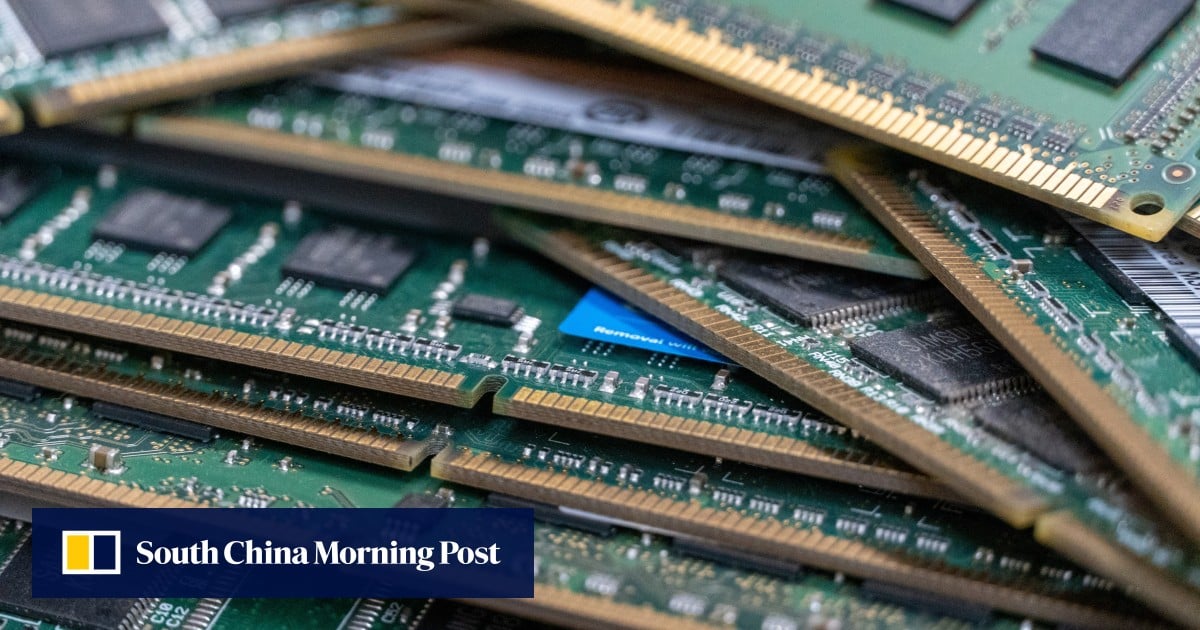
The main driver is demand for memory chips tied to the global AI boom. The article says tighter supply and higher prices have lifted the value of these exports, with Morgan Stanley cited as saying 16GB DDR5 memory chips were up 682 per cent and NAND flash memory prices were up 807 per cent. South Korea’s semiconductor exports to China rose 243 per cent year on year in May, according to ministry data.
Why this stands out
The article frames South Korea as an exception in East Asia. It says other economies in the region are under more pressure as Chinese competitiveness rises and technology supply chains shift. Japan is cited as a comparison point: export volumes to China have fallen by 10 per cent since 2022, while import demand from China has stayed elevated. Capital Economics’ Marcel Thieliant said Japan’s trade deficit with China has risen to a record 1.2 per cent of GDP.
The caution
The article’s core warning is that the improvement may not last. The surplus is being driven by a chip upswing, so any cooling in AI-related demand or memory prices could quickly reduce the benefit. For now, though, South Korea’s chipmakers are getting an outsized boost from China’s appetite for AI hardware.
Key points
- South Korea swung from a deficit to a surplus with China as semiconductor exports surged.
- The Ministry of Trade, Industry and Resources said May’s surplus reached US$3.8 billion.
- Memory-chip demand for AI helped push up chip prices and export value.
- Analysts warn the improvement may be temporary if the chip cycle turns.
- The story contrasts South Korea’s position with other East Asian economies under trade pressure.
If AI demand stays strong, South Korea could keep benefiting from higher semiconductor exports to China. That would support a stronger trade balance and give chipmakers more sales in a key market.
The article warns the gain could be short-lived because it is tied to a chip boom. If memory prices cool or demand eases, the surplus with China could shrink quickly.