China's economy showing signs that slowdown may be extending
China's factory output and retail sales slumped in July after one of the country's weakest quarterly growth rates on record, adding pressure on Beijing to intervene with stimulus measures.
Intelligence analysis by Llama
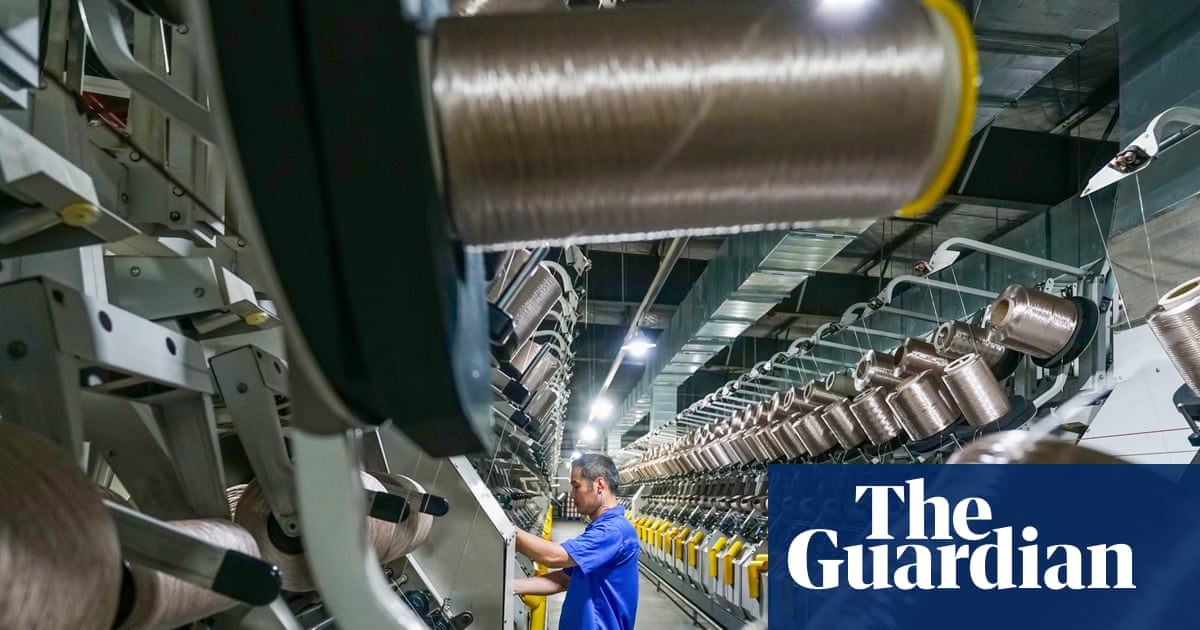
July factory output slowed to 4.5% year-on-year from 5.3% in June, and retail sales rose just 0.6%, both missing forecasts. The data follows a 4.3% Q2 growth print, one of China's weakest on record, and prompts Premier Li Qiang to urge a pivot toward bolstering overseas demand.
China is like a giant workshop and shop that the whole world depends on. Lately, both the workshop and the shop have been making and selling less than expected, even after a slow spring. The leaders are now telling everyone to look abroad for buyers, while hoping the slowdown passes on its own.
Analysis
4.3% and the quarter that set the tone
The July data lands on top of an already fragile picture: China reported an annualised growth rate of 4.3% for the three months to June, the National Bureau of Statistics confirmed, undershooting the government's own 4.5% to 5% target and ranking among the weakest quarterly readings since Beijing began publishing official GDP data in the early 1990s. With the Q2 print already in the rear-view mirror, July's industrial output growth of 4.5% year-on-year, down from 5.3% in June, signals that the soft patch is not lifting as analysts had hoped. Retail sales told a similar story, rising just 0.6% in July against forecasts for 1.5% and a 1% gain the month before, even with summer holiday tourism spending in the mix. The Reuters poll miss on both gauges gives the slowdown a quantitative edge rather than a narrative one.
Li Qiang and the external demand pivot
Premier Li Qiang used Monday's state council meeting, carried by Xinhua, to frame the problem and signal a policy response. He acknowledged that "the problem of insufficient domestic demand remains prominent," that "some industries and enterprises are facing increasing difficulties," and that "uncertainties in external environment are rising." His proposed remedy leans outward: "actively stabilise external demand, expand mutually beneficial international economic and trade cooperation and promote balanced trade development." That language matters because it hints at a tolerance for stronger export-led growth even as trade partners from Brussels to Washington weigh restrictions on Chinese goods, and it implicitly accepts that domestic consumption cannot be revived quickly enough to carry the economy on its own.
Capital Economics on the AI capex silver lining
Julian Evans-Pritchard, head of China economics at Capital Economics, offered the read-through most likely to travel through markets. He flagged that "the boost to manufacturing activity from AI capex continued to build," describing the broader weakness as partly a function of "temporary disruptions from recent typhoons" rather than a structural break. His base case is a "modest uptick in growth over the rest of the year, supported by fiscal loosening," a view that effectively gives Beijing time but also raises the bar: if Beijing's tax and spending package fails to land before year-end, the modest-uptick scenario will not hold. The NBS, for its part, attributed part of the July softness to "extreme weather, including high temperatures and heavy rainfall," a useful political buffer for the headline numbers.
Key points
- July factory output rose 4.5% year-on-year, down from 5.3% in June and below a Reuters poll forecast of 4.8%
- Retail sales grew just 0.6% in July versus a forecast 1.5%, even with summer holiday tourism spending
- China's Q2 GDP grew 4.3% annualised, one of the weakest quarterly readings on record and below the 4.5%–5% government target
- Premier Li Qiang said insufficient domestic demand remains prominent and called for stabilising external demand
- Capital Economics still expects a modest uptick later in the year, citing AI capex and expected fiscal loosening
Capital Economics expects a modest uptick in growth later in the year, supported by fiscal loosening from Beijing, and notes that the AI capex cycle is continuing to lift manufacturing activity. Typhoon-related disruptions cited by the NBS are described as temporary rather than structural, leaving room for a rebound as weather normalises and stimulus measures are rolled out.
Premier Li Qiang himself warned that insufficient domestic demand remains prominent, industries are facing increasing difficulties, and external uncertainties are rising, all of which could deepen if Beijing's stimulus is delayed. A 4.3% Q2 print that already missed the official 4.5%–5% target leaves little margin: a continued slip in industrial output and retail sales would erode the modest-uptick base case and risk reinforcing the property and tariff headwinds already weighing on the economy.