China’s Geely partners with Ford to revive Spain plant and deepen European EV drive
China's Geely Auto is partnering with Ford Motor to utilize Ford's idle plant in Spain for the production of multi-energy and electric vehicles, with deliveries expected to commence in 2028.
Intelligence analysis by Gemini 2.5 Flash
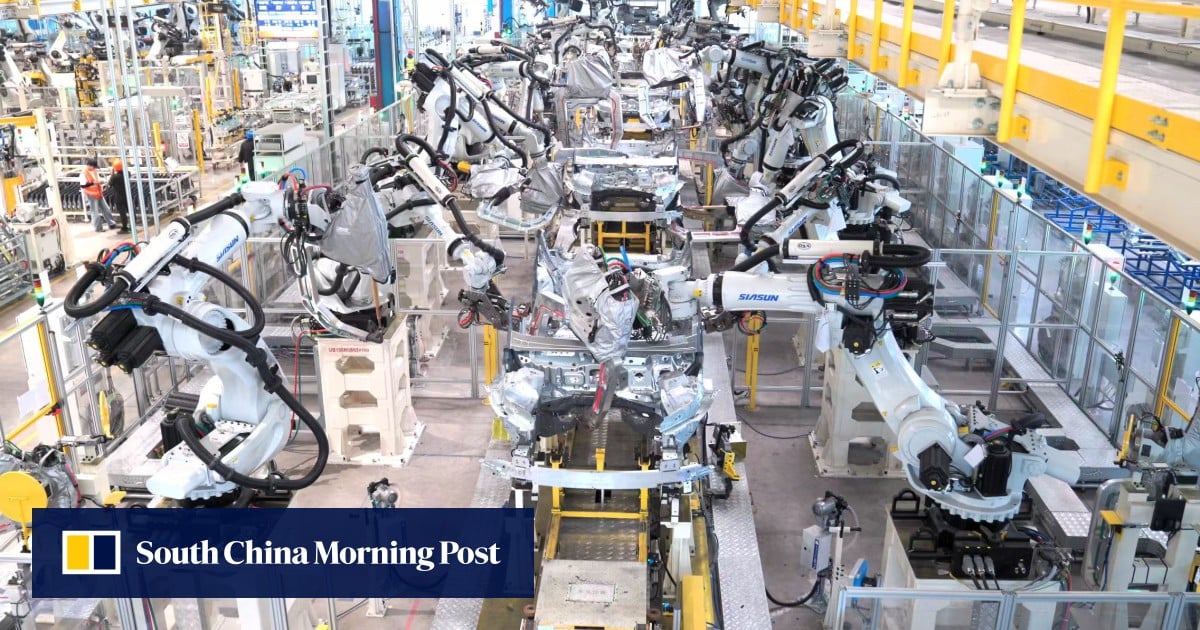
Chinese carmaker Geely is collaborating with Ford to leverage its underused factory near Valencia, Spain, for EV manufacturing. This strategic alliance allows Geely to expand its European footprint and tap into existing infrastructure, while Ford optimizes its assets and helps secure local employment.
Imagine two big toy car companies, Geely from China and Ford from America, deciding to share a giant toy factory in Spain that Ford wasn't using much. Instead of building a new one, they'll work together to make cool new electric and hybrid cars there, starting in a few years. This helps Geely sell more cars in Europe, and helps Ford make better use of its factory and keep people working.
Analysis
The collaboration between Geely Auto and Ford Motor to revive an idle plant in Spain marks a significant development in the global automotive industry, particularly for the European electric vehicle market. This move is not merely a business transaction but a strategic maneuver reflecting broader trends in international trade and manufacturing.
Geely's European Expansion Strategy
Geely's decision to partner with Ford for European production is a calculated step to deepen its presence in a crucial market. By utilizing an existing Ford facility, Geely can bypass the complexities and time associated with building a new plant from scratch, accelerating its market entry and scaling capabilities. This strategy also positions Geely to potentially circumvent future tariffs that European authorities might impose on imported Chinese EVs, a growing concern amid trade tensions. The assembly of two Geely-branded electric models at the Valencia plant signals a direct assault on the European EV market, leveraging local production to enhance competitiveness and consumer trust.
Ford's Asset Optimization and Future
For Ford, this partnership offers a pragmatic solution to the challenge of underutilized assets. The Almussafes plant, once Ford's largest outside the US, had been operating at less than a quarter of its 450,000-vehicle annual capacity. The joint venture, with Ford holding a 66% stake, allows the American automaker to optimize factory utilization, share development costs, and secure long-term stability and employment for its workforce in Valencia. The plan to assemble three Ford-branded multi-energy vehicles alongside Geely's EVs suggests a diversified approach to its European portfolio, adapting to evolving market demands while maintaining a significant operational footprint.
Implications for the European EV Landscape
This tie-up highlights a growing trend of Chinese carmakers deepening their European foray by tapping international marques’ excess production facilities. As independent analyst Gao Shen notes, Chinese EV makers are powering ahead in Europe, and local production sites can eventually help them avoid tariffs. The partnership could intensify competition within the European EV market, potentially leading to more diverse and affordable options for consumers. It also sets a precedent for future collaborations between Chinese and Western automakers, as both seek to navigate a rapidly changing global automotive landscape characterized by electrification, sustainability pressures, and geopolitical considerations.
Key points
- China's Geely Auto and Ford Motor are forming a joint venture to produce multi-energy and electric vehicles at Ford's idle plant in Almussafes, Spain.
- Geely will hold a 34% stake, while Ford will control 66%, with vehicle deliveries anticipated to begin in 2028.
- The plant will assemble three Ford-branded multi-energy vehicles and two Geely-branded electric models.
- This collaboration allows Geely to deepen its European market presence and leverage existing production capacity.
- The move reflects a broader trend of Chinese carmakers establishing local production in Europe to potentially avoid tariffs and expand globally.
This partnership could significantly boost EV production in Europe, create stable employment opportunities in Spain, and provide Geely with a crucial local manufacturing base to expand its market share while potentially mitigating future tariff risks. For Ford, it optimizes underutilized assets and diversifies its European vehicle offerings.
Potential challenges for the venture include complex integration between two distinct corporate cultures, intense competition in the rapidly evolving European EV market, and unforeseen regulatory hurdles that could impact production timelines or profitability.
Market signals
- Geely Auto The partnership provides Geely with a strategic entry point into the European EV market, enhancing its global expansion efforts.
- F Ford benefits from optimizing its underutilized Spanish plant, sharing development costs, and securing long-term operational stability.
AI-generated analysis of potential market relevance. Not financial advice.