China’s lunar research station could be guarded by robot watchdogs, space scientists say
China's lunar research station could be guarded by robot watchdogs, space scientists say. Custom-designed machines could identify hazards on the moon and help astronauts collect rock samples, source water ice, researchers say.
Intelligence analysis by Llama
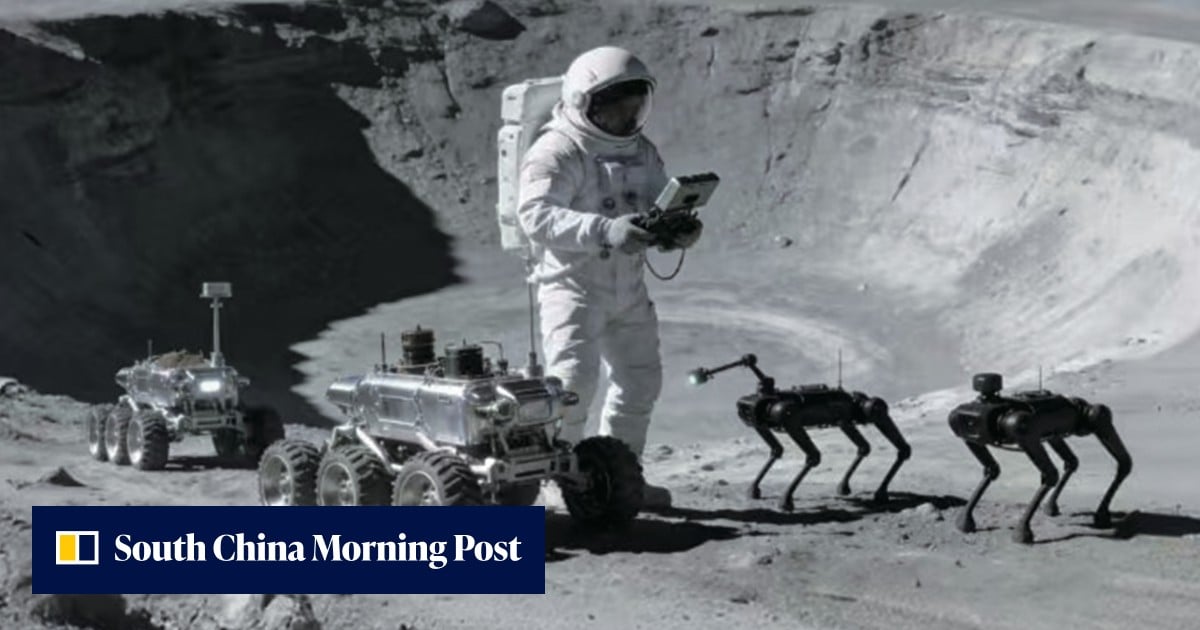
China's lunar research station could be guarded by robot watchdogs, which would identify hazards on the moon and help astronauts collect rock samples and source water ice. The robots would also take on routine tasks such as daily patrols and inspections, regulating air and temperature, cleaning living spaces, tending plants, and preparing meals.
Imagine a robot dog that can help astronauts explore the moon. It could identify hazards, collect rock samples, and even chat with the astronauts to keep them company. This robot dog would be a big help in making the moon a safer and more interesting place to visit.
Analysis
Robot Watchdogs on the Moon: A New Era in Lunar Exploration
China's lunar research station could be the first to employ robot watchdogs, custom-designed machines that would identify hazards on the moon and help astronauts collect rock samples and source water ice. This concept envisions three astronauts working alongside intelligent machines, with one astronaut directing two robot dogs across the landscape while another collects rock samples and carries out detailed scientific work. A third astronaut would remain inside a van-sized pressurised rover, coordinating the mission and controlling other robots when needed.
According to researchers from the China Academy of Space Technology, the nation's leading spacecraft developer, robots would play a central role in extracting lunar resources and preparing the moon for long-term human settlement. They would take on routine tasks such as daily patrols and inspections, regulating air and temperature, cleaning living spaces, tending plants, and preparing meals. They could even chat with astronauts, keep them company, and help ease the psychological strain of living in an isolated environment.
The use of robots in lunar exploration is not new, but the concept of robot watchdogs is a significant development. It highlights the potential for autonomous systems to take on complex tasks and free up human resources for more critical work. As China extends the frontier of human space flight from Earth orbit to the moon, the role of robots will become increasingly important in preparing the moon for long-term human settlement.
The Benefits of Robot Watchdogs
The benefits of robot watchdogs are numerous. They would be able to identify hazards on the moon, such as craters and rocky terrain, and help astronauts navigate safely. They would also be able to collect rock samples and source water ice, which would be essential for future lunar missions. Additionally, they would be able to take on routine tasks, freeing up human resources for more critical work.
The Challenges of Robot Watchdogs
While the concept of robot watchdogs is promising, there are several challenges that need to be addressed. One of the main challenges is the development of autonomous systems that can operate effectively in the lunar environment. The moon's surface is harsh and unforgiving, with extreme temperatures, low gravity, and radiation. Robots would need to be designed to withstand these conditions and operate effectively in a variety of environments.
Another challenge is the integration of robots with human astronauts. Robots would need to be able to communicate effectively with humans and work together seamlessly. This would require significant advances in robotics and artificial intelligence.
Conclusion
The use of robot watchdogs in lunar exploration is a significant development that highlights the potential for autonomous systems to take on complex tasks. While there are several challenges that need to be addressed, the benefits of robot watchdogs are numerous. They would be able to identify hazards on the moon, collect rock samples and source water ice, and take on routine tasks, freeing up human resources for more critical work. As China extends the frontier of human space flight from Earth orbit to the moon, the role of robots will become increasingly important in preparing the moon for long-term human settlement.
Key points
- China's lunar research station could be guarded by robot watchdogs, custom-designed machines that would identify hazards on the moon and help astronauts collect rock samples and source water ice.
- The robots would take on routine tasks such as daily patrols and inspections, regulating air and temperature, cleaning living spaces, tending plants, and preparing meals.
- The use of robots in lunar exploration is a significant development that highlights the potential for autonomous systems to take on complex tasks.
- The benefits of robot watchdogs are numerous, including the ability to identify hazards, collect rock samples and source water ice, and take on routine tasks, freeing up human resources for more critical work.
If this development plays out positively, it could lead to a significant increase in the efficiency and effectiveness of lunar missions. Robots could take on routine tasks, freeing up human resources for more critical work, and helping to prepare the moon for long-term human settlement.
However, there are also potential risks associated with the use of robots in lunar exploration. For example, if the robots were to malfunction or become stuck, it could put the entire mission at risk. Additionally, the integration of robots with human astronauts could be a complex and challenging task.
