China's Robotaxi enters London for first time as Baidu's Apollo Go begins UK road tests with Uber and Lyft
Baidu's Apollo Go has begun testing robotaxis in London, UK, in partnership with FREENOW and Uber. The test fleet will use Apollo RT6 robotaxis with safety operators on board, and initial trials will take place in Brent, a London borough with both urban and suburban drivi…
Intelligence analysis by Llama
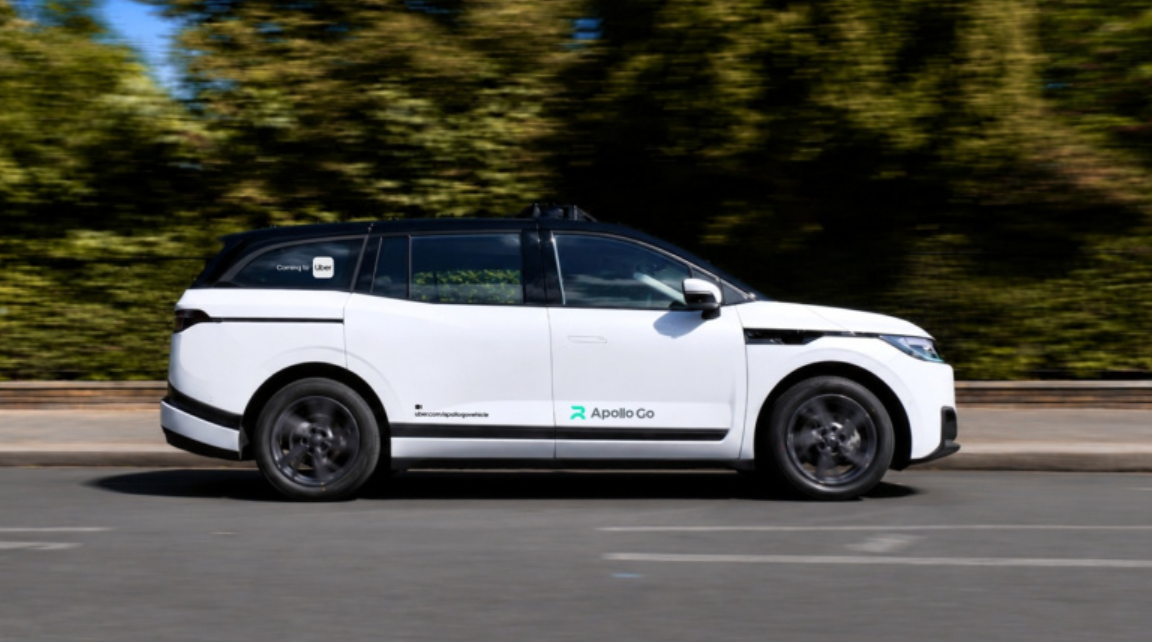
Baidu's Apollo Go has launched robotaxi testing in London, UK, in partnership with FREENOW and Uber. The test fleet will use Apollo RT6 robotaxis with safety operators on board, and initial trials will take place in Brent, a London borough with both urban and suburban driving conditions.
Imagine a car that can drive itself, without a human behind the wheel. That's what Baidu's Apollo Go is working on, and they've just started testing it in London, UK. The car will use special sensors and computers to navigate the roads, and it will even have a safety operator on board to make sure everything goes smoothly.
Analysis
A $60B Vote of Confidence
Baidu's Apollo Go has made significant strides in the autonomous vehicle space, and its recent launch of robotaxi testing in London, UK, is a testament to the company's commitment to innovation. The partnership with FREENOW and Uber marks a major milestone in the development of autonomous vehicles, and the first time a Chinese autonomous vehicle has conducted real-world road testing in London's complex traffic environment.
The deployment of Apollo RT6 robotaxis in London represents a significant expansion of Baidu's autonomous vehicle technology into a new market. The Apollo RT6 is a highly advanced autonomous vehicle platform that has been designed to operate in complex urban environments. The fact that Baidu has chosen to deploy this technology in London, a city known for its challenging traffic conditions, is a vote of confidence in the company's ability to develop and deploy autonomous vehicle technology.
The partnership with FREENOW and Uber also highlights the growing importance of collaboration in the development of autonomous vehicles. By working together, companies can share resources, expertise, and risk, and accelerate the development of this critical technology.
Why Cursor?
The launch of robotaxi testing in London also raises important questions about the future of transportation. As autonomous vehicles become increasingly prevalent, we can expect to see significant changes in the way we travel. The deployment of Apollo RT6 robotaxis in London is a step towards a future where transportation is safer, more efficient, and more convenient.
However, there are also challenges to be addressed. The development of autonomous vehicles requires significant investment in infrastructure, including the deployment of high-speed internet and the development of new safety protocols. Additionally, there are concerns about the impact of autonomous vehicles on employment and the economy.
The Road Ahead
As Baidu continues to develop and deploy its autonomous vehicle technology, we can expect to see significant advancements in the field. The company's partnership with FREENOW and Uber is a major step forward, and the deployment of Apollo RT6 robotaxis in London is a testament to the company's commitment to innovation.
However, there are also challenges to be addressed. The development of autonomous vehicles requires significant investment in infrastructure, including the deployment of high-speed internet and the development of new safety protocols. Additionally, there are concerns about the impact of autonomous vehicles on employment and the economy.
As we look to the future, it is clear that autonomous vehicles will play a major role in shaping the way we travel. The deployment of Apollo RT6 robotaxis in London is a significant step forward, and we can expect to see significant advancements in the field in the years to come.
Key points
- Baidu's Apollo Go has begun testing robotaxis in London, UK, in partnership with FREENOW and Uber.
- The test fleet will use Apollo RT6 robotaxis with safety operators on board.
- Initial trials will take place in Brent, a London borough with both urban and suburban driving conditions.
- The deployment marks the first time a Chinese autonomous vehicle has conducted real-world road testing in London's complex traffic environment.
If this development plays out positively, we can expect to see significant advancements in the field of autonomous vehicles. The deployment of Apollo RT6 robotaxis in London is a major step forward, and we can expect to see more companies investing in this technology in the years to come. Additionally, the partnership between Baidu, FREENOW, and Uber highlights the growing importance of collaboration in the development of autonomous vehicles.
However, there are also challenges to be addressed. The development of autonomous vehicles requires significant investment in infrastructure, including the deployment of high-speed internet and the development of new safety protocols. Additionally, there are concerns about the impact of autonomous vehicles on employment and the economy.