China’s Unitree says “GPT moment” for robots remains years away
Unitree Robotics' director Irving Chen says robots are still years away from a
Intelligence analysis by Llama
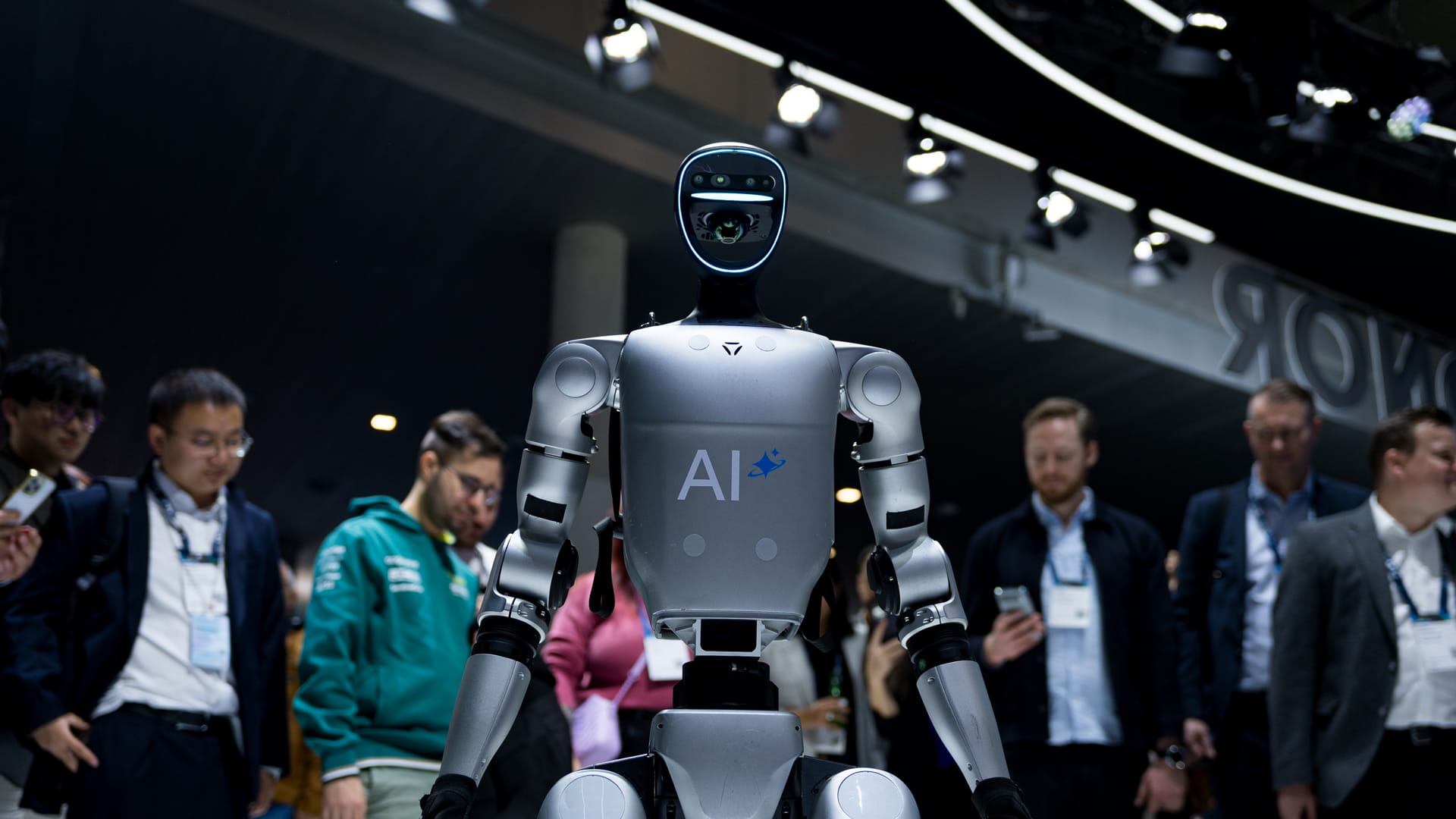
Unitree Robotics' director Irving Chen says robots are still years away from a
Imagine a robot that can do tasks on its own, like a human. But right now, robots are still learning how to do these tasks and can't work as well as humans. It's like a kid learning to ride a bike - they need to practice and get better before they can do it on their own.
Analysis
A $60B Vote of Confidence
Unitree Robotics, a leading Chinese humanoid maker, is preparing for an IPO in Shanghai after receiving regulatory approval earlier this month. The company plans to raise RMB 4.2 billion (USD 619.7 million), with 48% allocated to AI and embodied intelligence research. This significant investment in embodied intelligence is a vote of confidence in the potential of humanoid robots to transform industries.
Why Cursor?
The robotics industry is still in the pilot stage, with most projects focused on research and testing. Chen expects proof-of-concept trials to dominate through next year, followed by commercial deployment by 2030. This timeline highlights the challenges facing the industry, including the need for robots to perform longer and more complex tasks reliably in changing environments without pre-programming.
The Road Ahead
Chen identifies more capable robot
Key points
- Unitree Robotics' director Irving Chen says robots are still years away from a
- GPT moment
- comparable with ChatGPT's breakthrough in generative artificial intelligence.
- Chen highlights the challenges facing the booming humanoid robotics industry, citing the need for robots to perform longer and more complex tasks reliably in changing environments without pre-programming.
- Unitree expects proof-of-concept trials to dominate through next year, followed by commercial deployment by 2030.
- Chen identifies more capable robot
- brains
- and large-scale manufacturing as the industry's next breakthrough.
If Unitree's plans to launch more robotics models designed to work across homes, offices, and industrial sites without pre-setting come to fruition, it could lead to widespread adoption of humanoid robots in various industries. This could result in increased productivity and efficiency, as well as new job opportunities in fields related to robotics and AI.
The development of humanoid robots is still in its early stages, and there are significant challenges to overcome before they can be widely adopted. For example, robots need to be able to perform longer and more complex tasks reliably in changing environments without pre-programming, which is a difficult task. Additionally, the high cost of developing and manufacturing humanoid robots may limit their adoption in certain industries.