Food court stalls caught off guard by rules over plastic serving containers
Hong Kong environmental authorities have warned restaurant operators not to use disposable tableware coated in plastic for dine-in service. Some food stall owners were caught off guard by inspectors and received warnings.
Intelligence analysis by Llama
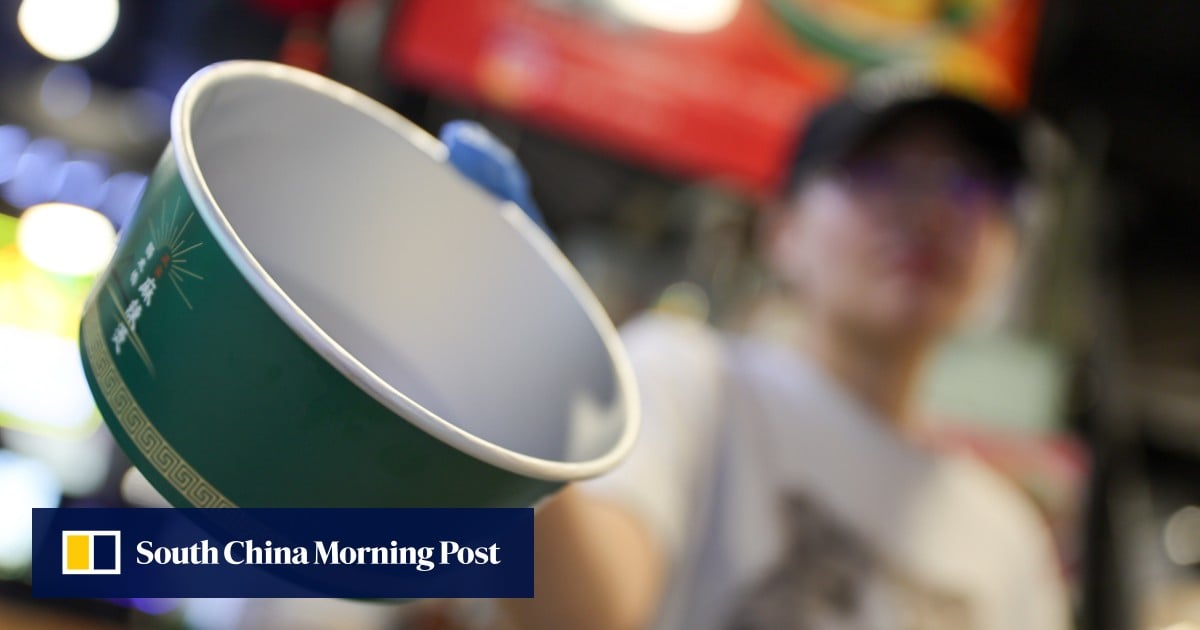
Hong Kong's Environmental Protection Department has clarified that paper products with an inner plastic lining can only be used for takeaway, not for dine-in service. This has left some food stall owners surprised and concerned about the cost of switching to approved versions.
Imagine you're at a food court in Hong Kong, and you're eating from a bowl that's lined with plastic. The government just said that's not allowed anymore. The reason is to help reduce plastic waste and protect the environment. Some food stall owners were surprised by this new rule and are worried about how much it will cost them to change their bowls.
Analysis
A $60B Vote of Confidence in Hong Kong's Environmental Efforts
The Environmental Protection Department's clarification on the use of paper products with an inner plastic lining for dine-in service is a significant development in Hong Kong's ongoing efforts to reduce plastic waste. The department's warning to restaurant operators not to use disposable tableware coated in plastic for dine-in service is a clear indication of the government's commitment to environmental protection.
Why the Rules Matter
The rules over plastic serving containers are not just about reducing waste; they are also about protecting the livelihoods of food stall owners. The clarification by the Environmental Protection Department has left some owners concerned about the cost of switching to approved versions. Philip Ho, a 35-year-old owner of a food stall at Dragon Centre, was among those who received a warning from inspectors. He said he did not expect that the bowls he had been using violated the single-use plastics ban, which took effect in April 2024.
The Road Ahead
The Environmental Protection Department's clarification is a clear indication that the government is serious about reducing plastic waste in Hong Kong. The department's warning to restaurant operators is a reminder that the use of disposable tableware coated in plastic for dine-in service is not acceptable. Food stall owners who are caught violating the rules may face fines or other penalties. The clarification by the Environmental Protection Department is a significant development in Hong Kong's ongoing efforts to reduce plastic waste and protect the environment.
Key points
- Hong Kong's Environmental Protection Department has clarified that paper products with an inner plastic lining can only be used for takeaway, not for dine-in service.
- Restaurant operators who use disposable tableware coated in plastic for dine-in service may face fines or other penalties.
- Food stall owners are concerned about the cost of switching to approved versions and may be forced to close their businesses or reduce their services.
If food stall owners adapt quickly to the new rules, they may be able to reduce their costs and improve their environmental credentials. This could lead to increased customer loyalty and a positive reputation for their businesses.
If food stall owners are unable to afford the cost of switching to approved versions, they may be forced to close their businesses or reduce their services. This could lead to job losses and economic hardship for the owners and their employees.