China’s Xpeng plants a flag in Germany’s auto heartland with Mona L03 launch
Chinese electric vehicle maker Xpeng unveiled its new Mona L03 compact SUV in Munich, Germany, as it announced its intention to expand in Europe. The company aims to sell 8,000 vehicles in Germany this year and 20,000 next year, undercutting Tesla's Model Y and Audi's Q4 …
Intelligence analysis by Llama
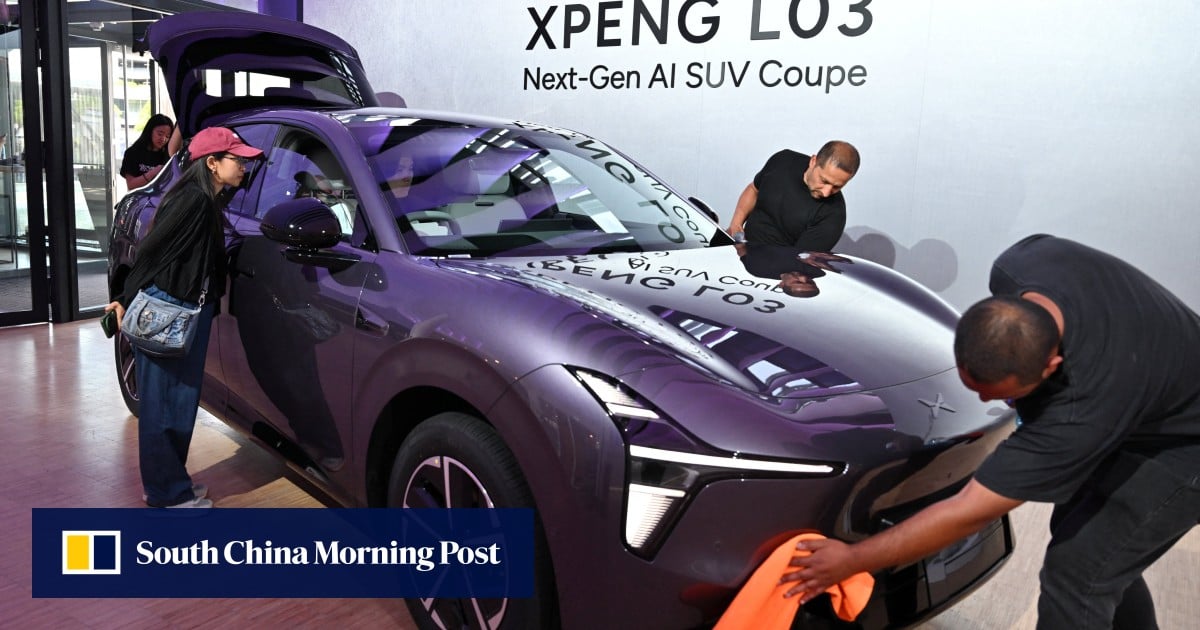
Xpeng, a Chinese electric car brand, launched its new SUV, the Mona L03, in Munich, Germany, marking its expansion into Europe. The company aims to sell 8,000 vehicles in Germany this year and 20,000 next year, with a starting price of €35,600.
Xpeng is a Chinese company that makes electric cars. They just launched a new car called the Mona L03 in Germany, which is a big deal because it means they're trying to sell more cars in Europe. The car is cheaper than some other popular electric cars, like Tesla's Model Y, which makes it a more attractive option for people who want to buy an electric car.
Analysis
A $60B Vote of Confidence
Xpeng's launch of the Mona L03 compact SUV in Munich, Germany, marks a significant milestone in the company's expansion into Europe. With a starting price of €35,600, the vehicle undercuts Tesla's Model Y and Audi's Q4 e-tron, making it a competitive offering in the market. The company's ambition to sell 8,000 vehicles in Germany this year and 20,000 next year is a testament to its confidence in the European market. Xpeng's chairman and CEO, He Xiaopeng, emphasized the company's commitment to building a presence in Europe, stating, 'We are here not only to bring our products to Europe, but also to build them for Europe.' This statement highlights the company's intention to establish a long-term presence in the region, rather than just being a fleeting player. The launch of the Mona L03 compact SUV is a key step in this process, and its pricing strategy is aimed at undercutting established players like Tesla and Audi. The company's partnership with Volkswagen Group, which owns about 5 per cent of Xpeng, also adds to its credibility in the European market. While Volkswagen Group is reportedly considering cutting up to 100,000 jobs across the group, including at Porsche and Audi, its partner from China is expanding aggressively into its backyard. This contrast between the two companies highlights the challenges that Volkswagen Group faces in the European market, while Xpeng is able to capitalize on the opportunities presented by the region's growing demand for electric vehicles. The Mona L03 compact SUV is a key offering in Xpeng's European expansion strategy, and its pricing strategy is aimed at making it a competitive offering in the market. The company's ambition to sell 8,000 vehicles in Germany this year and 20,000 next year is a testament to its confidence in the European market. Xpeng's expansion into Europe is significant, as it marks the company's intention to establish a presence in the region. The launch of the Mona L03 compact SUV is a key step in this process, and its pricing strategy is aimed at undercutting established players like Tesla and Audi. The company's partnership with Volkswagen Group also adds to its credibility in the European market. Overall, Xpeng's expansion into Europe is a significant development in the region's electric vehicle market, and the launch of the Mona L03 compact SUV is a key step in this process.
Key points
- Xpeng launched its new Mona L03 compact SUV in Munich, Germany, marking its expansion into Europe.
- The company aims to sell 8,000 vehicles in Germany this year and 20,000 next year.
- The Mona L03 compact SUV has a starting price of €35,600, undercutting Tesla's Model Y and Audi's Q4 e-tron.
- Xpeng's chairman and CEO, He Xiaopeng, emphasized the company's commitment to building a presence in Europe.
- The company's partnership with Volkswagen Group adds to its credibility in the European market.
If Xpeng's expansion into Europe is successful, it could lead to increased competition in the electric vehicle market, driving innovation and better prices for consumers. Additionally, Xpeng's partnership with Volkswagen Group could lead to increased investment in the region, creating jobs and stimulating economic growth.
However, Xpeng's expansion into Europe also poses risks, such as increased competition from established players like Tesla and Audi, which could make it difficult for the company to gain market share. Additionally, the company's reliance on Volkswagen Group for funding and support could create a vulnerability if the partnership were to end.