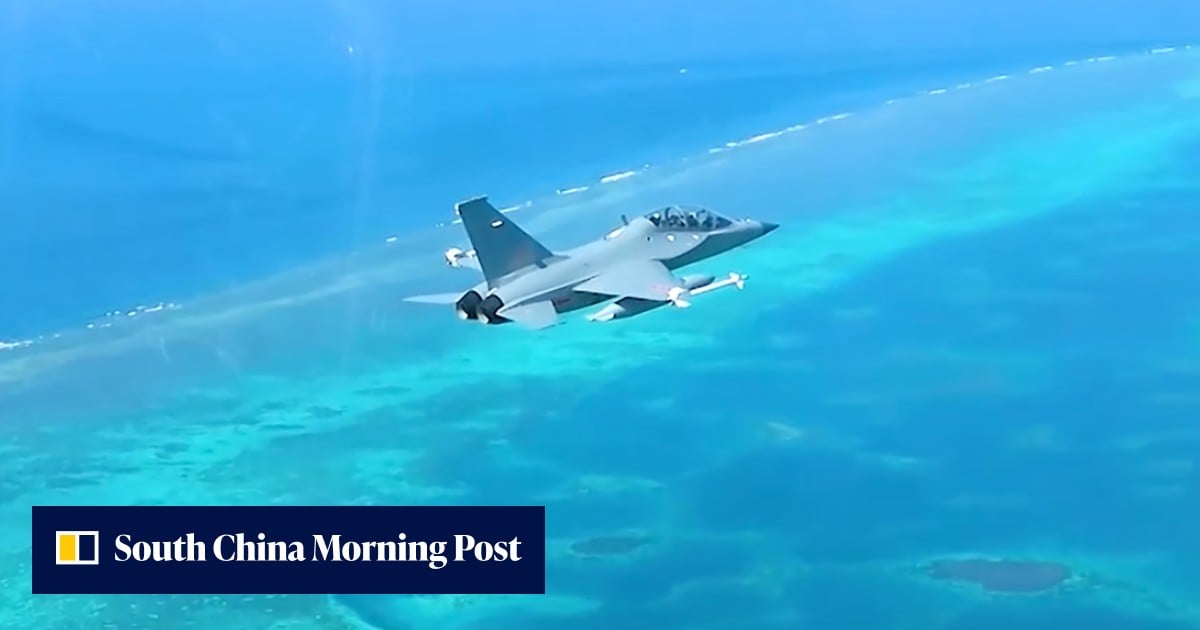
Chinese and Philippine maritime forces clash at Second Thomas Shoal
Chinese and Philippine maritime forces clashed at Second Thomas Shoal in the South China Sea, with both sides exchanging accusations. The incident occurred as China's top diplomat is due to attend the Asean foreign ministers' meeting in the Philippines.
Intelligence analysis by Llama
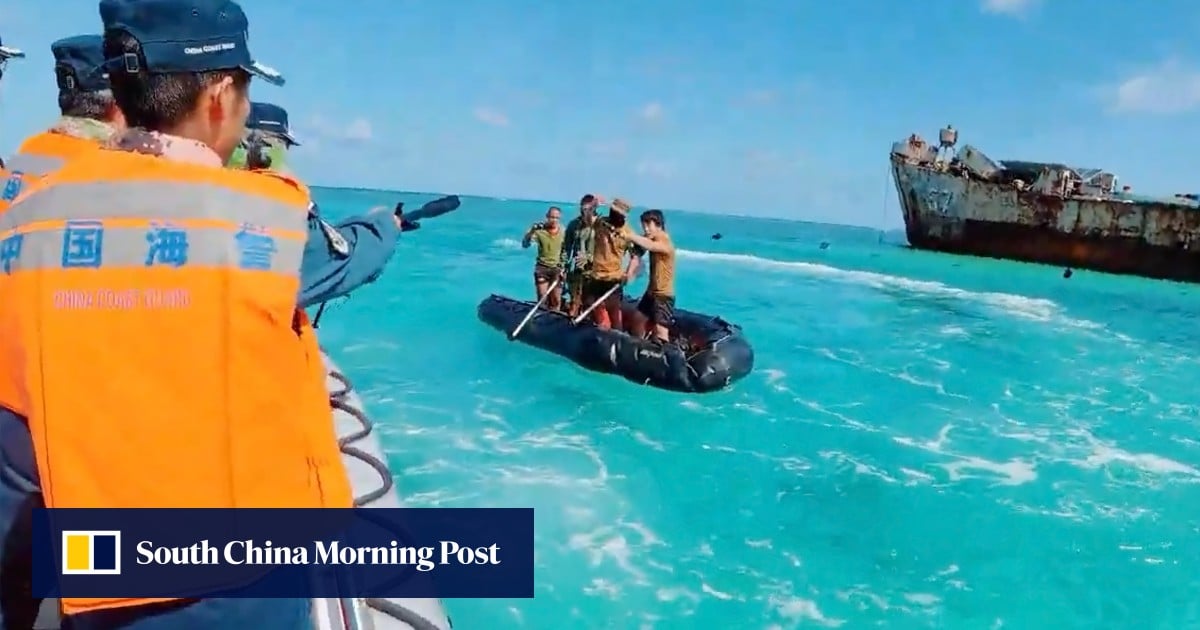
A clash between Chinese and Philippine maritime forces has occurred at Second Thomas Shoal in the South China Sea, with both sides accusing each other of aggression. The incident has raised tensions ahead of the Asean foreign ministers' meeting in the Philippines.
Imagine you're playing a game of tag with your friends, but one of the rules is that you can't move forward unless you have permission from the other players. That's kind of like what's happening in the South China Sea, where China and the Philippines are arguing over who gets to control certain areas of the sea. Recently, there was a big argument between their naval forces, which has made everyone in the region a bit nervous.
Analysis
A Fresh Escalation in the South China Sea
The recent clash between Chinese and Philippine maritime forces at Second Thomas Shoal is a stark reminder of the ongoing tensions in the South China Sea. The incident, which occurred on July 20, 2026, has raised concerns about the stability of the region and the potential for further conflict.
According to the China Coast Guard, two rubber dinghies were launched from the Philippine Navy's BRP Sierra Madre, a vessel grounded on the shoal by Manila about 27 years ago. The Chinese agency accused the Philippine personnel of using tools such as oars and long sticks to maliciously attack Chinese law enforcement officers. The Chinese side took measures to stabilise the situation, including issuing verbal warnings and manoeuvring to avoid the vessel.
The incident has been met with fresh accusations from both sides, with the China Coast Guard demanding that the Philippines 'immediately cease its infringements, provocations and false propaganda'. The Philippines has yet to respond to the allegations, but the incident has raised concerns about the potential for further conflict in the region.
The Asean Foreign Ministers' Meeting
The clash between Chinese and Philippine maritime forces has occurred just as China's top diplomat is due to attend the Asean foreign ministers' meeting in the Philippines. The meeting is expected to focus on regional security and economic cooperation, but the incident has raised concerns about the potential for further tensions in the region.
The Implications for Regional Stability
The recent clash between Chinese and Philippine maritime forces has significant implications for regional stability. The incident has raised concerns about the potential for further conflict in the region and has highlighted the need for diplomatic efforts to resolve the ongoing dispute over the South China Sea.
The incident has also raised concerns about the role of the Asean foreign ministers' meeting in addressing regional security and economic cooperation. The meeting is expected to focus on these issues, but the incident has highlighted the need for greater diplomatic efforts to resolve the ongoing tensions in the region.
Key points
- Chinese and Philippine maritime forces clashed at Second Thomas Shoal in the South China Sea.
- Both sides have exchanged accusations over the incident.
- The clash has raised concerns about regional stability and the potential for further conflict.
- The Asean foreign ministers' meeting is due to take place in the Philippines, where regional security and economic cooperation will be discussed.
The incident has highlighted the need for diplomatic efforts to resolve the ongoing dispute over the South China Sea. If both sides can work together to find a peaceful solution, it could lead to greater regional stability and cooperation.
The recent clash between Chinese and Philippine maritime forces has raised concerns about the potential for further conflict in the region. If tensions continue to escalate, it could lead to a destabilisation of the region and a decrease in regional cooperation.
Market signals
- XAU Escalation in the South China Sea drives safe-haven demand for gold, per the article's framing of investor reaction.
AI-generated analysis of potential market relevance. Not financial advice.