Chinese court accepts Evergrande liquidation petition 1 day after founder’s life sentence
A court in southern China's Guangdong province formally accepted a bankruptcy liquidation petition against China Evergrande Group's main onshore unit, Hengda Real Estate, citing the firm's inability to pay mature debts and insufficient total assets. This decision comes ju…
Intelligence analysis by Llama
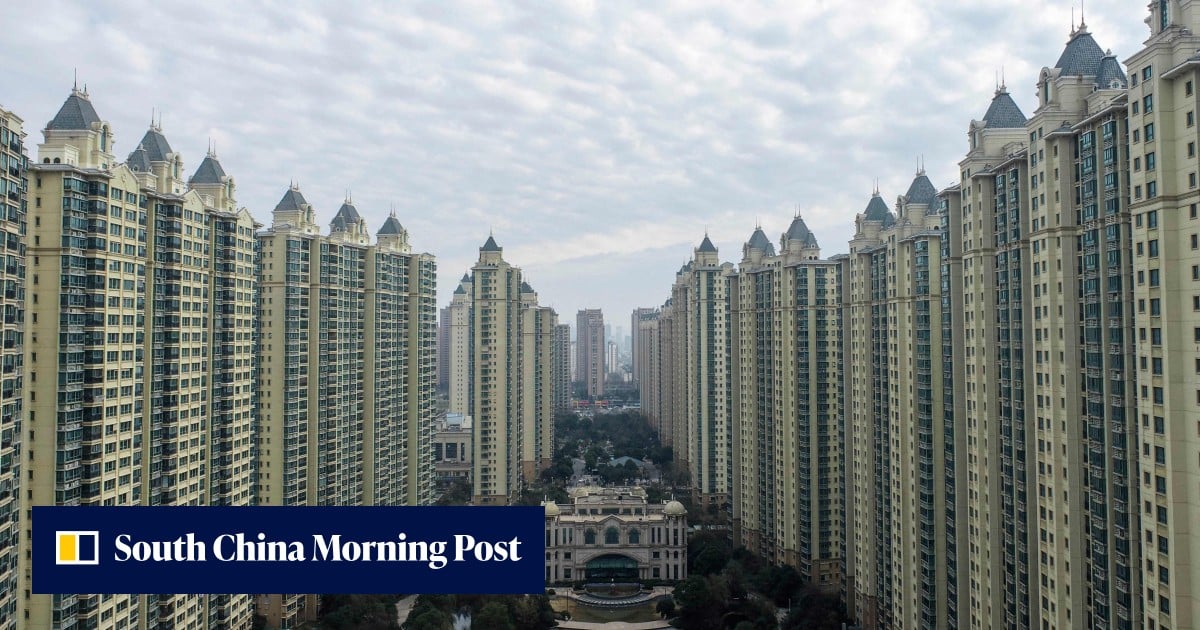
A Chinese court has accepted a bankruptcy liquidation petition against China Evergrande Group's main onshore unit, Hengda Real Estate, just a day after the founder, Hui Ka-yan, was sentenced to life in prison for financial fraud and mismanagement. This decision marks the final chapter in the unravelling of what was once China's largest property developer.
Imagine a big company called Evergrande that built lots of houses and apartments. But it got into trouble because it borrowed too much money and couldn't pay it back. The Chinese government said 'no more' and took away the company's permission to build. Now, the company's main office is being closed down and its assets are being sold off to pay back the money it borrowed.
Analysis
Evergrande's Downfall: A Timeline of Events
The liquidation of Evergrande's main onshore unit marks the final chapter in the unravelling of what was once China's largest property developer. The company's downfall began in 2021, when it fell foul of Beijing's 'three red lines' – regulatory curbs on overleveraged developers. Despite efforts to restructure its debt, Evergrande was unable to pay its mature debts and was subsequently forced into liquidation.
The Role of Hui Ka-yan: Founder and Mastermind
Hui Ka-yan, also known as Xu Jiayin, was the billionaire founder of Evergrande. He was convicted on multiple financial charges, stripped of his political rights for life, and ordered to forfeit all personal property. The Shenzhen court also levied administrative fines totalling 8.82 billion yuan (US$1.32 billion) on parent company China Evergrande Group and 7 billion yuan on Evergrande Real Estate, alongside orders to recover remaining illegal gains.
Implications for China's Property Market
The liquidation of Evergrande's main onshore unit has significant implications for China's property market. The company's downfall has sent shockwaves through the industry, with many other developers struggling to meet their debt obligations. The Chinese government has taken steps to address the crisis, including introducing new regulations and providing financial support to struggling developers. However, the long-term impact of the crisis remains to be seen.
Key points
- A Chinese court has accepted a bankruptcy liquidation petition against China Evergrande Group's main onshore unit, Hengda Real Estate.
- The decision comes just a day after the Shenzhen Intermediate People's Court handed down a life sentence to Hui Ka-yan, the billionaire founder of Evergrande.
- The liquidation of Evergrande's main onshore unit marks the final chapter in the unravelling of what was once China's largest property developer.
- The Chinese government has taken steps to address the crisis, including introducing new regulations and providing financial support to struggling developers.
The liquidation of Evergrande's main onshore unit may mark the beginning of a new era for China's property market. With the government taking steps to address the crisis, there is hope that the industry will recover and that new developers will emerge to fill the gap left by Evergrande's downfall.
However, the liquidation of Evergrande's main onshore unit also raises concerns about the future of the company's employees and the impact on the local economy. The company's downfall has already had a significant impact on the property market, and it remains to be seen how long it will take for the industry to recover.