Chinese robot makers’ lament: if we only had a better ‘brain’, and more data
Chinese robotics companies lack sufficient data and a good 'brain' to improve the interaction of their products with the physical world, according to industry insiders at the World Artificial Intelligence Conference.
Intelligence analysis by Llama
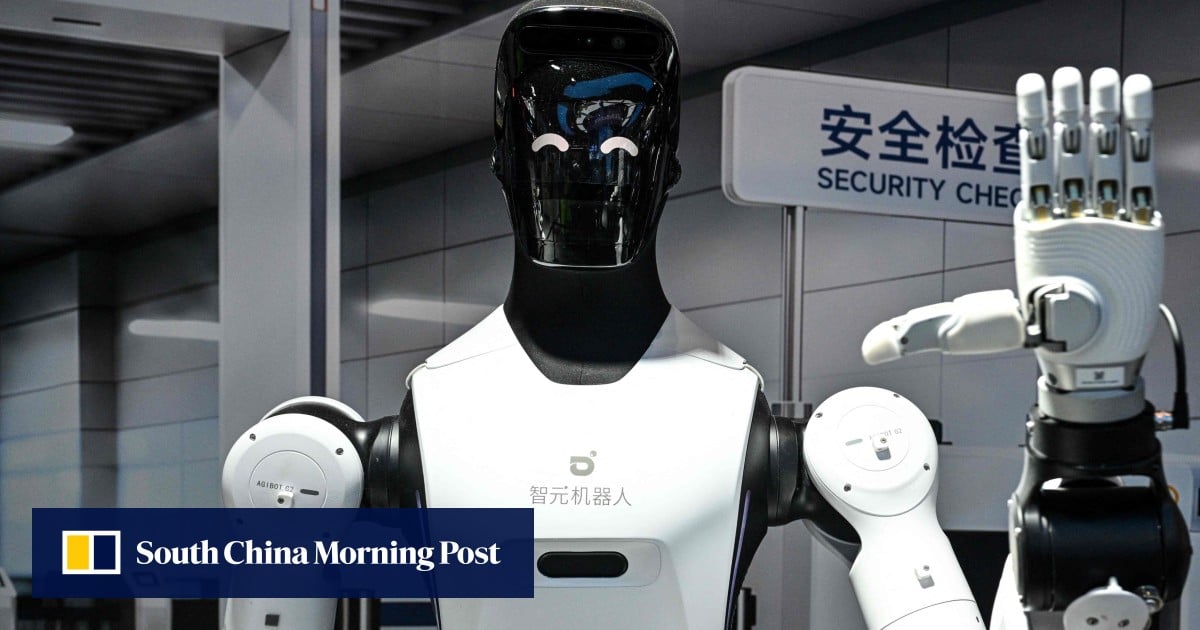
Chinese robot makers lament the lack of a better 'brain' and more data to improve their products' interaction with the physical world, citing the need for a closed-loop iterative system and more multi-modal data.
Imagine you have a robot that can do things like a human, but it needs a special brain and lots of data to learn how to interact with the world. Chinese robot makers are struggling to give their robots this brain and data, making it hard for them to work well in the real world.
Analysis
A Brain and Data Conundrum
Chinese robotics companies are facing a significant challenge in developing embodied AI that can effectively interact with the physical world. According to industry insiders at the World Artificial Intelligence Conference, the most critical bottleneck is the lack of a good 'brain' and sufficient data to improve their products' interaction with the physical world. Wang Xiaogang, co-founder of SenseTime and chairman of its robotics spin-off Ace Robotics, emphasized the need for a closed-loop iterative system that links hardware, data, models, and real-world scenarios. However, the current training data collected from human demonstrations is limited, and hardware design for robots must be jointly optimized alongside data-collection methods and physical structure. The amount of available multi-modal data about the physical world is far from adequate compared to that used in large language models, creating a significant bottleneck in the current training of world models. These world models are expected to allow next-generation humanoid robots to model and navigate their surroundings.
The Data Bottleneck
The lack of multi-modal data is a significant challenge in the development of embodied AI. Yao Maoqing, partner and senior vice-president of Shanghai-based humanoid robot maker AgiBot, highlighted the need to unlock real-world scenarios and replicate them at scale. However, the current amount of available data is far from sufficient, and the industry is struggling to collect and utilize more data. This creates a significant bottleneck in the development of embodied AI, making it challenging for robots to effectively interact with the physical world.
The Road Ahead
The development of embodied AI is crucial for improving robots' real-world interactions. Chinese robotics companies must address the challenges of developing a good 'brain' and collecting sufficient data to improve their products' interaction with the physical world. The industry must work together to unlock real-world scenarios and replicate them at scale, creating a more closed-loop iterative system that links hardware, data, models, and real-world scenarios.
Key points
- Chinese robotics companies lack a good 'brain' and sufficient data to improve their products' interaction with the physical world.
- The industry is struggling to collect and utilize more data, creating a significant bottleneck in the development of embodied AI.
- Developing a closed-loop iterative system that links hardware, data, models, and real-world scenarios is crucial for improving robots' real-world interactions.
If Chinese robotics companies can develop a better 'brain' and collect more data, they may be able to create robots that can effectively interact with the physical world, leading to significant advancements in the field of embodied AI.
The lack of a good 'brain' and sufficient data may hinder the development of embodied AI, making it challenging for robots to effectively interact with the physical world, and potentially leading to significant delays in the field's progress.

