Chinese team injects desert moss gene into Xinjiang cotton to beat fungus, boost output
Chinese scientists say a desert moss gene helped cotton resist a fungal disease and lift yield by nearly a quarter.
Intelligence analysis by GPT-5.4 Mini
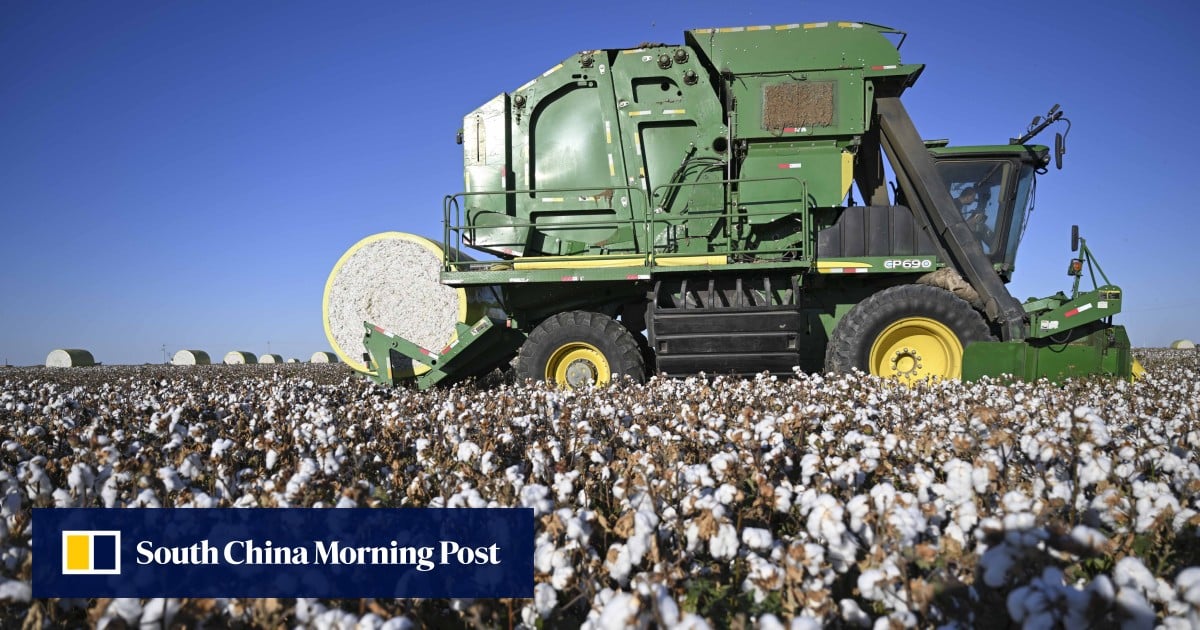
Researchers at the Chinese Academy of Sciences’ Xinjiang institute inserted a stress-resistance gene from desert moss into cotton. The resulting plant showed stronger resistance to Verticillium wilt and higher yields under infection conditions.
Scientists gave cotton a helpful gene from a desert moss, like borrowing a tough coat from a plant that survives harsh weather. That helped the cotton fight off a fungus better and make more cotton in the test.
Analysis
What the researchers did
A team led by the Xinjiang Institute of Ecology and Geography at the Chinese Academy of Sciences inserted a stress-resistance gene from a steppe moss that survives in Xinjiang’s desert environment into cotton plants. The goal was to make cotton more resilient to Verticillium wilt, a fungal disease sometimes called “cotton cancer.”
What they reported
According to the paper, published in Plant Biotechnology Journal in April, the transgenic cotton showed an approximate 23.8 per cent yield increase relative to non-transgenic plants under pathogen infection conditions. The article says the modified plants also showed improved resistance to the disease.
Why the finding is being framed as useful
The paper presents the approach as a “promising strategy” for crop improvement by borrowing genes from species that already thrive in extreme environments. That matters because the disease can affect more than cotton; the article says it can also hit fruits and vegetables.
The reporting places the work in Xinjiang, China’s top cotton-producing region, where researchers and policymakers have been trying to turn desert land into productive farmland. The article also links this line of research to wider efforts to strengthen China’s agricultural sector, including the use of artificial intelligence and smart farming, with food security as a central goal.
The article does not say the genetically modified cotton is already widely deployed. It reports a research result with potential agricultural applications, not a finished commercial rollout.
Key points
- Chinese scientists inserted a stress-resistance gene from desert moss into cotton plants.
- The modified cotton showed better resistance to Verticillium wilt, a fungal disease that harms crops.
- The team reported an approximate 23.8% yield increase under pathogen infection conditions.
- The work comes from Xinjiang, China’s largest cotton-producing region.
- The article links the research to China’s broader push to strengthen agricultural production and food security.
If the result holds up outside the lab or trial setting, it could help cotton plants lose less to Verticillium wilt and produce more fiber. The article says the method could also inspire crop improvements using genes from plants that survive extreme places.
The report only describes performance under infection conditions, so the benefits may not translate directly to farms at scale. As with any transgenic crop, broader use would still depend on further testing, regulation, and acceptance.