Chip stocks slide in US and Asia as AI jitters rattle investors
Shares in major chip firms, including Nvidia, Samsung Electronics, and SK Hynix, have fallen sharply in the US and Asia due to deepening sell-offs in AI-related stocks, leading to market volatility.
Intelligence analysis by Gemini 2.5 Flash
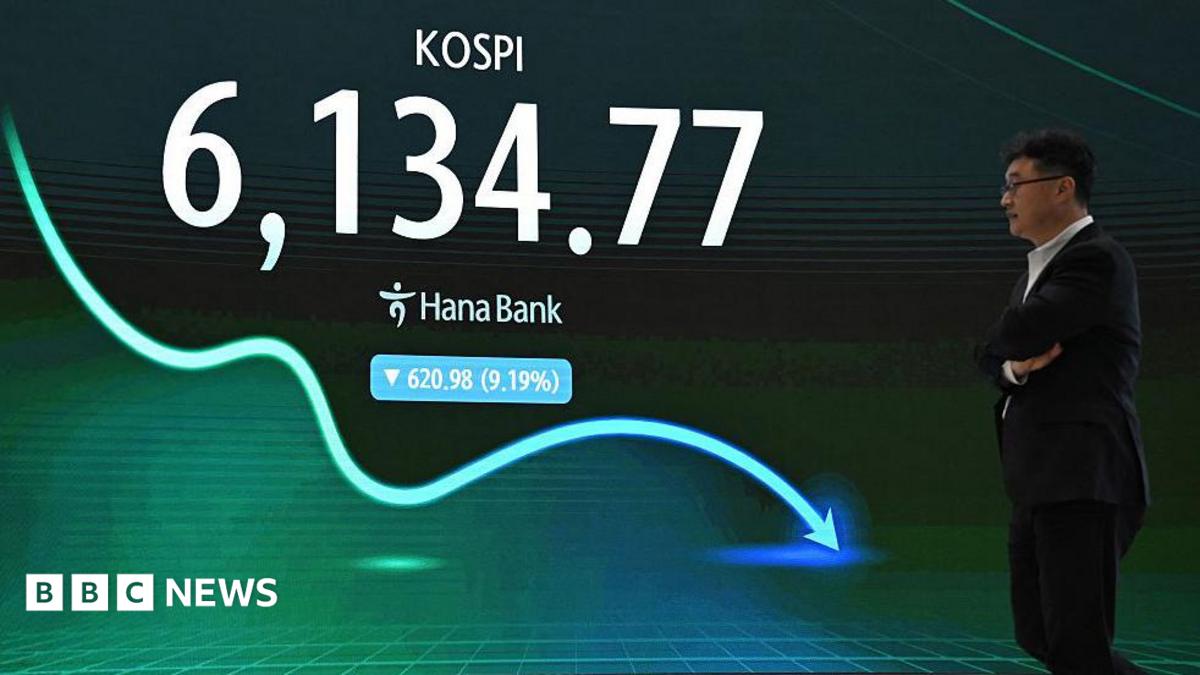
Investor concerns about the profitability of massive AI investments and growing competition, particularly from Chinese chipmakers, have triggered a significant slide in technology stocks across global markets, with South Korea's Kospi index experiencing a temporary trading halt.
Imagine a special kind of computer part, called a 'chip,' that helps make smart robots and programs work. For a while, everyone was super excited about these chips, and the companies making them were like the most popular kids in school, with their 'stock' (a tiny piece of owning the company) getting more and more expensive. But recently, people started to wonder if these companies were spending too much money to make these smart things, and if they would ever make enough money back. This made some people nervous, so they started selling their 'stock' in these chip companies, causing their prices to drop, like when everyone suddenly wants to sell their favorite toy at the same time.
Analysis
Global Market Tremors in AI Chips
The recent downturn in chip stocks across the US and Asia signals a significant shift in investor sentiment towards the artificial intelligence sector. Major players like Nvidia, which saw a 5% drop, lost its position as the world's most valuable listed company to Apple, underscoring the volatility. This ripple effect was acutely felt in South Korea, where the benchmark Kospi index experienced a temporary trading halt after plummeting by 8%, eventually closing around 10% lower. Technology giants Samsung Electronics and SK Hynix bore the brunt, each falling by approximately 12%.
The market's reaction reflects a broader re-evaluation of the rapid growth seen in AI-related stocks. The Kospi index, which had more than doubled earlier in the year, has now shed about a third of its value, indicating a correction driven by a mix of factors. Japan's Nikkei 225, also heavily weighted with tech companies, mirrored this trend with a nearly 3.8% decline. This widespread sell-off suggests that the initial euphoria surrounding AI's potential is now being tempered by more pragmatic financial considerations.
Unpacking the AI Profitability Puzzle
At the heart of these 'AI jitters' are fundamental questions about the long-term profitability of the vast sums being poured into artificial intelligence development. Analysts are increasingly scrutinizing whether the technology can generate sufficient returns to justify the hundreds of billions of dollars governments and companies are investing. A specific catalyst for Nvidia's recent decline was a Wall Street Journal report indicating the company is in talks to provide around $250 billion for OpenAI as part of a massive data-center project. While this signifies immense investment, it also raises concerns about the scale of capital expenditure required before significant returns materialize.
This skepticism is not merely about individual company performance but reflects a broader industry-wide challenge. The rapid pace of innovation and deployment in AI demands continuous, substantial investment in infrastructure, research, and development. Investors are now weighing the potential for future breakthroughs against the immediate financial burden and the timeline for these investments to translate into sustainable profits. The market's current reaction suggests a growing demand for clearer pathways to profitability and a more tangible return on the significant capital deployed in the AI ecosystem.
The Shifting Sands of Chip Competition
Adding another layer of complexity to the market's unease is the intensifying global competition in chip manufacturing. While established players like Nvidia, Samsung, and SK Hynix have dominated, the landscape is rapidly evolving. Apple's resurgence, with a 25% rise this year allowing it to reclaim the title of the world's most valuable company, highlights the dynamic nature of the tech sector. More significantly, the article points to growing competition from Chinese chipmakers, which are rapidly advancing their capabilities and market presence.
An illustrative example is ChangXin Memory Technologies (CXMT), China's largest memory chip maker, whose shares soared by nearly 470% on their Shanghai debut. CXMT's plans to use IPO proceeds to boost production and R&D signal an aggressive push to capture market share in critical components like dynamic random-access memory (DRAM) chips, which are essential for AI data centers and various consumer devices. This emergence of strong domestic competitors, particularly from China, introduces a new dimension of risk and uncertainty for global chip giants, potentially impacting their market share, pricing power, and long-term growth prospects.
Key points
- Shares in major chip firms, including Nvidia, Samsung Electronics, and SK Hynix, have fallen sharply in the US and Asia.
- Nvidia's 5% drop led to Apple overtaking it as the world's most valuable listed company.
- South Korea's Kospi index experienced a temporary trading halt after sliding by 8%, with tech firms leading the decline.
- Investor concerns center on whether massive AI investments can become profitable and growing competition from Chinese chipmakers.
- China's ChangXin Memory Technologies (CXMT) saw its shares soar by nearly 470% on its Shanghai debut, planning to boost production and R&D.
Despite current jitters, the massive investments by governments and companies into AI capabilities could eventually yield transformative technologies and significant long-term profits, validating the initial enthusiasm. The continued innovation, particularly from new players like CXMT, could also drive advancements that benefit the entire tech ecosystem.
The current market slide suggests that the huge investments in AI may not become profitable enough to justify their cost, leading to further stock corrections and investor disillusionment. Increased competition, especially from rapidly growing Chinese chipmakers, could also erode market share and profitability for established industry leaders.
Market signals
- NVDA Nvidia shares fell by 5% on Monday, losing its position as the world's most valuable listed company.
- AAPL Apple rose by about 25% this year, allowing it to overtake Nvidia as the world's most valuable company.
- Kospi Index South Korea's benchmark Kospi index slid by 8% and fell further to trade around 10% lower, triggering a circuit breaker.
- ChangXin Memory Technologies Shares in China's biggest memory chip maker soared by nearly 470% on their debut in Shanghai.
AI-generated analysis of potential market relevance. Not financial advice.