QQ Pet Returns with Tencent's Hunyuan Hy3 AI Integration
Tencent has revived its classic QQ Pet service, now enhanced with 3D models and powered by the Hunyuan Hy3 large language model for more natural and proactive interactions.
Intelligence analysis by Gemini 2.5 Flash Lite
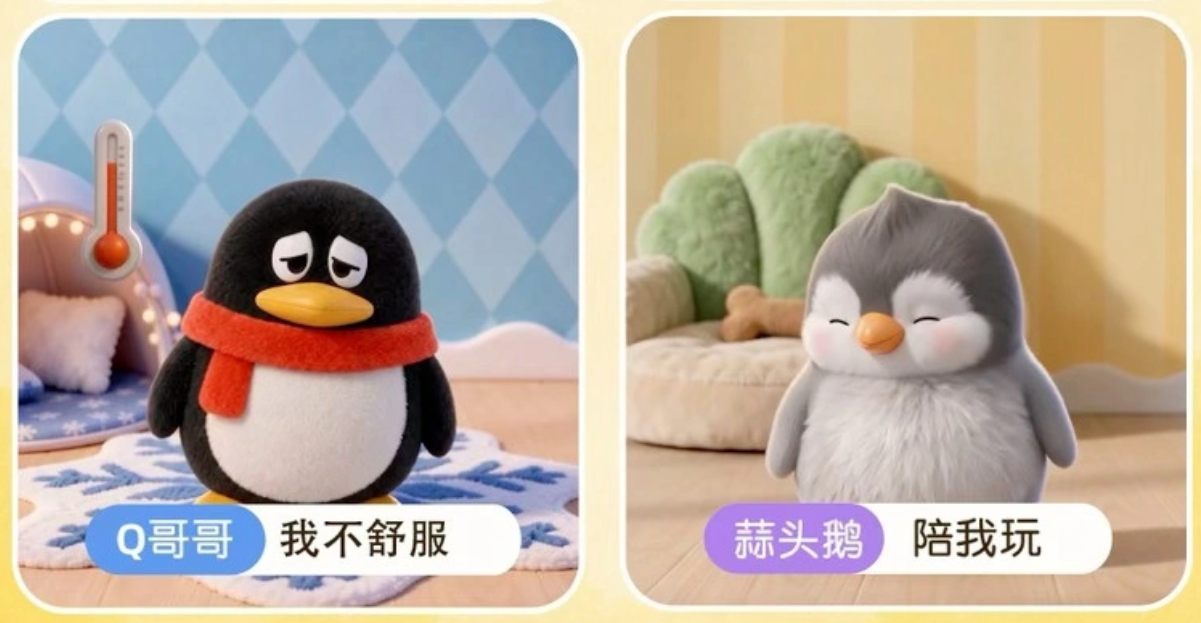
The beloved QQ Pet is back, reimagined with advanced AI capabilities from Tencent's Hunyuan Hy3 LLM. This update brings 3D graphics and smarter interactions, integrating the virtual companion deeper into the QQ ecosystem.
Imagine your old Tamagotchi, but way smarter! Tencent brought back QQ Pet, a virtual friend you can feed and play with. Now, it uses a super-smart computer brain called Hunyuan Hy3, like a tiny AI assistant, to talk and act more like a real pet, understanding you better and surprising you with its actions.
Analysis
A Nostalgic Revival Meets AI Innovation
Tencent's decision to bring back QQ Pet, a service that holds significant nostalgic value for many users, is a strategic move to leverage its existing user base while modernizing the experience. The integration of the Hunyuan Hy3 large language model is central to this revival. This isn't merely a cosmetic upgrade; it represents a fundamental shift in how the virtual pet will interact with users. By embedding a sophisticated AI, Tencent aims to move beyond pre-programmed responses to create a more dynamic and engaging companion that can understand context, exhibit personality, and even initiate interactions proactively.
Hunyuan Hy3: The Engine Behind the New QQ Pet
The Hunyuan Hy3 model, recently open-sourced by Tencent, is the technological backbone of the new QQ Pet. Its Mixture-of-Experts (MoE) architecture, boasting 295 billion total parameters and 21 billion activated parameters, along with a substantial 256K token context window, provides the computational power and linguistic understanding necessary for advanced AI functionalities. This allows the virtual pet to maintain coherent conversations, remember past interactions, and adapt its behavior, offering a level of realism and responsiveness previously unattainable in such applications. The model's capabilities are crucial for creating a pet that feels truly alive and responsive to the user's needs and moods.
Deeper Integration and Future Potential
The new QQ Pet is designed to be more than just a standalone application; it will be woven into the fabric of the core QQ messaging platform. Its presence in chat lists and windows means users will encounter their virtual companions more frequently, reinforcing the bond and making the AI integration a constant, ambient feature. This pervasive integration hints at Tencent's broader strategy to infuse AI across its product ecosystem, transforming user engagement and potentially opening new avenues for monetization and service delivery. The success of this relaunch could pave the way for similar AI-driven enhancements in other Tencent services.
Key points
- Tencent has relaunched its classic QQ Pet virtual companion service.
- The new version features 3D models and is powered by Tencent's Hunyuan Hy3 large language model.
- Hunyuan Hy3 enables more natural, proactive, and context-aware interactions.
- The virtual pet will be integrated into core QQ experiences like chat lists and windows.
- The AI model is based on a Mixture-of-Experts architecture with 295 billion parameters.
The relaunch of QQ Pet with advanced AI could significantly boost user engagement within the QQ platform, fostering deeper emotional connections between users and their virtual companions. This successful integration of Hunyuan Hy3 may also set a precedent for Tencent to enhance other services with AI, leading to more intuitive and personalized digital experiences across its ecosystem.
Despite the AI enhancements, the success of the new QQ Pet hinges on user adoption and whether the AI interactions can genuinely replicate the appeal of the original, or offer a compelling new experience. If the AI proves to be buggy, overly intrusive, or fails to capture user interest, the revival might fall short of expectations, potentially impacting Tencent's broader strategy for AI integration.