Commentary: AI is changing how films are made, not what makes them worth watching
The controversy over AI-generated local movies actually tells us something useful about AI, says The Teenage Textbook Movie director Phillip Lim. He argues that AI can make it much easier to produce something, but not necessarily something good.
Intelligence analysis by Llama
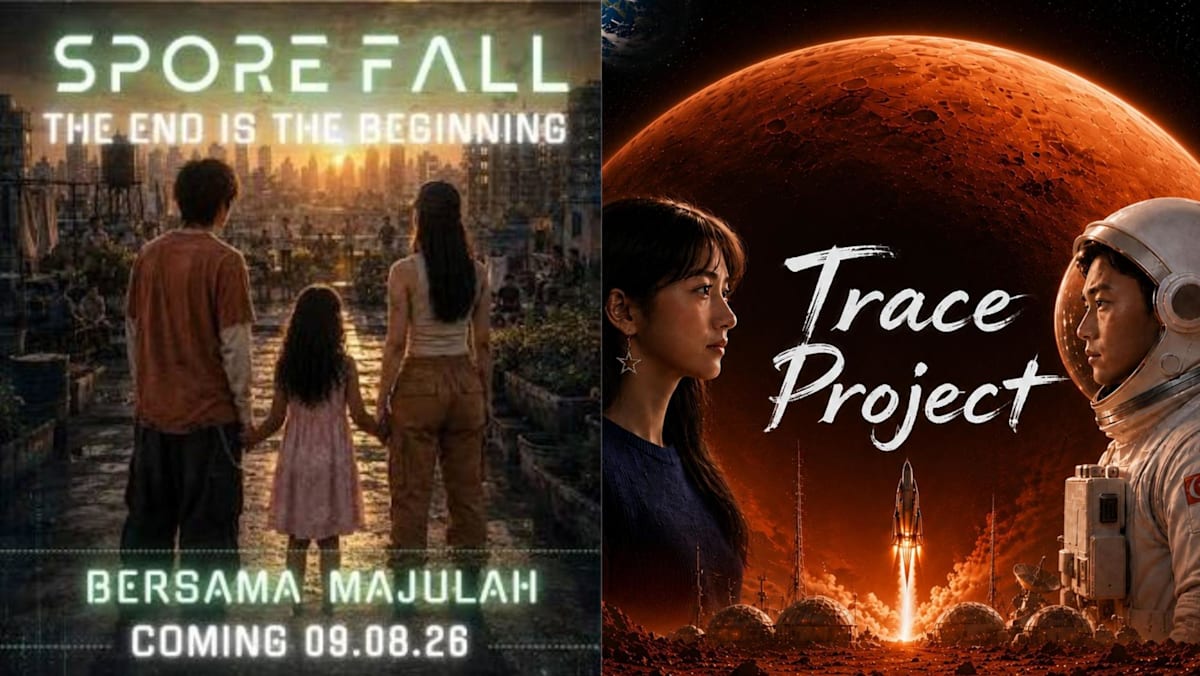
The debate about AI in filmmaking is not about whether AI can make good films, but whether it can make the creative decisions for humans. Director Phillip Lim argues that AI can give him ideas, but cannot make the creative decision for him.
Imagine you're making a movie, and you want to create a special effect. You can use a computer to help you design it, but you still have to decide what looks good and what doesn't. That's because the computer can only do what you tell it to do, and it can't make creative decisions on its own.
Analysis
The Value of Human Creativity in Filmmaking
The controversy over AI-generated local movies has sparked a debate about the role of artificial intelligence in filmmaking. While some argue that AI can make good films, others claim that it can never replace human creativity. As a filmmaker, I believe that AI can be a useful tool in the creative process, but it cannot make the creative decisions for us.
AI can give me ideas, but it cannot make the creative decision for me. I used AI to look for inconsistencies in the screenplay I wrote. It pointed out that something a character said earlier seemed to contradict something said later. But AI does not know what is beyond the page: whether the contradiction is intentional, what it tells the audience about the character, how I intend to address it later, or whether the resolution comes visually.
A storyboard of an AI-assisted short film at 28th Shanghai International Film Festival at Shanghai Film Art Centre on Jun 15, 2026. (Photo:CNA/Tan Wen Lin)
The same limitation became clearer when I asked AI to help with a creative problem. There was one transition shot in my script that bothered me for weeks. My team kept asking me to explain it, but I couldn't. I used AI to help me come up with a solution, but it was still up to me to decide what worked and what didn't.
The Limitations of AI in Filmmaking
The debate about AI in filmmaking is not about whether AI can make good films, but whether it can make the creative decisions for humans. AI can make it much easier to produce something, but not necessarily something good. A bad film does not suddenly become a good film because it was made with new technology.
The Future of Filmmaking
The controversy over AI-generated films highlights the importance of human creativity in filmmaking and the limitations of AI in making creative decisions. As a filmmaker, I believe that AI can be a useful tool in the creative process, but it cannot replace human creativity. The future of filmmaking will be shaped by the collaboration between humans and AI, not by the replacement of one by the other.
Key points
- AI can give filmmakers ideas, but it cannot make creative decisions for them.
- The debate about AI in filmmaking is not about whether AI can make good films, but whether it can make creative decisions for humans.
- The future of filmmaking will be shaped by the collaboration between humans and AI, not by the replacement of one by the other.
The collaboration between humans and AI in filmmaking could lead to new and innovative storytelling techniques, and the development of new technologies that can enhance the creative process.
The over-reliance on AI in filmmaking could lead to a loss of human creativity and a homogenization of film styles, making it harder for new and innovative ideas to emerge.