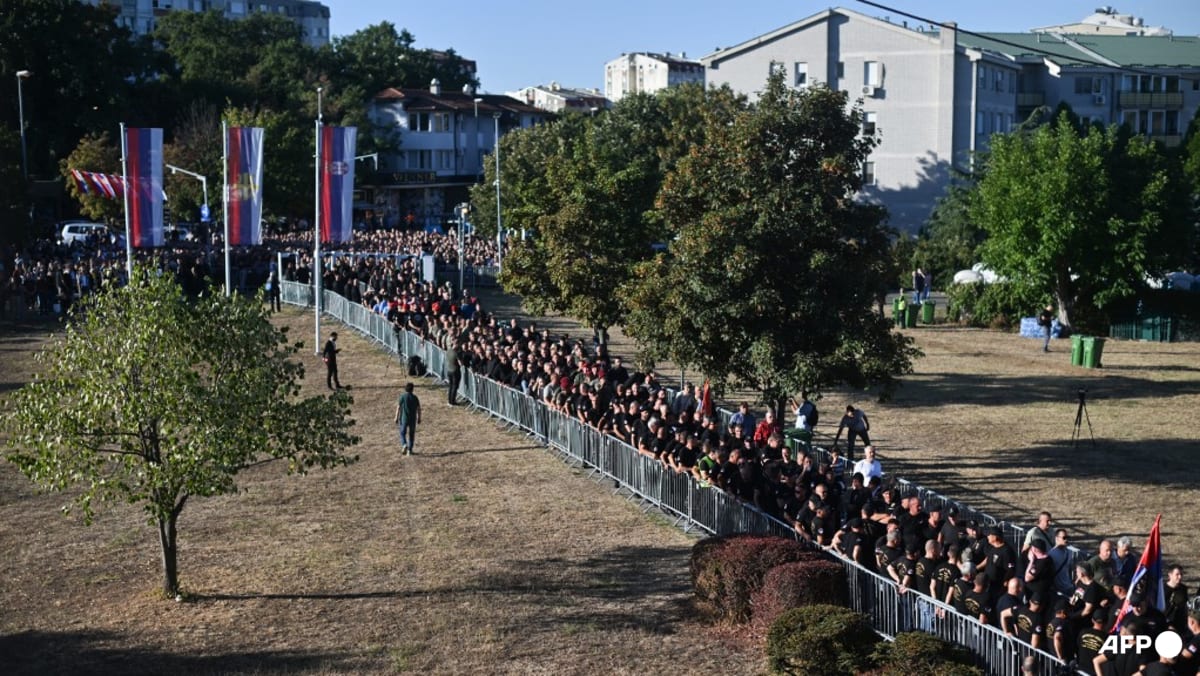
Crowds gather for war criminal Ratko Mladic's funeral in Belgrade
Mourners gathered in Belgrade for the funeral of convicted war criminal Ratko Mladic, drawing condemnation from the EU and Bosnia for "glorification" of a man convicted of genocide.
Intelligence analysis by Gemini 2.5 Flash Lite
The funeral of Ratko Mladic, a Bosnian Serb military leader convicted of genocide, saw crowds gather in Belgrade, sparking criticism from the EU and Bosnia for what they termed "glorification" of a war criminal.
Imagine a very sad and difficult time in history where countries fought. A military leader named Ratko Mladic was found responsible for terrible crimes, like a big fight where many people were hurt or killed. When he died, many people in his home country gathered to say goodbye, but others were upset because they felt it was like celebrating someone who caused so much pain.
Analysis
Ratko Mladic
The funeral of Ratko Mladic, the former Bosnian Serb military commander convicted of genocide and war crimes, took place in Belgrade, drawing significant crowds and sparking controversy. Mladic, who died at 84 while serving a life sentence at The Hague, was a central figure in the Bosnian War of the 1990s. His funeral ceremony at St Luka church saw mourners paying their respects, with many expressing views of him as a "national hero" and "general." The event was marked by Serbian flags and banners praising Mladic, with some attendees travelling from Bosnia's Serb entity, Republika Srpska, to participate.
European Union
The European Union has voiced strong disapproval of the events surrounding Mladic's funeral. Marta Kos, the EU's enlargement commissioner, cancelled a planned visit to Serbia, stating that the "glorification surrounding his death is incompatible with the values on which the EU path is built." This condemnation underscores the EU's stance on accountability for war crimes and its expectations for candidate countries to align with European values. The EU's reaction signals potential repercussions for Serbia's accession process, as such displays are seen as a step backward from reconciliation and justice.
Srebrenica Massacre
Mladic was convicted of genocide for his role in the 1995 Srebrenica massacre, where Bosnian Serb forces killed approximately 8,000 Bosnian Muslim men and boys. This atrocity remains the worst act of bloodshed in Europe since World War II and is a deeply painful memory for victims and their families. Fadila Efendic, whose son and husband were killed in Srebrenica, expressed her pain that "his ideas are not dead." Mladic's convictions also included persecuting and forcibly expelling Bosnians and Croats, terrorizing civilians during the siege of Sarajevo, and taking UN peacekeepers hostage.
Key points
- Crowds gathered in Belgrade for the funeral of convicted war criminal Ratko Mladic.
- The event drew criticism from the EU and Bosnia for "glorification" of a genocide convict.
- Mladic was convicted of genocide, war crimes, and crimes against humanity during the 1990s Bosnian War.
- His convictions include the Srebrenica massacre, Europe's worst bloodshed since WWII.
- The funeral has raised concerns about regional reconciliation and Serbia's EU path.
The strong condemnation from the EU and Bosnia may serve as a catalyst for Serbia to more decisively distance itself from the wartime past and reaffirm its commitment to European values. This could lead to a more unified regional approach to reconciliation and justice, strengthening the prospects for lasting peace and stability in the Balkans.
The public display of support for Mladic in Belgrade risks exacerbating regional tensions and undermining reconciliation efforts. It could embolden nationalist sentiments and create further obstacles for Serbia's EU accession, potentially prolonging the legacy of conflict and division in the Western Balkans.