‘Dear’ for deer, ‘vegitables’ for vegetables: Punjab school photo sparks political row
A photograph shared by Punjab Education Minister Harjot Singh Bains, showcasing education reforms, sparked a political row after opposition leaders spotted spelling errors on a classroom poster.
Intelligence analysis by Gemini 2.5 Flash
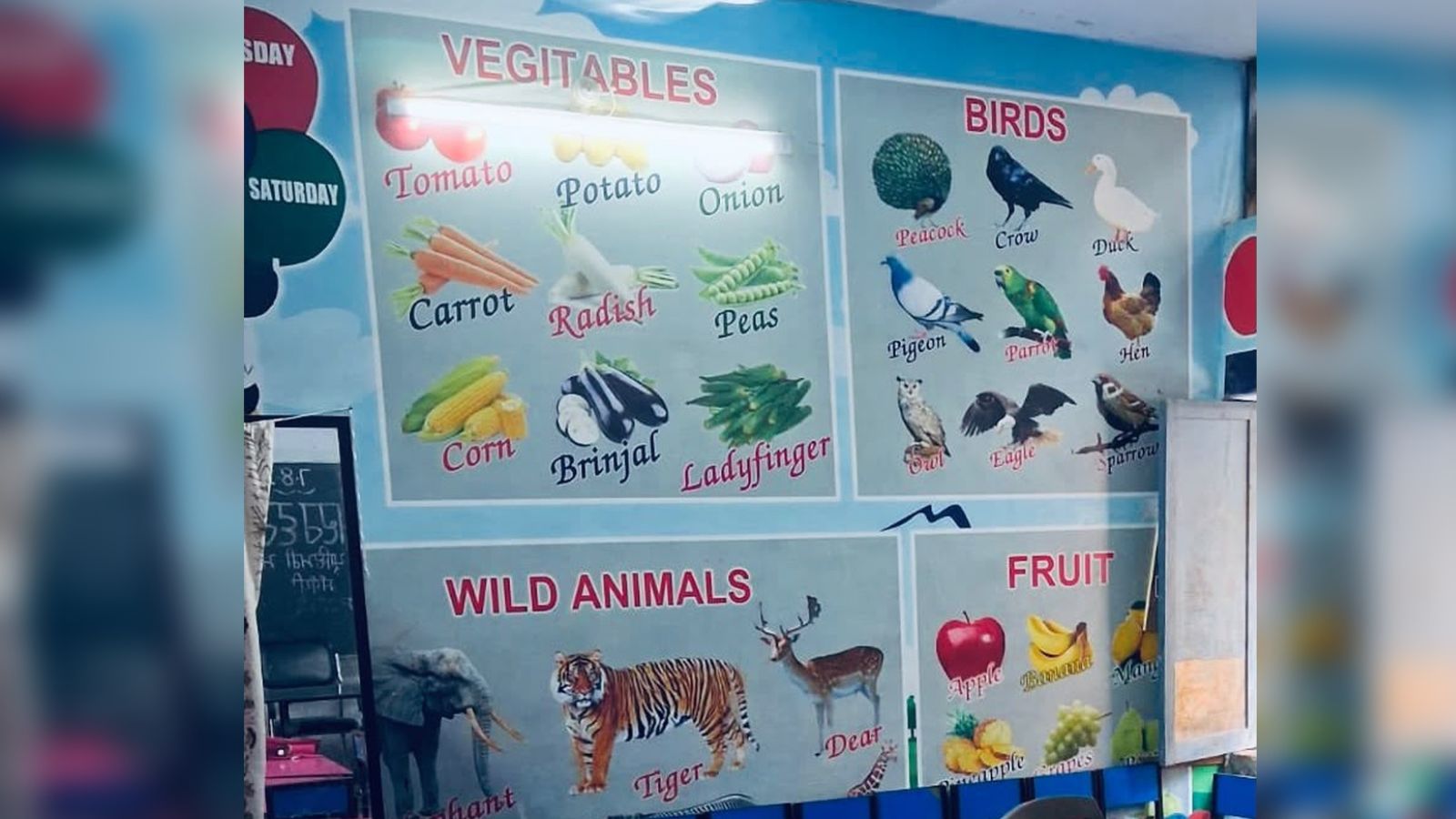
The Punjab Education Minister's attempt to highlight education reforms backfired when a photo revealed spelling mistakes on a school poster, leading to sharp criticism from the Shiromani Akali Dal and BJP, who accused the AAP government of focusing on propaganda over quality.
Imagine a teacher showing off a cool new classroom, but then someone spots a big spelling mistake on a poster, like writing 'dear' instead of 'deer'! This made other grown-ups who don't like the teacher's boss very happy, and they started saying the boss isn't doing a good job with schools. But the teacher's boss said, 'Hey, don't just look at one mistake, look at all the great things we've done for schools, like making them much better than before!' It's like arguing over a tiny smudge when a whole painting has been beautifully redone.
Analysis
The recent political skirmish in Punjab, ignited by spelling errors on a government school poster, underscores the intense scrutiny faced by the Aam Aadmi Party (AAP) government's education initiatives. What began as a seemingly minor oversight quickly escalated into a full-blown political row, with opposition parties seizing the opportunity to challenge the state's claims of educational reform. This incident highlights the delicate balance between showcasing progress and maintaining impeccable standards, especially in a sector as critical as education. The AAP government, under Education Minister Harjot Singh Bains, has been actively promoting its "Sikhya Kranti" (Education Revolution), aiming to transform public schooling in Punjab. However, the poster gaffes provided ammunition to critics who argue that the focus on superficial reforms or "photo-ops" might be overshadowing fundamental quality issues.
Harjot Singh Bains
Punjab Education Minister Harjot Singh Bains found himself at the center of the controversy after sharing photographs intended to highlight educational advancements. His social media post, meant to celebrate the "Sikhya Kranti," inadvertently exposed basic spelling mistakes on a classroom poster, specifically "dear" for deer and "vegitables" for vegetables. Bains swiftly responded to the criticism, accusing the opposition of being "anti-Punjab" and deliberately focusing on minor errors while ignoring substantial progress. He leveraged the incident to draw attention to what he described as significant achievements, including Punjab's improved ranking in the NITI Aayog School Education Quality Index. This defensive posture, while deflecting immediate blame, also revealed the political sensitivity surrounding the government's flagship programs.
NITI Aayog Report
Central to Minister Bains' defense was the mention of a NITI Aayog report, which he claimed positioned Punjab as the top-performing state in school education, surpassing even Kerala. This data point was strategically deployed to counter the narrative that the government's education reforms were superficial or flawed. By citing an external, authoritative source, Bains attempted to shift the focus from the poster errors to the broader, quantitative improvements in the state's education system. He asserted that Punjab had climbed from 27th to 1st place, with over 19,000 government schools upgraded and thousands of new classrooms built. This emphasis on systemic change and measurable outcomes aimed to portray the spelling mistakes as isolated incidents rather than symptomatic of widespread educational decline.
Shiromani Akali Dal
The Shiromani Akali Dal (SAD), along with the Bharatiya Janata Party (BJP), quickly capitalized on the spelling errors to launch a scathing attack on the AAP government. SAD specifically pointed to a reported dropout of over 6 lakh students from government schools since 2022, linking it to the perceived decline in educational quality. They sarcastically advised Bains to "try eating the right ‘Vegitables’" and invoked Delhi's AAP leaders, Manish Sisodia and Arvind Kejriwal, suggesting a "Sikhya Scam" had been exposed. This aggressive political posturing aimed to undermine the AAP's credibility, particularly on a promise as central as education reform. The opposition's strategy was to use the visible errors as tangible proof that the government's claims of a "Parda Punjab" (Educated Punjab) were hollow, contrasting it with the negative image of "Udta Punjab" (Flying Punjab, often associated with drug issues). The incident thus became a microcosm of the larger political battle for narrative control in the state.
Key points
- Punjab Education Minister Harjot Singh Bains shared photos of a government school, intending to showcase education reforms.
- The photos revealed spelling errors on a classroom poster, including 'dear' for deer and 'vegitables' for vegetables.
- Opposition parties, including the Shiromani Akali Dal (SAD) and BJP, criticized the AAP government, accusing it of focusing on 'photo-ops and propaganda'.
- Bains hit back, calling the opposition 'anti-Punjab' and highlighting the state's rise to No.1 in the NITI Aayog School Education Quality Index 2026.
- The minister emphasized significant upgrades to over 19,000 government schools and the construction of thousands of new classrooms as evidence of real progress.
This incident, despite being a political controversy, could lead to increased vigilance and quality control within Punjab's education department, ensuring that educational materials are thoroughly vetted. It might also prompt a more substantive debate on the actual progress and challenges in the state's schools, moving beyond superficial political attacks.
The political row risks overshadowing genuine efforts at education reform in Punjab, as opposition parties may continue to focus on minor gaffes rather than engaging in constructive criticism. This could lead to a cycle of unproductive mudslinging, distracting from the critical work of improving educational outcomes for students.