Democratic senators demand answers about conditions aboard USS Abraham Lincoln
Senate Democrats led by Sen. Richard Blumenthal are pressing the Navy for answers about extended deployment conditions on the USS Abraham Lincoln, citing reports of food shortages, plumbing failures, and mental health crises during a record 250-day at-sea stretch.
Intelligence analysis by Llama
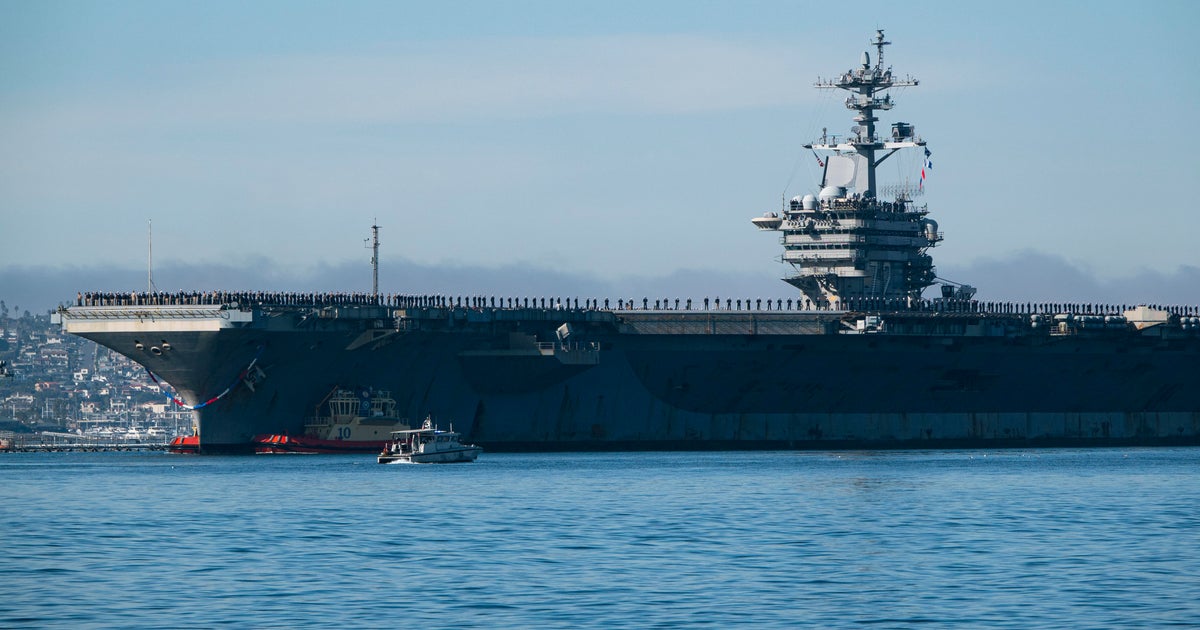
After a sailor went overboard and families raised alarms about deteriorating conditions on the USS Abraham Lincoln, Democratic senators are demanding the Navy explain shortages of food, clean water, and mental health support during a record deployment exceeding 250 days.
Imagine 5,000 people stuck on one giant floating city for over 200 days straight, with not enough food and broken pipes. Some families said their loved ones were so stressed they tried to hurt themselves, and one sailor fell off the ship. Now senators want the Navy to explain why conditions got so bad.
Analysis
Richard Blumenthal's 250-Day Inquiry
Sen. Richard Blumenthal of Connecticut fired off a letter to Defense Secretary Pete Hegseth and acting Navy Secretary Hung Cao demanding the Navy formally account for conditions aboard the USS Abraham Lincoln, which he said has been deployed more than 250 days and has gone without port call for more than 200 consecutive days. The Connecticut Democrat framed that as a record for consecutive days at sea, and his list of concerns was unusually specific: widespread shortages of basic supplies, water contamination, plumbing issues, deteriorating mental health, and deck safety concerns. By tying the inquiry to a precise day count rather than vague grievances, Blumenthal is essentially daring the Navy to either confirm the worst or produce documentation showing conditions have remained humane.
The political weight of the letter is amplified by its recipients. Hegseth is a politically appointed Defense Secretary under fire for other operational decisions, and Cao is an acting secretary overseeing the Navy during a sensitive moment in the Middle East. A formal response from either office will become a paper trail. If the Navy acknowledges any of the deficiencies Blumenthal cites, it hands Senate Democrats ammunition for hearings; if it denies them while family accounts continue to surface, the credibility gap widens.
Hung Cao and the Supply-Hub Disruption
A Navy official, speaking to CBS News, did not deny the deployment's strain but placed the blame on the operational environment rather than Navy planning. The Lincoln, the official said, is operating in a highly contested environment where traditional supply hubs in the Middle East were disrupted by combat actions. Leadership responded by triaging supplies: food first, hygiene items next, then mail. The same official told CBS that current reports confirm continuous access to clean water, functioning air conditioning, and healthy meal options.
That framing turns the dispute into a question of triage versus adequacy. Sailors and families describe shortages and contamination; the Navy describes rationing in a war zone and says baseline needs are met. The gap between those accounts is precisely what a Congressional investigation would probe, and it is why a delegation visit — not just written answers — matters. Documents can be curated; a walkthrough of a galley cannot.
Ruben Gallego's Oversight Push
Sen. Ruben Gallego of Arizona, himself a Marine veteran, escalated the pressure with a public call for a bipartisan Congressional Delegation to visit the Lincoln and conduct an on-site investigation. His request followed a Military Times report that several sailors had attempted to jump overboard or were prevented from trying in recent months. Two U.S. officials confirmed to CBS that a sailor went overboard last month and was recovered safely, with the circumstances under investigation.
Gallego's framing matters because it forces a choice on Republican leadership. Either a bipartisan delegation goes, and the resulting findings become public record, or the request is blocked, and the optics shift toward a Pentagon shielding itself from scrutiny. The Navy's response to CBS — that it has not identified an increase in reported suicidal ideation or attempts aboard the ship and is providing onboard deployment-resilience counselors, chaplains, Fleet and Family Support services, Military OneSource, and medical professionals — reads as a preemptive defense. Whether that defense satisfies families who report severe mental health crises and attempted suicides will determine whether this stays a letter exchange or becomes a sustained oversight fight.
Key points
- Sen. Richard Blumenthal is demanding the Navy account for conditions during the Lincoln's 250-plus-day deployment, including 200-plus consecutive days at sea
- Families have reported food shortages, water contamination, plumbing issues, and mental health crises including attempted suicides among the roughly 5,000 sailors and Marines aboard
- A Navy official cited disrupted Middle East supply hubs and said the ship maintains clean water, functioning AC, and healthy meal options
- Two U.S. officials confirmed a sailor went overboard last month and was recovered; the circumstances are under investigation
- Sen. Ruben Gallego is pushing for a bipartisan Congressional delegation to visit the ship for an in-person oversight investigation
If the Navy cooperates fully with the Congressional inquiry and allows an on-site delegation visit, the resulting documentation could reassure families and Congress that baseline needs are being met, while also surfacing logistical lessons that improve future deployments.
If the Navy's written denials continue to clash with family accounts and the Military Times reporting, the credibility gap could fuel sustained hearings, distract the Pentagon during a tense Middle East operational period, and create lasting political damage for Hegseth and acting Secretary Cao.