Details of Iran's May Inflation Data Are More Troubling Than the Headline Number
Iran's official inflation hit 57.7% in May, but the article says lived inflation is far higher, with food prices surging and rural areas hit hardest.
Intelligence analysis by GPT-5.4 Mini
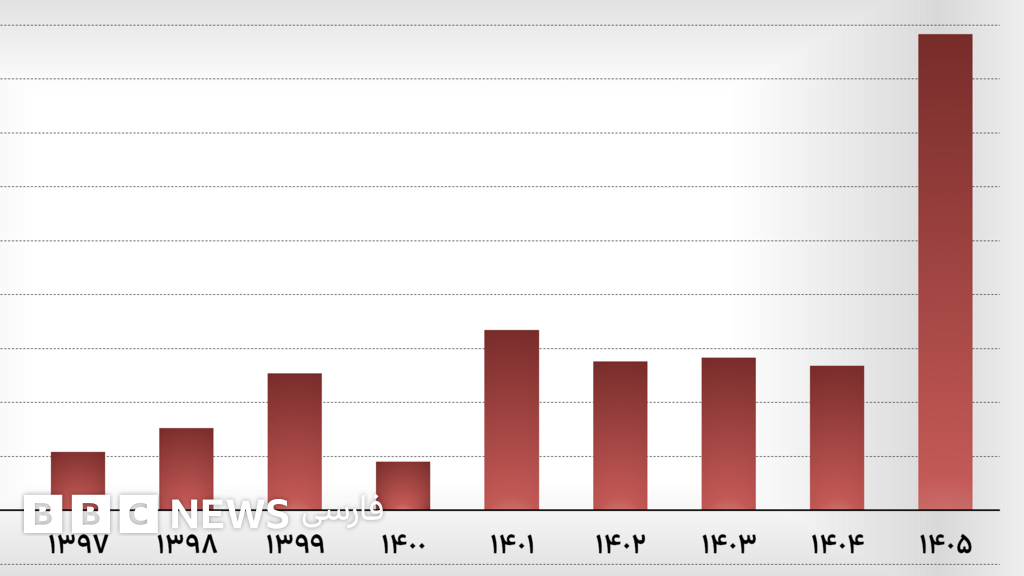
The BBC Persian report argues that Iran's inflation crisis is deeper than the official annual figure suggests. It highlights steep regional gaps, a food-price spike, and monthly price growth running at roughly triple the recent norm.
Iran's prices are climbing like a staircase that keeps getting steeper. The report says food, especially rice, chicken, eggs, and oil, has become much more expensive than last year, so many families feel inflation much more sharply than the official number.
Analysis
What the report says
The Statistics Center reportedly published its May data later than usual, and the numbers point to another record. The official 12-month inflation rate reached 57.7%, up four percentage points from the previous month, marking a third straight month of record highs, according to the article.
Why the headline figure understates the pressure
The piece argues that the inflation people actually feel is closer to the point-to-point rate, which compares prices this May with May a year earlier. By that measure, inflation rose above 80%, after being below 40% a year earlier. The report also notes that the gap between regions and income groups is wide: urban inflation averaged 80.8%, while rural inflation reached 101.8%. For the lowest-income deciles, point-to-point inflation was above 95%.
Food is rising much faster than everything else
The article says food prices rose about 130% over the past 12 months, much faster than the broader basket of goods and services. It gives especially sharp examples: imported rice up 223%, chicken up 287%, eggs up 343%, liquid oil up 354%, and solid oil up 431%. It also says the monthly inflation rate in May was 8.8%, about three times the May average of the previous four years.
Regional split and outlook
Four western provinces - Lorestan, Kurdistan, Kermanshah, and Ilam - are said to have seen inflation above 100%, while Tehran stood at 69.5% and several other provinces were in the high-70s range. The article says the situation could push official inflation above 70% by summer if the pace continues. It also links any real easing of inflation to an agreement with the US and an end to the blockade of southern ports, warning that continued disruption would keep feeding price rises.
Key points
- Iran's official 12-month inflation rate reached 57.7% in May, a new high for the third month in a row.
- The article says inflation people feel is much worse, with point-to-point inflation above 80% nationwide and above 100% in some rural and western provinces.
- Food prices rose about 130% over 12 months, with imported rice, chicken, eggs, and oils rising far faster than the overall basket.
- Monthly inflation in May was 8.8%, roughly three times the May average of the previous four years.
- The report says inflation may keep worsening unless broader economic and geopolitical pressure eases.
If price growth slows back toward older averages, the official inflation rate may stop climbing so fast. The article also says extra food subsidies or discounted distribution through the coupon card system could ease pressure on households if the government can fund it.
If monthly inflation stays near current levels, the official rate could move above 70% by summer, according to the report. Continued import disruption, higher production costs, and weak industrial activity would likely keep pushing prices up, especially for food and basic goods.