Discovery of ancient Chinese anaesthesia reveals advanced early surgical practices
Researchers have discovered physical evidence of ancient Chinese topical anaesthesia from the Ming Dynasty, using aconitine from a poisonous plant.
Intelligence analysis by Gemini 2.5 Flash
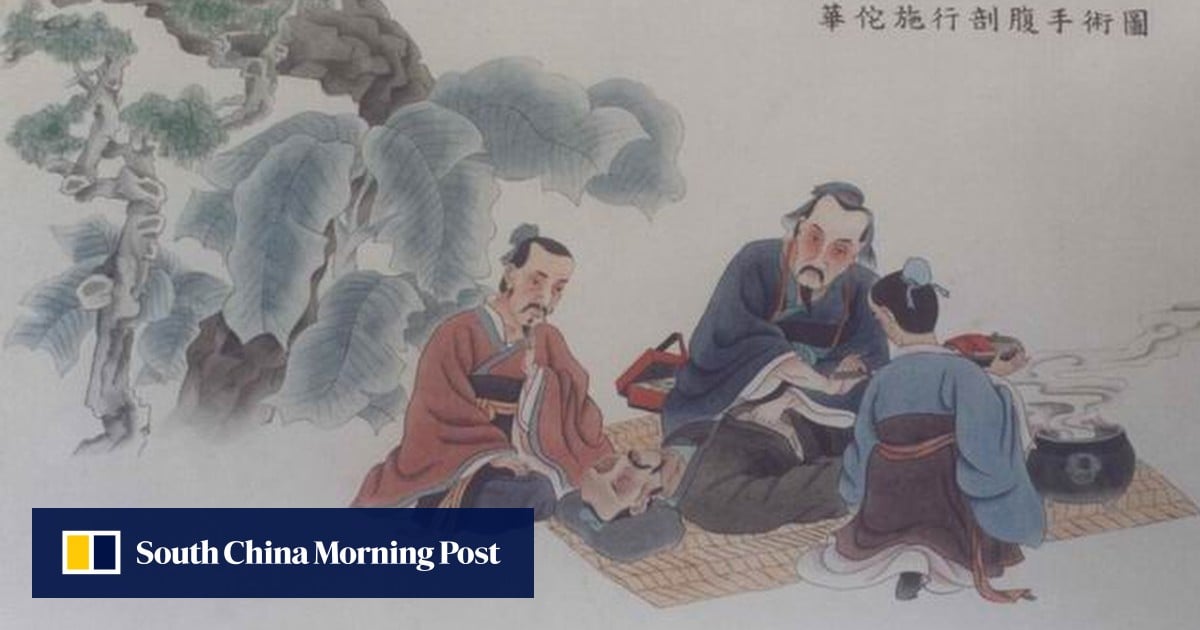
A recent discovery in China has uncovered surgical tools containing aconitine, confirming that surgeons in the Ming Dynasty used a toxic plant concoction as an anaesthetic, validating historical medical texts.
Imagine getting a boo-boo that needs fixing, but it hurts! Long, long ago in China, a smart doctor named Xia Quan figured out how to use a special plant to make people's bodies feel numb so he could fix them without causing too much pain. It's like putting a magic cream on your skin that makes it sleepy for a little while.
Analysis
The invention of modern anaesthetics in 1846 is a key moment in medical history, but humans have always looked for ways to ease surgical pain. Recent research has shown that during the Ming Dynasty (1368–1644), surgeons in the 14th century used a poisonous plant mixture to create an anaesthetic. This method was developed by the famous traditional Chinese medicine surgeon Xia Quan. This finding offers physical proof that supports old writings, adding an intriguing piece to medical history.
The discovery happened when researchers found aconitine on 10 surgical tools taken from Xia’s tomb. Aconitine is a potent toxin that comes from the poisonous plant known as wolfsbane or monkshood. Zhao Congcang, a study author from Northwest University in Xian, Shaanxi province in central China, explained that aconitine works by activating sodium ion channels in nerve cell membranes. This continuous activation first excites the nerves temporarily, then inhibits them, leading to an anaesthetic effect.
Key points
- Ancient Chinese anaesthesia from the Ming Dynasty has been discovered.
- The anaesthetic was a topical concoction derived from the poisonous wolfsbane plant.
- Aconitine, a toxin from wolfsbane, was found on surgical tools from surgeon Xia Quan's tomb.
- Aconitine works by temporarily exciting and then inhibiting nerve cells to relieve pain.
This discovery could lead to a deeper appreciation and further study of traditional Chinese medicine and its historical contributions to global medical science. It may also inspire new research into ancient botanical remedies for modern applications.
The use of highly toxic plants like wolfsbane for anaesthesia highlights the dangers and limitations of early medical practices. Without precise dosage and understanding, such methods could have easily led to accidental poisoning or other severe complications.