Do China’s export curbs on tungsten threaten Japan’s AI chip supply chain?
Chinese tungsten curbs are tightening supply of tungsten hexafluoride, lifting prices and threatening Japanese gas makers that serve AI chip fabs.
Intelligence analysis by GPT-5.4 Mini
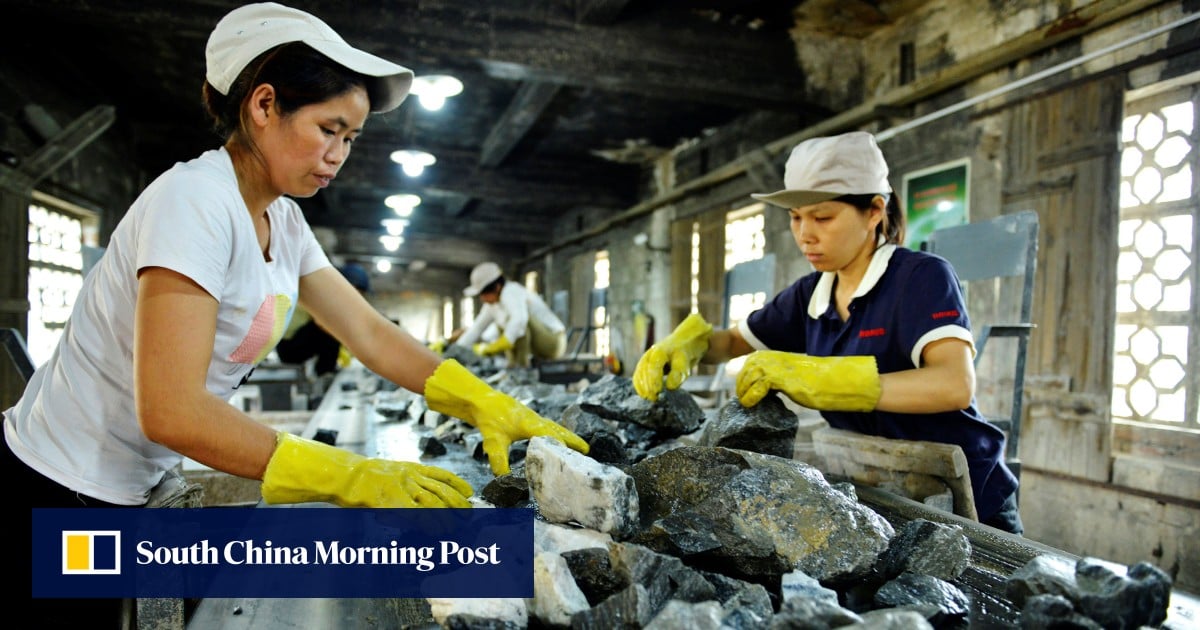
SCMP says Beijing’s tungsten export controls are rippling into tungsten hexafluoride, a key semiconductor gas. Japanese producers Showa Denko Kanto and Central Glass may suspend output in July as inventories shrink and prices surge.
It is like one town making a special screw that many factories need. When that screw becomes scarce and pricey, the whole assembly line slows down, and the same thing can happen to AI chip factories.
Analysis
Supply squeeze
The article links Beijing’s export controls on tungsten to a tightening market for tungsten hexafluoride, a gas used in semiconductor manufacturing. SCMP says the gas is a critical precursor for making the microscopic connections inside advanced AI chips built on 3- to 7-nanometre nodes.
Prices have moved sharply higher. The story cites market data showing tungsten hexafluoride up more than 200 per cent year on year, and says five-nines material, meaning 99.999 per cent purity, was trading above 1,700 yuan, or US$251, per kilogram. That is roughly three times the level a year earlier.
Japan’s producers under pressure
The article says Showa Denko Kanto and Central Glass, two major Japanese specialty-gas makers, were planning to suspend production in July as inventories ran down, according to an earlier report by The Elec. Those companies had reportedly warned major chipmakers, including Samsung Electronics and DB HiTek, about possible disruptions.
A separate Nikkei Asia report cited in the piece says Japan’s imports of tungsten from China fell 50 per cent in April versus the 2025 monthly average. The article also points to a Citic Securities note saying firms have struggled to find alternative suppliers because China dominates global reserves and production.
Why the bottleneck matters
The supply risk is not only about the gas itself. The article says tungsten powder, the raw material used to make tungsten hexafluoride, makes up more than 60 per cent of production costs. That means a constraint at the raw-material stage can quickly feed through to higher prices and tighter output for chip-related chemicals.
Key points
- China’s tungsten export curbs are squeezing supply of tungsten hexafluoride, a gas used in semiconductor manufacturing.
- The article says the gas price has risen more than 200% year on year and is now over 1,700 yuan per kg for five-nines material.
- Showa Denko Kanto and Central Glass were reportedly planning to suspend production in July as inventories shrink.
- Japan’s tungsten imports from China fell 50% in April versus the 2025 monthly average, according to Nikkei Asia.
- The article says alternative suppliers are hard to secure because China dominates global tungsten reserves and production.
If alternative tungsten suppliers are found, Japanese gas makers could keep producing and chipmakers may avoid a deeper disruption. That would help calm prices and reduce pressure on semiconductor manufacturing inputs.
If inventories keep falling and new suppliers do not emerge quickly, Showa Denko Kanto and Central Glass could pause output and chipmakers could face supply disruptions. Higher raw-material costs could also keep tungsten hexafluoride expensive and prolong the bottleneck.