Does Pete Hegseth’s volte-face on China reflect an America in decline?
Hegseth softened his China message at Shangri-La, with no Taiwan mention. The piece argues this shift reflects Trump’s priorities and America’s weakening leverage.
Intelligence analysis by GPT-5.4 Mini
The article reads Hegseth’s changed tone at the Shangri-La Dialogue as a political pivot, not a strategic rethink. It argues that Trump’s Beijing visit and Beijing’s growing leverage help explain why Washington may be speaking more cautiously on China and Taiwan.
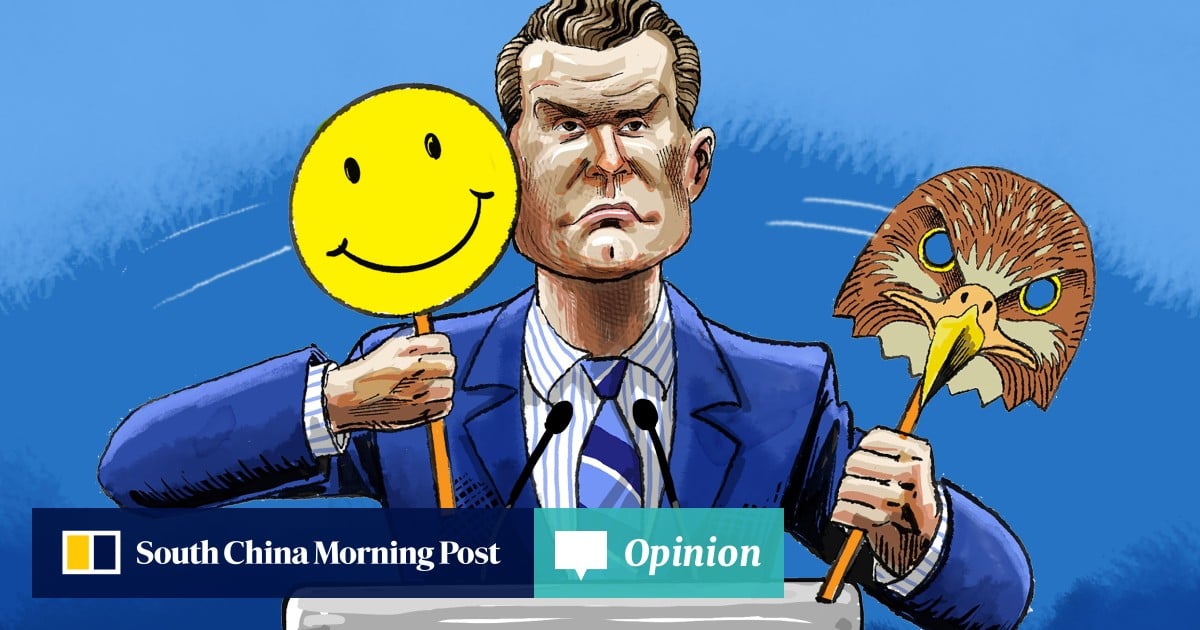
The article says a US official suddenly sounded much friendlier about China, like someone switching masks in a play. It argues this may be because China has more ways to push back now, so Washington is acting more careful.
Analysis
What changed
The author contrasts Pete Hegseth’s current speech at the Shangri-La Dialogue with last year’s version. Instead of open attacks on China, Hegseth used a much softer tone, saying that under Trump’s leadership US-China relations are better than they have been in many years. The speech also left out Taiwan, which the author treats as a notable omission rather than a coincidence.
The article’s argument
The piece ties the shift to Donald Trump’s recent visit to Beijing, which he described as a “tremendous success.” In the author’s reading, Hegseth’s tone reflects loyalty to Trump rather than a new independent policy line. The article suggests that Washington is adjusting its language because the political center of gravity has moved.
Taiwan and leverage
The author says Trump also sounded reluctant to commit to Taiwan arms sales, citing his comment that the US should not want to travel 9,500 miles to fight a war. From there, the article argues that it will become harder for Washington to keep selling arms to Taiwan as the power gap between the US and China narrows.
The piece says Beijing now has more retaliatory tools than before, including cancelling purchases from US firms, sanctioning American defence contractors, and expanding military exercises around Taiwan. The author argues these measures could be used together to increase pressure.
Bottom line
The article’s core claim is that the softer US line is not just rhetoric. It may reflect a Washington that is increasingly cautious because China has more ways to impose costs, and because selling Taiwan arms could be seen as pushing the US toward a conflict it cannot win.
Key points
- Hegseth’s Shangri-La speech was far less confrontational than last year’s.
- The speech did not mention Taiwan, which the author treats as significant.
- The article links the softer tone to Trump’s recent visit to Beijing and his priorities.
- It argues that China now has more retaliatory tools against US arms sales to Taiwan.
- The author frames the shift as a sign of narrowing US leverage and possible American decline.
If this softer tone leads to more caution on both sides, it could reduce public tension and lower the chance of a sharp crisis. A more measured US approach could also leave more room for practical talks instead of constant confrontation.
If the change is only political theater, the underlying dispute could stay unresolved while both sides keep preparing for worse. The article also suggests Taiwan arms sales could become a flashpoint if Washington and Beijing keep testing each other’s limits.