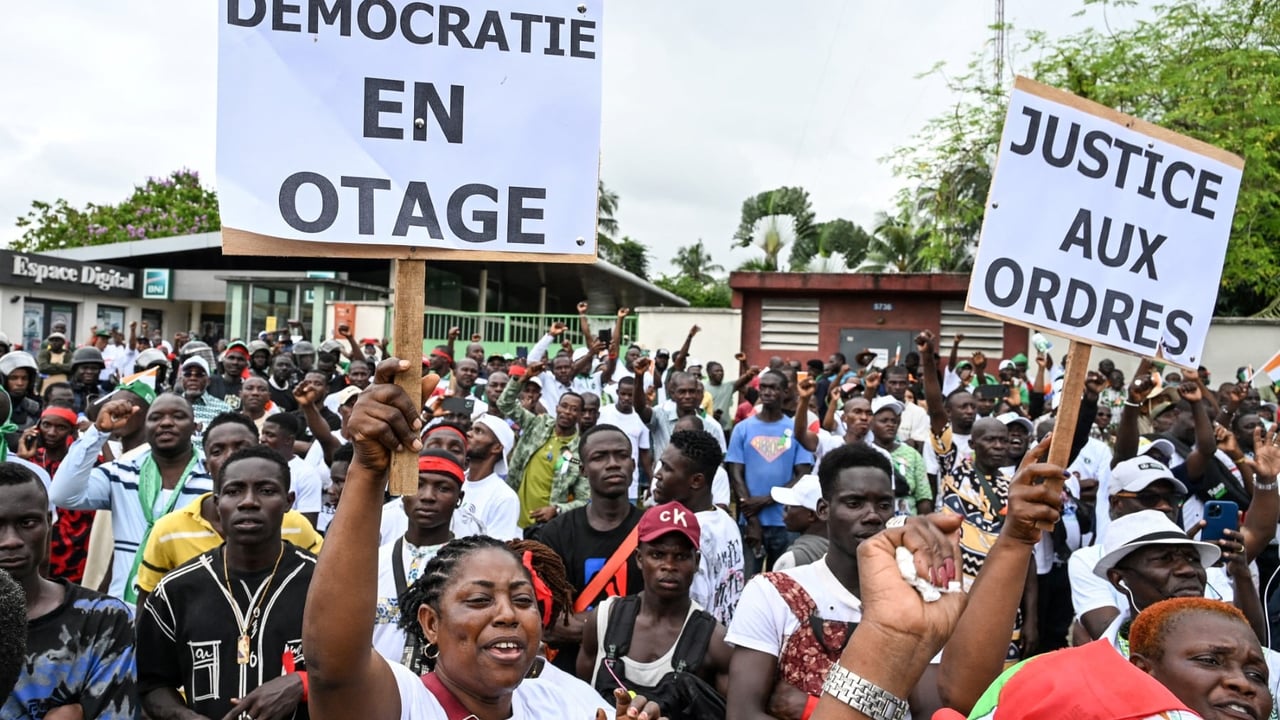
DRC: Opposition Postpones July 22, 2026 Demonstration
The Democratic Republic of Congo's opposition coalition, C64, has postponed its planned July 22 demonstration in Kinshasa, following a request from religious leaders and President Tshisekedi's call for a national dialogue.
Intelligence analysis by Gemini 2.5 Flash
The C64 opposition platform in the DRC has agreed to defer its protest against proposed constitutional changes, a move that comes after President Félix Tshisekedi tasked religious leaders with organizing a national dialogue. While the opposition acknowledges the presidential initiative, it has issued an ultimatum, demanding the official convocation of this dialogue by August 15, 2026,…
Imagine a big group of people in a country called Congo were planning a huge march because they were unhappy with some new rules the country's leader wanted to make. But then, some wise religious leaders stepped in and asked them to wait, saying the leader wants to talk things over. So, the group agreed to postpone their march, but they told the leader, "You have to start talking by August 15th, or we'll march anyway!" They want to talk about big problems like safety and making life better for everyone.
Analysis
The political landscape in the Democratic Republic of Congo remains fraught with tension, despite the recent postponement of a major opposition demonstration. The C64 coalition, a significant opposition bloc, had planned a large-scale protest in Kinshasa on July 22, 2026, primarily to voice its strong disapproval of the presidential camp's proposed constitutional amendments. This planned action underscored the deep divisions and distrust prevalent within the country's political sphere, with the opposition fearing moves that could undermine democratic principles or extend presidential terms.
A Conditional De-escalation
The decision to postpone the demonstration was not unilateral but emerged from a series of consultations, notably involving religious leaders. President Félix Tshisekedi's initiative to entrust these religious figures with the organization of a national dialogue appears to be a strategic move to address the opposition's grievances and foster a more conciliatory environment. The religious leaders subsequently requested the C64 to defer their protest, a request that was ultimately honored after internal discussions within the coalition. This suggests a fragile willingness from the opposition to engage in dialogue, albeit with significant reservations and a clear demand for concrete assurances from the government.
The Stakes of National Dialogue
The C64 platform has explicitly stated that the proposed national dialogue must serve as a genuine forum to tackle the country's fundamental challenges. Their communiqué highlights a range of critical issues, including external aggression, persistent insecurity in the eastern regions, a pervasive governance crisis, and severe economic and social difficulties. For the opposition, this dialogue is not merely a formality but an opportunity to address the root causes of instability and discontent. The success of such a dialogue hinges on the government's sincerity and its readiness to engage meaningfully with these complex and deeply entrenched problems, which affect the daily lives of millions of Congolese citizens.
An Ultimatum for Governance
Despite the initial gesture of goodwill in postponing the protest, the C64 has maintained a firm stance by issuing an ultimatum to President Tshisekedi. They demand that the national dialogue be officially convened by August 15, 2026. This deadline underscores the opposition's lingering distrust of the government and its desire for tangible progress rather than mere promises. Should the President fail to meet this deadline, the C64 has vowed to mobilize the Congolese people for renewed peaceful citizen actions. This threat serves as a powerful reminder of the opposition's commitment to defending constitutional order, democracy, and the rule of law, signaling that their patience is conditional and their resolve to challenge perceived governmental overreach remains strong.
Key points
- The C64 opposition coalition in the DRC postponed its July 22, 2026 demonstration in Kinshasa.
- The postponement followed President Tshisekedi's decision to task religious leaders with organizing a national dialogue.
- The opposition demands the dialogue address issues like external aggression, insecurity in the East, governance crisis, and economic difficulties.
- C64 has issued an ultimatum, requiring President Tshisekedi to officially convene the dialogue by August 15, 2026.
- Failure to meet the ultimatum will lead the opposition to call for renewed peaceful citizen actions.
The postponement of the demonstration and the agreement to engage in a national dialogue could lead to a constructive resolution of political tensions. If the dialogue is genuinely inclusive and addresses the core issues raised by the opposition, it could foster greater national unity and stability, paving the way for effective governance and addressing the country's pressing challenges.
Should President Tshisekedi fail to officially convene the dialogue by the August 15 deadline, or if the dialogue proves to be superficial, the opposition has threatened to resume protests. This could reignite political instability, deepen public distrust in the government, and exacerbate the existing governance and security crises in the DRC.