DRC: What the Constitutional Court's decision on the referendum law means
The DRC Constitutional Court has validated a proposed referendum law, allowing President Tshisekedi to potentially promulgate it, a move the opposition fears could enable a third presidential term.
Intelligence analysis by Gemini 2.5 Flash
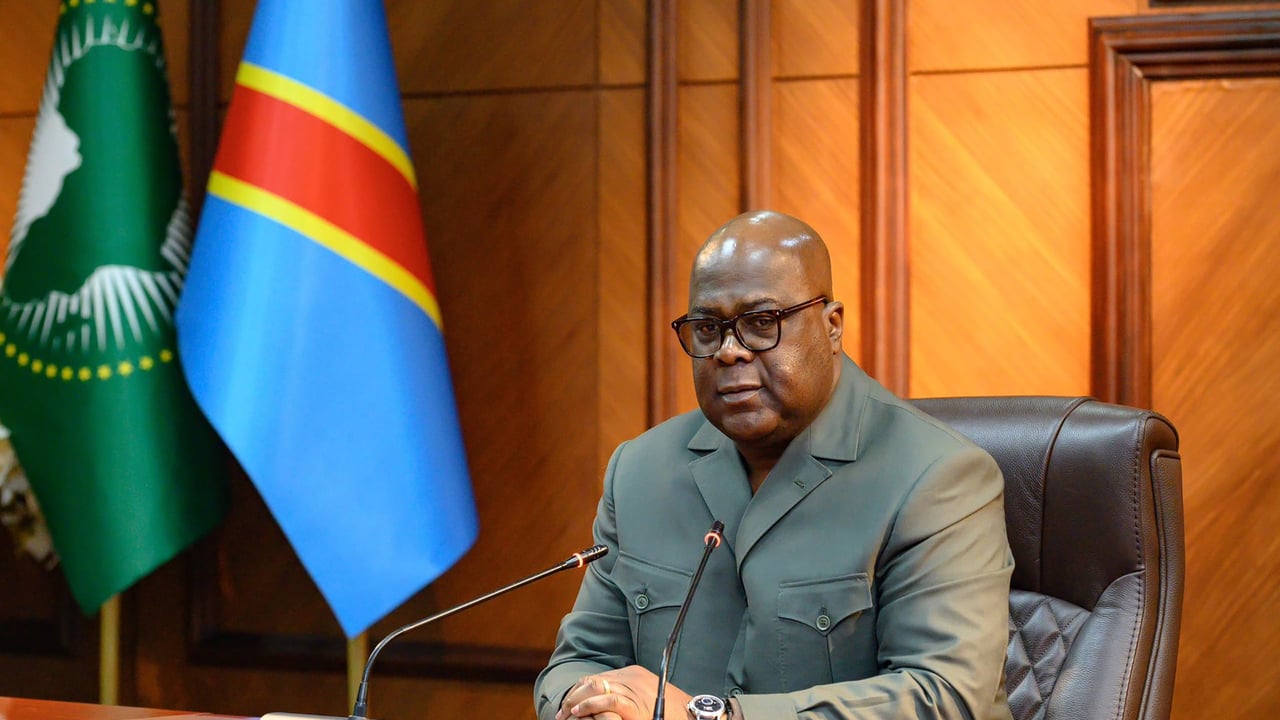
The Constitutional Court of the Democratic Republic of Congo has conditionally approved a referendum law, a decision that has sparked controversy. While legally framed as a technical review, the opposition views this as a strategic maneuver by President Tshisekedi to pave the way for an additional presidential mandate, intensifying political tensions.
Imagine the referee in a soccer game said a new rule about how long the game can last is okay, but with some small changes. One team is happy because it might mean they can play longer, but the other team is worried it means the referee is letting the first team cheat to stay on the field for extra time.
Analysis
The recent decision by the Democratic Republic of Congo's Constitutional Court to validate a proposed referendum law, albeit with thirteen interpretative reservations, has ignited a fierce political debate. On the surface, the Court's review was presented as a purely technical legal exercise, aimed at refining the text by removing vague notions such as "unsuitable constitutional matters" and "social forces present." These adjustments, affecting articles 3, 4, 5, 7, 8, 9, 10, 12, 14, 19, 21, 23, and 43, were intended to ensure the law's clarity and constitutional compliance.
The Court's Conditional Approval
The Constitutional Court's validation, despite the numerous reservations, effectively gives President Félix Tshisekedi the green light to promulgate the law. This conditional approval means that while the core framework for organizing a referendum is deemed constitutional, its implementation must adhere strictly to the Court's interpretations. The legal nuances involved suggest an attempt to balance constitutional principles with the practicalities of governance, yet the political implications far outweigh the technicalities in the public discourse.
Opposition's Alarm and Political Implications
The opposition, however, has vehemently denounced the Court's decision, interpreting it not as a technical legal adjustment but as a strategic move to facilitate President Tshisekedi's potential bid for a third term. In the DRC's political landscape, where presidential term limits are a sensitive issue, any legislative change related to referendums is viewed with suspicion, especially given the history of leaders in other African nations extending their mandates through constitutional amendments. The opposition's concerns highlight a deep mistrust in the current political process and fear that the law could be manipulated to bypass existing constitutional restrictions on presidential terms.
Broader Context of Constitutional Amendments
This development places the DRC within a broader African context where constitutional amendments, particularly those affecting presidential terms, frequently become flashpoints for political contention and instability. The ability of a sitting president to initiate and promulgate a referendum law, even with judicial oversight, raises questions about the checks and balances within the country's democratic institutions. The outcome of this legislative process and its subsequent application will be a critical indicator of the DRC's commitment to democratic principles and the rule of law, with significant implications for its internal stability and regional standing.
Key points
- The DRC Constitutional Court validated a proposed referendum law, with 13 interpretative reservations.
- This decision allows President Félix Tshisekedi to potentially promulgate the law.
- The opposition strongly denounces the decision, viewing it as a means for Tshisekedi to seek a third presidential term.
- The Court's review involved technical legal adjustments, including the removal of vague constitutional notions.