Drought leaves 'barely any apples' to make cider
Somerset's cider orchards have been 'decimated' by a long summer drought, leading to significantly reduced apple crops for producers. Many trees produced no fruit or dropped unripe apples early, causing severe supply issues for cider makers.
Intelligence analysis by Gemini 2.5 Flash
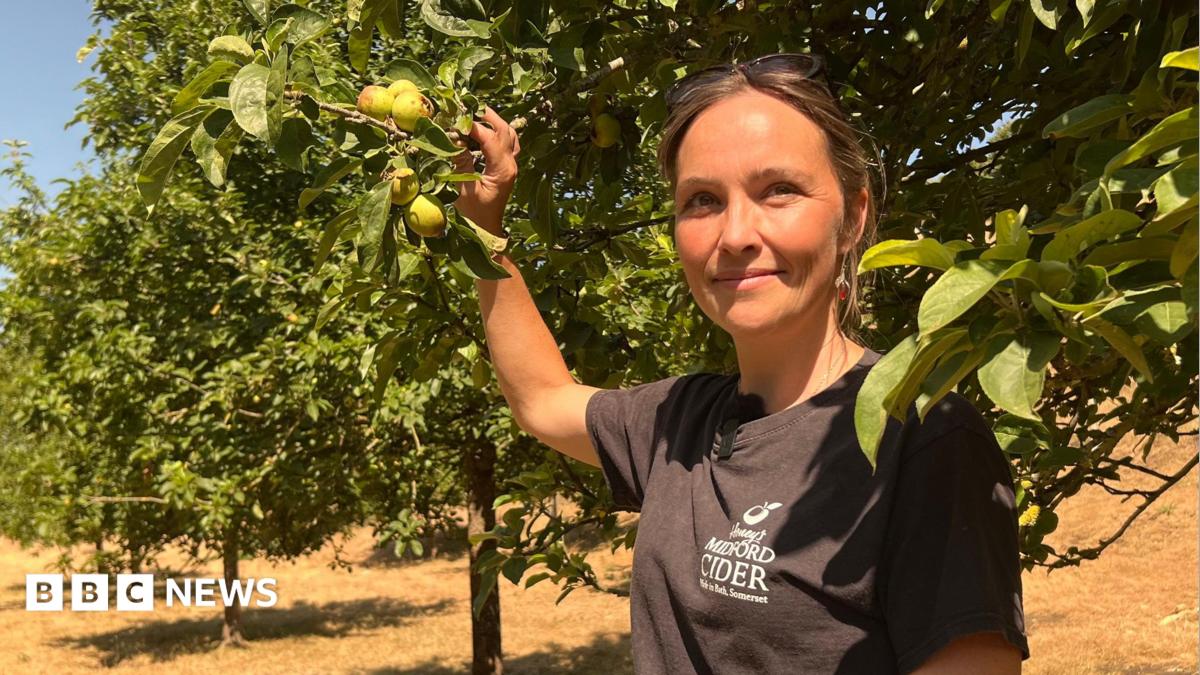
Cider makers in Somerset, UK, are facing a dire situation as prolonged drought and heatwaves have severely impacted their apple harvests. Producers like Honey's Cider and Rich's Cider report crop yields as low as 10% of normal, forcing them to consider future stock shortages despite high demand for cider during the hot weather.
Imagine your favorite apple tree in the backyard. This year, because it was super hot and dry, the tree got really thirsty and stressed, so it couldn't grow many apples. Now, imagine if that tree was how a whole company made its apple juice for cider – they'd have a big problem because they wouldn't have enough apples to make drinks for everyone, even though people really want to buy them!
Analysis
The cider industry in Somerset, a region renowned for its apple production, is grappling with unprecedented challenges stemming from consecutive years of drought and unusually mild winters. Producers are reporting devastating crop failures, with some orchards yielding as little as 10% of their typical harvest. This severe reduction in apple supply directly threatens the viability of cider makers, many of whom rely exclusively on fresh juice and cannot resort to concentrates or industrial products.
Kimberly Jones
Kimberly Jones of Honey's Cider near Bath exemplifies the struggles faced by smaller, artisanal producers. Her orchard, established 25 years ago, has seen its worst year yet, producing only a tenth of its usual apple crop. This scarcity is particularly problematic for Honey's Cider, which prides itself on using only fresh juice, meaning their production volume is directly tied to the annual harvest. The irony of the situation is palpable: while the hot summer has been excellent for cider sales, the very conditions driving demand are simultaneously destroying the future supply.
Jones's experience underscores the vulnerability of businesses committed to traditional methods and local sourcing. Her refusal to compromise on ingredients means that a poor harvest directly translates into reduced output and potential financial strain. The long-term implications for such businesses, if these weather patterns persist, could be significant, potentially forcing them to either adapt their production methods or face existential threats.
George Scott
George Scott, Master Cider Maker at Rich's Cider, a much larger operation near Highbridge that typically produces nearly a million litres annually, echoes the concerns of smaller growers. He anticipates not even bothering to use a harvester in some orchards due to the minimal fruit yield, stating that the sheep can have what little drops. While Rich's Cider has existing stock to mitigate immediate shortages, Scott's primary worry lies with the long-term health of his trees, which have been stressed by two consecutive dry years.
His concerns are amplified by climate scientists' warnings of more hot, dry summers, suggesting that this year's crisis is not an anomaly but a potential new normal. The financial implications for larger producers like Rich's, who invest heavily in orchards and infrastructure, are substantial. The need to adapt to these changing conditions, potentially through costly irrigation systems or new farming techniques, presents a significant economic burden.
Dabinett
The impact of climate change extends beyond just drought, affecting specific apple varieties crucial to West Country cider's distinctive taste. The Dabinett variety, known for its bittersweet profile, has produced very few apples this year, not due to drought, but because of mild winters. Dabinett trees require a cold snap to fruit properly, a condition that has been absent in recent years.
This shift in climate threatens to fundamentally alter the character of Somerset cider. Neil MacDonald, who manages over 1,000 acres of orchards, is already grafting other varieties onto his Dabinett trees in response. This adaptation, while necessary, highlights the potential loss of traditional flavors and the significant investment required to transition orchards. The broader implication is a potential change in the regional identity of cider, driven by environmental pressures forcing growers to prioritize resilience over historical varietal preferences.
Key points
- Somerset's cider orchards have experienced a 'decimated' apple crop due to a long summer drought.
- Many trees produced only 10% of their normal fruit, or dropped unripe apples early due to stress.
- Cider makers, including Honey's Cider and Rich's Cider, face severe supply shortages for future production.
- Climate scientists warn that extreme weather, like hot, dry summers and mild winters, is becoming the new normal.
- Specific apple varieties, like Dabinett, are failing to fruit due to a lack of cold winter days, potentially changing the taste of West Country cider.
Despite the immediate challenges, the industry's resilience and willingness to adapt, such as irrigating young trees and exploring new varieties, could lead to more robust and climate-resilient orchards in the long term. The strong demand for cider during hot weather also presents a market opportunity if supply issues can be mitigated through innovation and strategic planning.
The continued pattern of hot, dry summers and mild winters, as warned by climate scientists, poses a severe threat to traditional cider apple varieties and farming practices. This could lead to sustained crop failures, significant financial strain on producers, and a fundamental change in the taste and availability of West Country cider, potentially impacting its cultural and economic significance.