Egyptian, Ugandan FMs discuss bilateral ties, regional issues
Egyptian Foreign Minister Badr Abdelatty and his Ugandan counterpart, Haruna Kasolo, met on the sidelines of the Second Extraordinary Summit of Troop-Contributing Countries to the African Union Support and Stabilization Mission in Somalia (AUSSOM). They discussed ways to …
Intelligence analysis by Llama
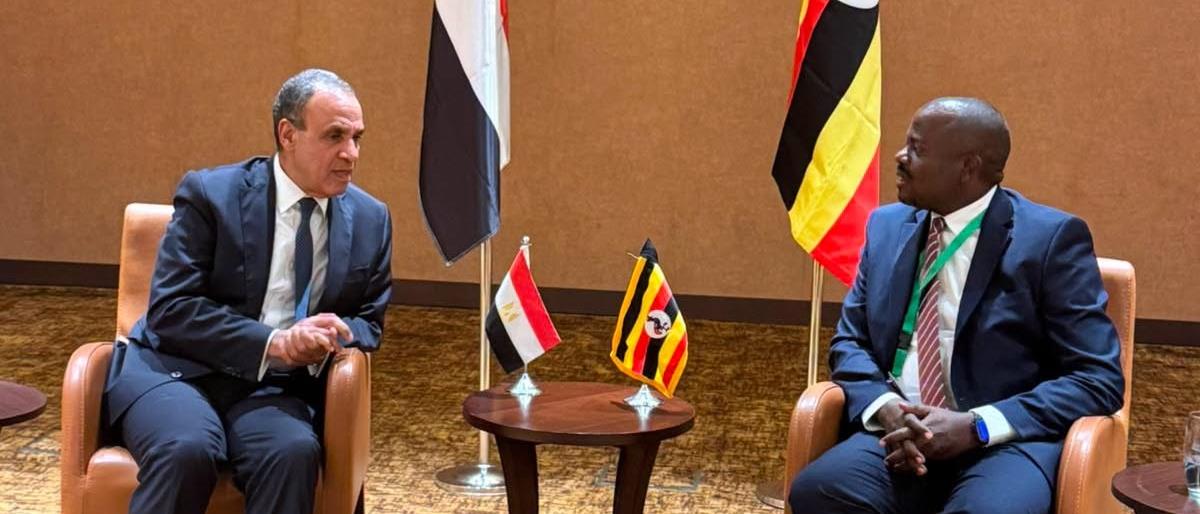
Egyptian and Ugandan foreign ministers met to discuss bilateral ties and regional issues, including developments in Sudan, Somalia, and eastern Democratic Republic of Congo.
Imagine two countries, Egypt and Uganda, working together to strengthen their friendship and cooperation. They talked about how to help each other in areas like trade, economy, and education. They also discussed how to work together to make the region a safer and more stable place.
Analysis
A Growing Momentum in Relations Between Egypt and Uganda
The meeting between Egyptian Foreign Minister Badr Abdelatty and his Ugandan counterpart, Haruna Kasolo, reflects the growing momentum in relations between the two countries. The two ministers discussed ways to strengthen bilateral ties and coordinate positions on issues of common concern, including trade, economic, and investment cooperation. Egypt's Foreign Minister emphasized the importance of expanding trade and economic cooperation, particularly in infrastructure, energy, mining, agriculture, aquaculture, water resources management, and the pharmaceutical industry. He also underscored the need to continue efforts to expand the Egyptian medical center in Jinja, while supporting Egyptian companies operating in Uganda and increasing access for Egyptian exports to the Ugandan market.
The Significance of the Egyptian-Ugandan Business Council
The establishment of the Egyptian-Ugandan business council is a key step towards boosting bilateral trade and enhancing the economic partnership between the two countries. Egypt's Foreign Minister stressed the importance of swiftly establishing the council and expressed Egypt's interest in expanding cultural and educational cooperation through scholarships, stronger partnerships between universities, and capacity-building programs offered by the Egyptian Agency of Partnership for Development, the Cairo International Center for Conflict Resolution, Peacekeeping and Peacebuilding, and Al-Azhar.
Regional Cooperation and Integration
The two ministers also exchanged views on regional issues, including developments in Sudan, Somalia, and eastern Democratic Republic of Congo. They agreed to strengthen bilateral and multilateral coordination to support peace, stability, and development across Africa. Egypt's Foreign Minister emphasized the importance of cooperation and integration among Nile Basin countries to achieve mutual benefit and shared interests. He also reiterated Egypt's rejection of unilateral measures in the Eastern Nile Basin and praised Uganda's efforts during its chairmanship of the Nile Basin Initiative (NBI) consultative process to restore inclusivity and consensus, advance development projects that serve shared interests in line with international law, and safeguard the interests of all Nile Basin states.
Key points
- Egyptian and Ugandan foreign ministers met to discuss bilateral ties and regional issues.
- They discussed ways to strengthen bilateral ties and coordinate positions on issues of common concern.
- The two ministers agreed to strengthen bilateral and multilateral coordination to support peace, stability, and development across Africa.
- Egypt's Foreign Minister emphasized the importance of cooperation and integration among Nile Basin countries to achieve mutual benefit and shared interests.
- He also reiterated Egypt's rejection of unilateral measures in the Eastern Nile Basin and praised Uganda's efforts during its chairmanship of the Nile Basin Initiative (NBI) consultative process.
The meeting between Egyptian and Ugandan foreign ministers is a positive step towards strengthening bilateral ties and promoting regional cooperation. If this development plays out positively, it could lead to increased trade, economic, and investment cooperation between the two countries, as well as enhanced cultural and educational exchange.
However, there are also potential risks and challenges associated with this development. For example, if the Egyptian-Ugandan business council is not established quickly, it could hinder the progress of bilateral trade and economic cooperation. Additionally, if the two countries are unable to coordinate their positions on regional issues, it could lead to increased tensions and instability in the region.