Elon Musk and co may relish march of the robots but there must be AI boundaries in the workplace | Heather Stewart
This article discusses the need for boundaries in the workplace as AI technology advances, highlighting concerns about human qualities in jobs and the potential for workers to be "robotised" by constant surveillance and repetitive tasks.
Intelligence analysis by Gemini 2.5 Flash
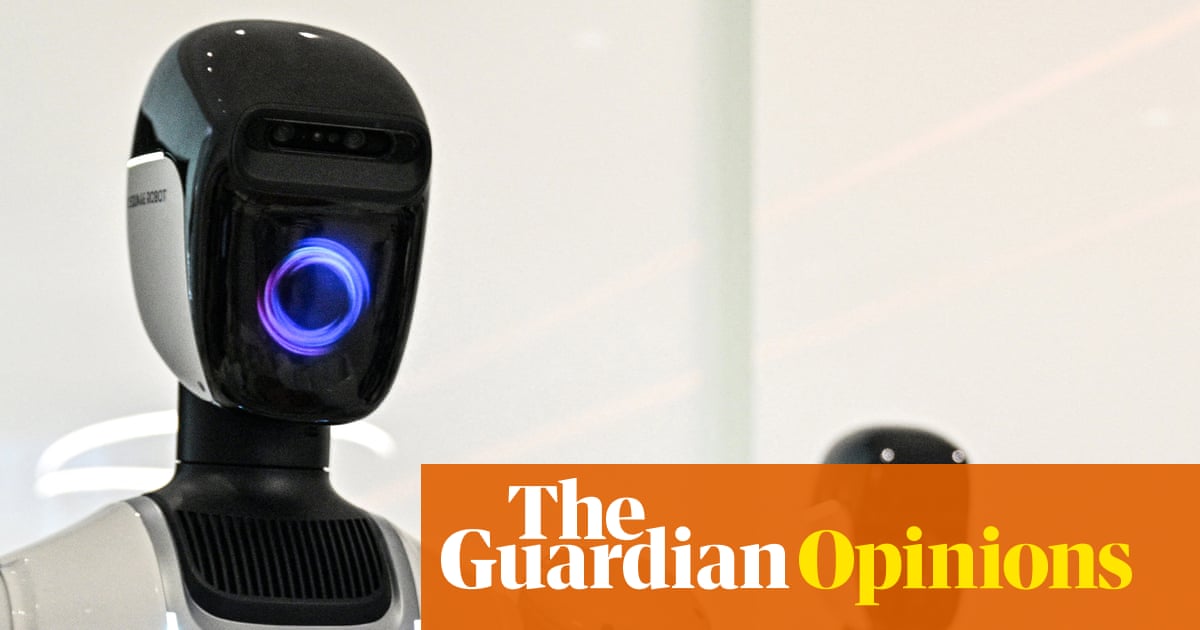
The rapid advancement of AI and robotics is forcing society to reconsider the nature of work and humanity. While tech leaders embrace automation, author Sarah O'Connor argues that careful consideration is needed to determine which aspects of work should be automated, advocating for human-centric approaches that value empathy and creativity over pure technical efficiency.
Imagine grown-ups are trying to figure out how to use clever computer brains and robots at work. Some really smart people, like Elon Musk, think robots can do almost everything. But a clever writer says we need to be careful, because if robots do too much, people might forget how to be creative or kind in their jobs, and that would be a bit sad. So, everyone needs to decide what robots should and shouldn't do.
Analysis
As AI and robotics rapidly advance, the workplace is undergoing significant transformation, prompting questions about the role of human qualities in jobs. The book "We Are Not Machines" by FT journalist Sarah O'Connor examines how AI is reshaping work, potentially leading to the "robotisation" of employees.
Impact on Workers
O'Connor's research highlights the experiences of Amazon employees under constant surveillance and translators who find their work less creative due to machine translation post-editing. These examples illustrate how technology can diminish job satisfaction and creativity, with one translator, Petr, expressing concern about the endangerment of creative jobs.
The Fight for the Future of Work
Instead of outright resisting AI, O'Connor suggests a more thoughtful approach to automation. She emphasizes that simply because a robot can perform a task doesn't mean it should, citing the example of a Dutch nurse providing empathetic care that a robot cannot replicate. O'Connor argues that policymakers, business leaders, workers, and consumers have the right to accept or reject specific uses of new technology in the workplace.
Bargaining Power and Regulation
The article points out the disparity in how technology affects workers, depending on their bargaining power. In Sweden, union-employer negotiations have led to collaborative integration of autonomous technology in mines. Similarly, Hollywood writers leveraged their influence to secure control over AI deployment in their creative process. However, for the majority of workers lacking such clout, government intervention may be necessary to establish boundaries. The UK's Trades Union Congress and Institute for Public Policy Research have called for employees to have negotiation rights before new technology is introduced.
Elon Musk's Influence
The article also touches upon the broader influence of tech leaders like Elon Musk, particularly in the context of SpaceX's significant market share in space launches. Alessio Terzi of the University of Cambridge compares Musk's dominance to that of the East India Company, warning of potential exploitation and the need for timely state intervention before power becomes too entrenched.
Key points
- AI and robotics advancements necessitate a re-evaluation of human roles and boundaries in the workplace.
- Sarah O'Connor's book, "We Are Not Machines," highlights concerns about constant surveillance and reduced creativity for workers due to AI.
- The article argues that the ability of a robot to perform a task does not automatically mean it should.
- Worker bargaining power, union negotiations, and government regulation are crucial for shaping ethical AI integration.
- Elon Musk's growing economic power and market dominance in space raise concerns about unchecked technological influence, drawing comparisons to historical monopolies.
Thoughtful implementation of AI, guided by human values and worker input, could lead to more efficient workplaces while preserving essential human roles. Collaboration between unions, employers, and governments, as seen in Sweden and Hollywood, could establish models for beneficial technology integration that respects human creativity and well-being.
Without clear boundaries and strong worker protections, AI could lead to widespread job displacement, decreased job satisfaction, and a "robotisation" of human tasks, diminishing creativity and empathy in the workplace. The disproportionate influence of tech billionaires might further entrench these negative outcomes, making future regulation costly and difficult.