Enemy achieved none of its goals: Iran army chief
Iran's army chief, Major General Amir Hatami, declared that the enemy failed to achieve any strategic or tactical goals in recent conflicts, asserting Iran's victory through successful defense and national unity.
Intelligence analysis by Gemini 2.5 Flash
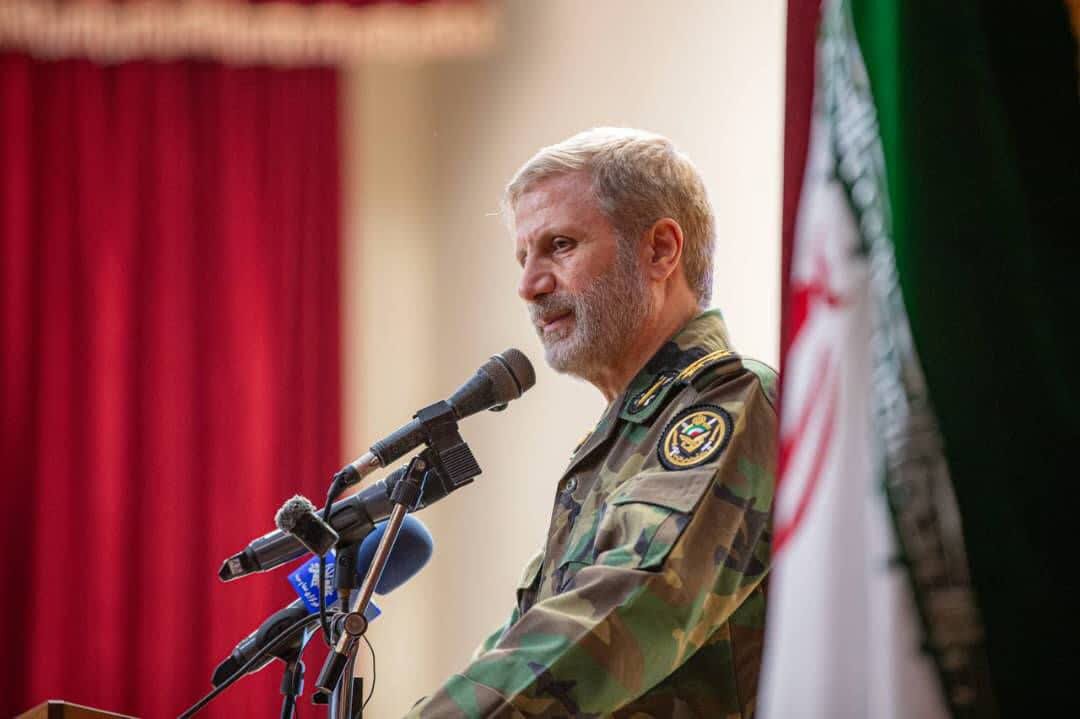
Speaking at a ceremony in Rasht, Major General Hatami emphasized that in military doctrine, a defender wins by denying the aggressor's objectives. He highlighted the resilience of Iran's missile and drone capabilities and air defense, rejecting enemy claims of their destruction and crediting national unity and leadership for the country's steadfastness.
Imagine two teams playing a game, and one team tries really hard to score but can't get past the other team's defense. Even if the attacking team has lots of fancy equipment, if they don't score, they haven't won. Iran's army chief is saying that's what happened: the 'enemy' tried to win against Iran, but Iran's defenses were too strong, so the enemy didn't achieve its goals, meaning Iran won by stopping them.
Analysis
Major General Amir Hatami, Iran's army chief, delivered a resolute message regarding the nation's recent conflicts, asserting that despite the adversary's extensive military capabilities, none of its strategic or tactical objectives were achieved. Speaking at a ceremony honoring army martyrs in Rasht, Gilan province, Hatami articulated a core principle of military logic: victory in a defensive war is defined by the defender's success in denying the aggressor's goals. This framing is crucial for understanding Iran's self-perception of its military engagements, positioning any failure of the 'enemy' to achieve its aims as a definitive win for Iran. His remarks serve to project an image of an unyielding and successful defense, aimed at both domestic reassurance and international deterrence.
Major General Amir Hatami
Major General Amir Hatami's address was not merely a recounting of past events but a strategic communication designed to shape perceptions of Iran's military prowess and resolve. By emphasizing that an aggressor is only victorious when it achieves its objectives, he reframed the narrative of conflict outcomes. This perspective allows Iran to claim victory even in scenarios where direct military confrontation might have occurred, as long as the stated or perceived goals of the adversary were not met. His leadership in articulating this doctrine underscores the importance of psychological warfare and narrative control in modern geopolitical struggles, particularly for a nation like Iran that frequently faces external pressures and sanctions.
His statements also directly challenged what he termed 'enemy claims' regarding the destruction of Iran's armed forces. Hatami countered these assertions by highlighting the continuous operational capacity and effectiveness of Iranian military assets. This direct refutation aims to discredit opposing narratives and reinforce the image of a robust and capable military, ready to confront any threats. The general's speech, delivered in a commemorative setting, also served to honor the sacrifices of military personnel, linking their legacy to the ongoing strength and resilience of the armed forces.
Iran's missile and drone power
A central pillar of Major General Hatami's argument for Iran's defensive success was the resilience and operational effectiveness of its missile and drone capabilities. He explicitly stated that despite enemy attempts to neutralize this power, 'the missiles and drones of the armed forces were fired at the enemy with full intensity until the final moment.' This assertion directly addresses a key area of concern for Iran's adversaries, who often highlight the country's ballistic missile and drone programs as destabilizing factors. Hatami's comments suggest that these capabilities remained intact and fully functional throughout the conflicts, serving as a critical deterrent and response mechanism.
Furthermore, the army chief praised the steadfastness of Iranian air defense systems, noting their success in damaging a number of enemy unmanned and manned aircraft, as well as strategic equipment. This detail provides a tangible example of Iran's defensive capabilities in action, moving beyond abstract claims of victory to specific instances of operational success. The emphasis on air defense highlights Iran's multi-layered approach to national security, combining offensive deterrence with robust defensive measures. This combination is presented as a formidable barrier against external aggression, reinforcing the message that Iran is well-prepared to protect its airspace and critical infrastructure.
National cohesion
Beyond military hardware and tactical successes, Major General Hatami attributed Iran's overall resilience and victory to the profound national cohesion under the leadership of the Leader. He underscored that this unity was not static but actively growing day by day, encompassing all branches of government and security bodies. This emphasis on national unity is a recurring theme in Iranian official discourse, presented as a fundamental strength that transcends military might and economic challenges. It suggests that the collective will and solidarity of the Iranian people, guided by their leadership, are indispensable components of the nation's defense strategy.
Hatami's remarks about the government, parliament, judiciary, armed forces, and security bodies all serving the people with full capacity further illustrate this point. By portraying a unified front across all state institutions, he aimed to convey a sense of stability and coordinated effort in safeguarding national interests. This holistic view of national security, where political, social, and military elements converge under a singular leadership, is crucial for understanding Iran's strategic posture. It implies that any external pressure or military action against Iran must contend not just with its armed forces, but with a deeply integrated and unified national system.
Key points
- Iran's army chief, Major General Amir Hatami, stated that the enemy failed to achieve any strategic or tactical goals in recent conflicts.
- Hatami asserted that in military logic, denying the enemy its objectives constitutes a victory for the defender.
- He highlighted the sustained operational capability of Iran's missile and drone forces, which were used 'with full intensity'.
- Iranian air defense systems reportedly damaged enemy unmanned and manned aircraft and strategic equipment.
- The army chief credited national cohesion under the Leader's guidance as a key factor in Iran's steadfastness.
The declaration could strengthen internal resolve and national unity, fostering a sense of security among the populace. Internationally, it might serve as a deterrent, signaling Iran's readiness and capability to defend its interests, potentially reducing the likelihood of future direct military confrontations.
Such strong rhetoric, while aimed at domestic and regional audiences, could be perceived as escalatory by adversaries, potentially increasing regional tensions. It might also lead to miscalculations if the perceived strength is overestimated or if it provokes a more aggressive response from those labeled as the 'enemy.'