Ethereum Foundation cuts and departures aren't a crisis, Joe Lubin says
Joe Lubin says the Ethereum Foundation’s cuts and departures are a necessary reset, not a crisis, as Ethereum’s ecosystem broadens.
Intelligence analysis by GPT-5.4 Mini
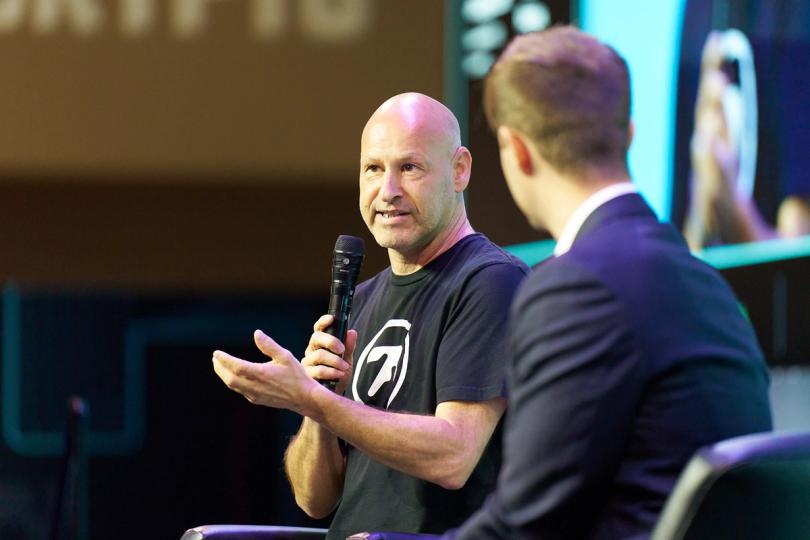
Lubin argues the Ethereum Foundation should stay narrowly focused on protocol stewardship and neutrality, while other groups handle adoption and business development. He says the changes are part of cleaning up roles, not a sign that Ethereum is in decline.
Joe Lubin says the people running Ethereum’s main foundation are trimming it down so it can stay fair and focused, like a referee instead of a coach. He thinks other groups should help grow the network, while the foundation keeps the engine running smoothly.
Analysis
What Lubin is saying
Joe Lubin dismissed criticism over the Ethereum Foundation’s recent budget cuts, staff departures, and restructuring. In his view, the foundation should be smaller and more focused on stewarding Ethereum’s core technology and values, rather than trying to drive commercialization itself.
He argued that the foundation needs to remain “credibly neutral” and avoid conflicts between the business side and protocol builders. That neutrality, he said, is especially important for a decentralized network like Ethereum.
A broader ecosystem model
Lubin said Ethereum’s future will not depend on one dominant institution. Instead, he expects a set of organizations to share responsibility for growth, adoption, institutional engagement, and ecosystem development. He described this as a more natural model for Ethereum than the tighter integration of protocol work and commercial strategy seen in some other blockchain projects.
He also pushed back on the idea that Ethereum is declining. While he acknowledged that crypto is no longer the main technology story and capital is flowing elsewhere, he said Ethereum’s long emphasis on scaling is now positioning it for a new wave of usage.
Where he sees growth
Lubin highlighted two areas: institutional adoption and “agentic commerce,” where AI agents and humans both use blockchain rails for transactions. He suggested that as these use cases grow, the foundation’s job is to stay focused on the protocol so the network can support more activity built on top of it.
The article also notes that Ethereum processes about 2 million transactions a day, according to Etherscan data, underscoring the scale of the network Lubin says is being refined rather than rescued.
Key points
- Joe Lubin says the Ethereum Foundation’s cuts and departures are not a crisis.
- He argues the foundation should focus on protocol stewardship and neutrality, not commercialization.
- Lubin expects multiple organizations to share responsibility for Ethereum’s future growth.
- He pointed to institutional use and AI-powered onchain transactions as possible next-wave drivers.
- He rejected the idea that Ethereum is in decline, even as crypto competes with AI for attention and capital.
If Lubin’s view proves right, the Ethereum Foundation could become a cleaner, more neutral steward of the network. That might help the broader ecosystem grow around it, especially if institutional use and AI-driven onchain activity continue to expand. A narrower foundation role could also reduce confusion about who is responsible for adoption versus protocol maintenance. That separation may make Ethereum easier to develop and govern over time.
The restructuring may still be read by critics as a sign that the foundation is under pressure or losing momentum. Staff departures and budget cuts can create uncertainty even if leaders insist the changes are strategic. If the broader ecosystem does not step up to handle adoption and growth, Ethereum could be left with a more limited foundation and no clear replacement for the missing coordination.