EU summit with western Balkan leaders to reaffirm membership prospects
EU leaders meeting in Montenegro will seek to reassure western Balkan states that accession remains possible, while advancing practical integration steps.
Intelligence analysis by GPT-5.4 Mini
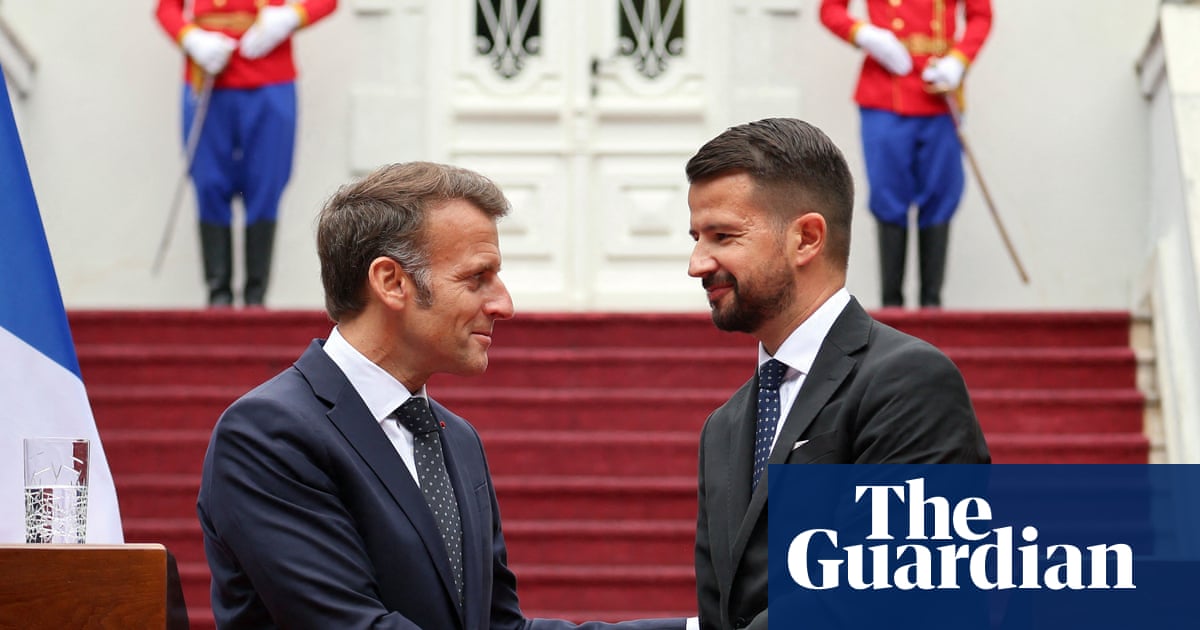
The summit in Tivat is meant to show six western Balkan countries that the EU still sees them as future members, even as the bloc remains split over enlargement. Leaders are also expected to lean on smaller measures, like roaming-fee cuts, to make the EU feel more tangible.
The EU is telling six nearby countries, “You still have a chance to join someday.” Instead of only big speeches, it is also trying small helpful steps, like cheaper phone roaming, so life feels a bit more connected while the long waiting game continues.
Analysis
What the summit is trying to do
European leaders are gathering in Tivat, Montenegro, to signal that the six western Balkan countries still have a real path toward EU membership. The summit is not just about speeches: the main goal is to push deeper integration with the EU single market so the region can begin to feel more like part of the bloc before formal accession.
António Costa, the European Council president, has framed enlargement as both a real commitment and a strategic necessity. He says it matters because of the wider competition with Russia and China and because it is tied to peace, stability and security in Europe.
Montenegro, Albania and the rest
Montenegro is presented as the furthest advanced of the six and hopes to become the EU’s 28th member by 2028. Albania is seen in Brussels as the next likely entrant, although some governments still question its record on organised crime. North Macedonia, Kosovo, Bosnia and Herzegovina, and Serbia face more serious political obstacles.
Serbia stands out as the most worrying case in the article. It is described as drifting away from the EU under President Aleksandar Vučić, who has cracked down on protests and refused to match EU sanctions on Russia.
Ukraine’s shadow over enlargement
The article says the debate over Ukraine is reshaping the whole enlargement process. Ukraine and Moldova are moving ahead with talks, and Germany has floated associate membership for Ukraine, but that idea is disputed and seen by some officials as a poor substitute for real accession. Officials quoted in the piece say this broader debate will also shape how western Balkan states are treated.
What Friday is likely to deliver
Despite the high-level turnout, sources caution against expecting major membership breakthroughs. The most concrete step mentioned is a push to begin talks on ending mobile roaming charges across the western Balkans, a small but visible way to make EU integration more practical for ordinary people.
Key points
- EU leaders are meeting in Montenegro to reassure western Balkan states that accession is still possible.
- The bloc wants to deepen integration through the single market and a plan to drop mobile roaming charges.
- Montenegro is the most advanced candidate, while Albania is seen as next in line.
- North Macedonia, Kosovo, Bosnia and Herzegovina, and Serbia face serious political obstacles.
- The debate over Ukraine’s path to the EU is influencing how enlargement is handled more broadly.
If the talks keep moving, the western Balkans could see EU membership as a real path rather than a distant promise. Practical steps like ending roaming charges and deeper market access could make the relationship feel more concrete for people in the region.
The summit could still end up being mostly symbolic if leaders avoid hard decisions on accession. Political disputes inside the region and disagreements inside the EU, including over Ukraine, may keep enlargement slow and uneven.